
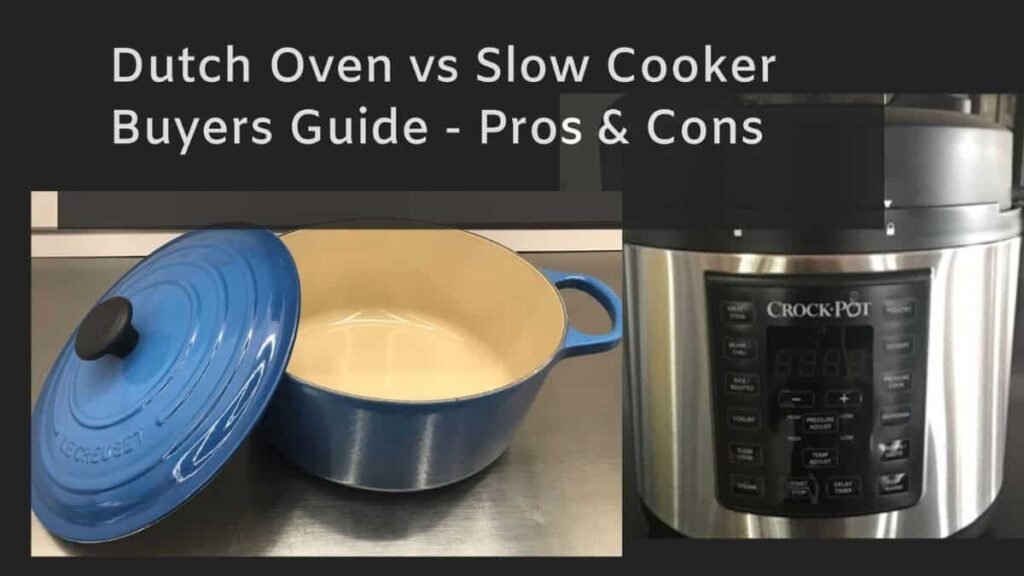
So, is a Dutch oven better than a slow cooker? There is no single answer for every kitchen. The two tools can make many of the same foods, but they work in very different ways. A Dutch oven gives you more control over heat and cooking steps. A slow cooker gives you more freedom to walk away while dinner cooks.
For many home cooks, the choice comes down to daily habits. A Dutch oven can move from the stovetop to the oven and then to the table. A slow cooker is built for long, low-heat cooking with little attention. This guide compares both tools so you can pick the one that fits your meals, schedule, and kitchen.

Is a Dutch Oven Better Than a Slow Cooker?
The short answer is that a Dutch oven is better for versatility, while a slow cooker is better for convenience. If you want one pot that can brown meat, cook on the stove, bake bread, and make a stew, a Dutch oven has a clear advantage. If you want to load your meal in the morning and return to dinner later, a slow cooker may suit you better.
A Dutch oven can also produce strong browning before slow cooking begins. That step can add deep flavor to meat and vegetables. A slow cooker can make tender food, but most standard slow cookers do not give the same direct browning control as a heavy pot on a hot stovetop.
This is why the question “is a Dutch oven better than a slow cooker” should be viewed as a use-case question. Neither tool replaces the other in every kitchen.
- ✦ Choose a Dutch oven
Choose it if you want one pot for searing, braising, roasting, baking, simmering, and slow cooking.
- ✦ Choose a slow cooker
Choose it if your main goal is simple, long, hands-off cooking while you work, sleep, or run errands.
- ✦ Choose both
If you cook often, owning both can be useful because each tool handles a different style of cooking.
What Makes a Dutch Oven Different?
A Dutch oven is a heavy pot, often made from cast iron. Many modern models have an enamel coating that makes them easier to clean and suitable for acidic foods. The thick walls and lid help hold heat and moisture during cooking.
You can use a Dutch oven on many stovetops and, when the model allows it, in the oven. This makes it useful for meals that need several steps in one pot.
- ✦ High heat
A Dutch oven can handle high heat for browning meat and vegetables before a longer cook.
- ✦ Oven use
Many Dutch ovens can move from the stovetop to the oven without changing pots.
What Makes a Slow Cooker Different?
A slow cooker uses an electric heating element to cook food at a low temperature over a long period. It is designed for convenience rather than rapid changes in heat.
This makes it useful for busy households. You can prepare ingredients, set the cooker, and let the meal cook while you handle other tasks.
- ✦ Hands-off cooking
Once the ingredients are ready, the cooker can handle most of the cooking without constant attention.
- ✦ Long cooking times
Slow cookers are well suited to tough cuts of meat, beans, stews, soups, and other meals that benefit from long cooking.
Dutch Oven vs Slow Cooker: Key Differences
The biggest difference is control. A Dutch oven gives you direct control over the heat, so you can quickly raise or lower the temperature. A slow cooker works at a lower, steadier heat and is meant to cook for several hours.
The cooking method also affects the final dish. A Dutch oven can brown ingredients first, reduce a sauce at the end, or finish a dish under the broiler if the cookware allows it. A slow cooker focuses more on steady, enclosed cooking.
For people asking “is a Dutch oven better than a slow cooker,” these differences matter more than the shape or size of the cookware.
- ✦ Heat control
A Dutch oven offers faster and more direct heat changes. A slow cooker provides slower, steady heat.
- ✦ Browning
A Dutch oven is excellent for browning meat and vegetables before the main cooking stage.
- ✦ Convenience
A slow cooker usually wins when you want to start a meal and leave it alone.
- ✦ Versatility
A Dutch oven can perform more cooking tasks and can replace several other pots for some meals.
- ✦ Portability
A slow cooker is convenient for some potlucks and gatherings because it can keep food warm and plugged in.
Cooking Time
A slow cooker is designed for long cooking. Many recipes take several hours on low heat. This works well when you want dinner ready after a full workday.
A Dutch oven can also cook food slowly, especially in a low oven. However, it can often reach the cooking stage faster because you have more control over the heat.
- ✦ Slow cooker
Best when the meal needs several hours of steady cooking.
- ✦ Dutch oven
Best when you want to change heat levels or combine fast and slow cooking steps.
Flavor and Browning
Browning is one reason many cooks prefer a Dutch oven. You can sear beef, chicken, or vegetables in the same pot before adding liquid. The browned bits left on the bottom can then become part of the sauce.
Some slow cookers have a stovetop-safe insert that allows browning before slow cooking. With a basic slow cooker, however, you may need a separate skillet.
- ✦ Dutch oven advantage
You can brown ingredients and build the whole dish in one pot.
- ✦ Slow cooker option
Use a model with a browning-safe insert or sear ingredients in another pan first.
Which Makes Better Food: Dutch Oven or Slow Cooker?
Both can make excellent food. The better result often depends on the recipe and the cooking steps. A Dutch oven has an advantage when the recipe depends on browning, reducing liquid, or changing heat during cooking.
A slow cooker can be excellent for foods that benefit from long, gentle cooking. Pulled pork, shredded chicken, chili, beef stew, beans, and many soups can work very well in a slow cooker.
If you are still asking “is a Dutch oven better than a slow cooker,” think about the texture you want. A Dutch oven gives you more ways to control the texture. A slow cooker gives you a simple path to tender food.
- ✦ Beef stew
Both work well. A Dutch oven lets you brown the beef first and reduce the sauce later.
- ✦ Pulled pork
A slow cooker is convenient for long cooking, while a Dutch oven can produce rich results with more heat control.
- ✦ Chili
Both methods work. A Dutch oven makes it easy to sauté aromatics and reduce excess liquid.
- ✦ Bread
A Dutch oven is far more useful because its enclosed shape can support crusty oven-baked bread.
Best Foods for a Dutch Oven
Dutch ovens shine with recipes that use several cooking stages. They are especially useful for braises, stews, soups, roasts, casseroles, and artisan-style bread.
They also work well when you want to start on the stove and finish in the oven. This gives you a level of control that a basic slow cooker cannot match.
- ✦ Braises
Brown meat, add liquid, cover, and finish with gentle heat.
- ✦ Bread
The heavy pot and lid can help trap steam during baking.
- ✦ Soups and stews
A Dutch oven can sauté, simmer, and reduce the dish in one pot.
Best Foods for a Slow Cooker
Slow cookers are especially useful for meals that need little attention. They can turn tough cuts into tender meals over several hours.
They also suit busy schedules. For a family that wants dinner ready after school, work, or errands, the slow cooker can be very practical.
- ✦ Pulled meat
Long cooking can make pork, beef, or chicken easy to shred.
- ✦ Chili
A slow cooker can keep chili warm for serving after a long cook.
- ✦ Soups
Many soup recipes can cook slowly with little hands-on work.
Dutch Oven vs Slow Cooker for Busy Families
For a busy household, convenience can matter more than cooking flexibility. A slow cooker lets you prepare ingredients ahead of time and start the meal before the busiest part of the day.
A Dutch oven takes more active attention for many recipes. You may need to brown ingredients, watch the heat, stir the food, or check the liquid level. That extra work can also give you more control over the final dish.
This is an important part of deciding whether a Dutch oven is better than a slow cooker. The best tool is the one that fits how you actually cook on a normal weeknight.
- ✦ For workdays
A slow cooker can be useful when you want to start cooking before leaving home.
- ✦ For weekend cooking
A Dutch oven can be better when you have time to build flavor and control each step.
- ✦ For meal prep
Both can prepare large batches of food that store well for later meals.
Hands-Off Cooking
The slow cooker has a clear edge for hands-off cooking. Once the ingredients are inside and the settings are chosen, the appliance does most of the work.
A Dutch oven can also cook with little attention once it is in a low oven. Still, you may need to monitor the cooking time and handle the pot with care because it becomes very hot.
- ✦ Slow cooker strength
Minimal active work makes it useful for long days and planned meals.
- ✦ Dutch oven strength
You get more control if you are willing to spend more time cooking.
Is a Dutch Oven More Versatile Than a Slow Cooker?
Yes, in terms of cooking functions, a Dutch oven is usually more versatile. It can sauté, sear, simmer, braise, roast, bake, and slow-cook. Some models can also go from the refrigerator to the oven when the manufacturer allows it and the temperature change is safe.
A slow cooker has a narrower purpose. It is designed mainly for slow, moist cooking at a controlled low heat. That narrower design is not a flaw. It is part of why the appliance is so easy to use.
If you have limited kitchen space, a Dutch oven can replace several pieces of cookware. If your priority is simple slow cooking, a slow cooker may still earn its space.
- ✦ Stovetop cooking
A Dutch oven can usually be used directly on the stovetop.
- ✦ Oven cooking
Many Dutch ovens are oven-safe, subject to the manufacturer’s temperature limits.
- ✦ Baking
Dutch ovens are popular for baking crusty loaves and other oven dishes.
- ✦ Slow cooking
Both tools can cook slowly, but a slow cooker is designed specifically for that task.
Dutch Oven Versatility Comes With More Work
Versatility does not always mean convenience. A heavy Dutch oven takes more effort to lift and wash, and cast iron holds heat for a long time. You also need to follow the care instructions for the exact material and finish.
An enameled Dutch oven is often easier for everyday use because it does not need the same seasoning routine as bare cast iron. Still, both types can be very durable when used and cleaned correctly.
- ✦ More control
You can change heat quickly and use several cooking methods.
- ✦ More handling
The pot can be heavy and hot, so it needs careful handling.
Cost, Durability, and Kitchen Space
Price varies widely for both cookware types. A basic slow cooker can be inexpensive, while premium models can cost much more. Dutch ovens also range from budget-friendly options to high-end enameled cookware.
Durability is another factor. A quality Dutch oven can last for many years with proper care. Slow cookers can also last a long time, but they contain electrical parts that may eventually need replacement.
When deciding whether a Dutch oven is better than a slow cooker, consider cost per use rather than price alone. A versatile pot may be valuable if you use it for many types of meals.
- ✦ Initial cost
Both products are available at several price levels, so compare the features you will actually use.
- ✦ Long-term use
A well-made Dutch oven can serve many cooking roles for years.
- ✦ Kitchen space
A Dutch oven can cover several cooking tasks, while a slow cooker takes dedicated storage space.
Which Is Easier to Clean?
Cleaning depends on the model. Many enameled Dutch ovens can be washed with warm water and mild dish soap, while bare cast iron needs different care. Always follow the maker’s cleaning guidance.
A slow cooker usually has a removable ceramic or metal insert that makes cleanup simple. Some inserts and lids are dishwasher-safe, but this depends on the model.
- ✦ Enameled Dutch oven
Often simple to clean with normal dish soap and a soft sponge.
- ✦ Bare cast iron
Needs proper cleaning and drying to protect its seasoning and prevent rust.
- ✦ Slow cooker
Removable inserts can make cleanup easy, especially when they are dishwasher-safe.
Can a Dutch Oven Replace a Slow Cooker?
For many recipes, yes. A Dutch oven can slow-cook food in a low oven and can handle many dishes that people normally make in a slow cooker. You may need to adjust the cooking time and liquid level because the two methods do not heat food in exactly the same way.
The main thing you lose is convenience. A slow cooker is designed to operate without an oven and can be left to cook for long periods under normal use. A Dutch oven needs more planning and can heat up the kitchen when used in the oven.
So, is a Dutch oven better than a slow cooker if you only want one appliance? It can be a strong all-purpose choice, but a slow cooker may be the better fit if hands-off cooking is your main goal.
- ✦ Use a Dutch oven instead
Choose it when you want browning, oven cooking, simmering, roasting, baking, and slow cooking from one pot.
- ✦ Keep the slow cooker
Keep it when you often need long cooking with very little active work.
- ✦ Adjust recipes
Do not assume that slow cooker and Dutch oven cooking times will always match. Use the recipe as a guide and check the food for doneness.
How to Slow-Cook With a Dutch Oven
Start by browning meat or vegetables on the stovetop if the recipe calls for it. Add the liquid and other ingredients, then cover the pot and move it to a low oven.
Check the food near the expected cooking time. The exact temperature and time depend on the recipe, the amount of food, the pot, and the cut of meat.
- ✦ Brown first
Sear meat and sauté vegetables when the recipe benefits from extra browning.
- ✦ Cover tightly
A tight lid helps reduce moisture loss during oven cooking.
- ✦ Cook gently
Use a low oven and allow enough time for tough ingredients to become tender.
Dutch Oven or Slow Cooker: Which Should You Buy?
If you want one piece of cookware that can do many jobs, a Dutch oven is a strong choice. It can handle everyday stovetop meals and more involved dishes, from braised beef to baked bread.
If you want the easiest path to dinner after a busy day, a slow cooker may be the better match. Its strength is not versatility. Its strength is making long cooking simple.
The best answer to “is a Dutch oven better than a slow cooker” depends on what you need most. Think about your cooking style before you think about brand, color, or price.
- ✦ Buy a Dutch oven if
You enjoy cooking, want more control, need oven and stovetop use, or want one pot for many jobs.
- ✦ Buy a slow cooker if
You want easy meal prep, long unattended cooking, and simple weeknight meals.
- ✦ Buy both if
You cook often and want maximum flexibility for both active and hands-off cooking.
A Simple Buying Checklist
Before buying either tool, think about how often you cook stews, soups, roasts, beans, and braised dishes. Also consider whether you prefer to cook actively or start a meal and leave it alone.
For a Dutch oven, check the size, weight, lid fit, cooking surface, and oven rating. For a slow cooker, check capacity, controls, insert material, cleaning options, and any features you will use.
- ✦ Your schedule
Choose a slow cooker if your schedule makes hands-off cooking especially valuable.
- ✦ Your cooking style
Choose a Dutch oven if you enjoy browning, reducing, baking, and controlling each step.
- ✦ Your storage
Make sure the cookware fits your cabinets and the meals you normally prepare.