
By Michael Hayes
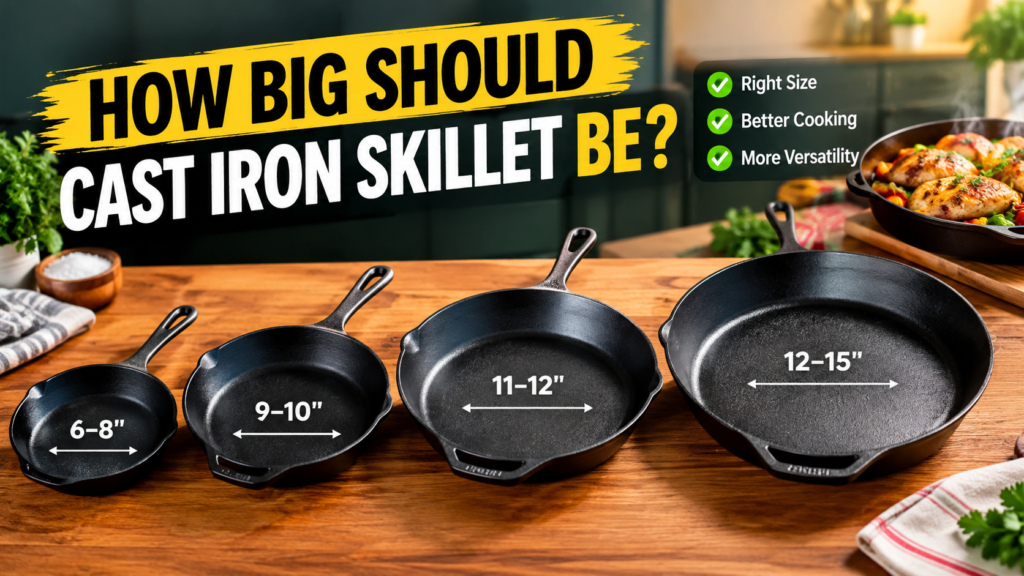
Quick Answer: For most households, a 10- to 12-inch cast iron skillet is the best all-purpose size. Choose 8 inches for one or two small portions, 10 inches for everyday meals for two, and 12 inches for families, searing, and one-pan dinners. Check that it fits your burner, oven, and storage space.
Standing in front of skillets labeled 8, 10, 12, and 15 inches can feel confusing. If you are wondering how big should cast iron skillet be, the answer depends on who you feed, what you cook, and what your stove, oven, and cabinets can handle. Cast iron is heavy and can last for years, so size matters more than with lighter pans. This guide helps you compare sizes and choose with confidence.
Kitchen TipsCookwareHome CookingCast Iron Care
This article is for general educational and buying-guidance purposes only. It does not replace the manufacturer’s official manual, food safety guidance, or professional advice. Materials, specifications, and care instructions can vary by product and should be confirmed with the manufacturer before purchase or use. For product defects, suspected food-safety issues, or injuries such as burns or cuts, contact the manufacturer, a qualified professional, or seek medical help as needed.
What Cast Iron Skillet Sizes Really Mean
Skillet sizes usually describe the width across the top rim, in inches. The flat cooking base inside is smaller because the sides slope inward, so a 12-inch pan may offer noticeably less usable surface. Depth, weight, and handle length also change how a pan feels, and they vary by brand and model.
Note: Check whether a listing shows the top diameter, the base diameter, or both. Brands measure differently, so two 10-inch pans may not cook alike.
Cast Iron Skillet Size Comparison
Use this table as a general guide, not a promise for every brand.
How Big Should Cast Iron Skillet Be for Your Household?
Start with how many people you feed on a normal weeknight. Food needs space to brown. When pieces crowd together, they release steam, and the surface turns pale and soft instead of crisp.
Choose an 8-inch skillet if you cook for one and make eggs or small sides. Choose a 10-inch skillet if you cook for two and want one pan for most meals. Choose a 12-inch skillet if you feed three or four people or sear steaks. Avoid going bigger than 12 inches first if weight or storage worries you.
Beginners often ask how big should cast iron skillet be when they plan to buy only one pan. Many home cooks find 10 or 12 inches the most flexible, and experienced cooks often own both.
Tip: When torn between two sizes, think about your biggest regular meal, not your smallest. A pan that fits that meal is easier to live with than one that forces constant batches.
Size-Picking Flow
This practical guide turns the decision into four quick checks.
Count your usual servings
Check your burner width
Confirm oven and cabinet fit
Pick the smallest size that works
The last step says smallest size that works. A smaller pan is lighter, heats faster, and stores more easily, so only go bigger when your regular meals need it.
Match the Skillet to Your Stove, Oven, and Cabinet
A size that looks perfect on paper can disappoint in a real kitchen. Cast iron heats slowly and holds heat well, so a pan much wider than your burner may have a hot center and cooler edges. Preheat gradually and rotate the pan if browning looks uneven.
Oven use makes how big should cast iron skillet be a practical question. Cast iron is often used for cornbread, roasted chicken pieces, and frittatas. Measure your rack space and leave room for the handle, because a 15-inch pan can be tight in a smaller oven.
On glass or ceramic cooktops, read the cooktop manual before using heavy cast iron, since sliding it may scratch the surface. Induction cooktops generally work with magnetic cookware, but confirm with the cooktop maker.
Cooktop, Oven, and Storage Fit
Safety Note: Cast iron handles get very hot on the stove and in the oven. Use dry oven mitts, never wet towels, and keep children and pets away from hot pans.
Weight, Handle, and Comfort
Cast iron is much heavier than aluminum or stainless pans, and weight climbs quickly with size. Check the listed weight instead of guessing, since it varies by brand. Weight matters when you move a hot pan to the oven, pour off grease, or wash it.
To test comfort, carry a loaded grocery bag in one hand for a few steps. A hot skillet full of food weighs more than the empty pan, so leave yourself a margin.
Warning: Never lift a large skillet one-handed when it holds hot oil or sauce. Clear a landing spot, use both hands, and seek medical help right away for serious burns.
Size Decision Priorities
This chart is a practical guide, not scientific data. It shows typical routine priority when choosing a size.
Typical routine priority
Servings and fit usually come first. Special uses matter, but they rarely justify a pan that is hard to lift or store.
How to Measure a Skillet Before You Buy
Settling how big should cast iron skillet be gets easier when you measure first.
- Measure the rim. Lay a ruler across the widest point, not counting the handle.
- Measure the base. This flat circle is where most food actually sits.
- Measure your burner. Compare its width with the pan base.
- Check the oven and cabinet. Note rack space, handle length, and shelf height.
- Compare with the listing. If numbers differ, ask the manufacturer.
Problem vs Likely Cause
Size mistakes show up in everyday cooking. This table links common problems to likely causes.
Crowded pans can also cook unevenly, so use a food thermometer and follow the safe minimum temperatures on FoodSafety.gov.
Is This Size Right for You?
Follow this path when you are unsure about a skillet you own or plan to buy.
No: choose a smaller pan or one with a helper handle.
No: cook in batches or size up.
No: pick a smaller size or check the manuals.
If any answer is no, fix that problem before buying. Comfort and fit usually matter more than extra cooking space.
Size-Smart Care Checklist
Bigger pans need a few extra habits. Use this checklist after every use.
✓Let the pan cool before washing, then dry it fully
✓Store large pans on a low, sturdy shelf
✓Place a paper towel between stacked pans
✓Check the base for cracks or wobble
✓Follow the manufacturer’s care and oiling steps
Safe vs Risky Skillet Habits
Heavy cookware rewards careful habits.
Quick Size Fit Dashboard
Here is a fast look at how each common size tends to fit daily cooking.
Light and quick to heat. Good for solo cooks and small sides.
A balanced everyday size. Suits two-person meals and many recipes.
Roomy for steaks and family meals. Heavier, so check storage and lifting comfort.
Made for big batches and entertaining. Needs a wide burner, a large oven, and a secure grip.
Most households land on the middle two cards. Pick a larger pan only when you regularly cook for a crowd.
Sizing Mistakes and Better Choices
These mistakes are easy to avoid.
When to Contact the Manufacturer or a Professional: Contact the maker if the pan arrives with the wrong dimensions, a warped base, or any cracks, and do not keep using a cracked skillet. For burns, fire, or suspected food-safety problems, get medical or emergency help, and review guidance from the CPSC.
This article may contain affiliate links. If you buy through these links, we may earn a small commission at no extra cost to you. We only mention products that fit the topic and recommend checking current specs and care instructions directly with the manufacturer.
Skillet Sizes Worth Considering
10-Inch Cast Iron Skillet
A 10-inch pan can make daily cooking easier for one or two people. Compare current dimensions and care instructions before buying.
12-Inch Cast Iron Skillet
Many home cooks find a 12-inch pan convenient for steaks and family meals. Check weight, handle design, and oven fit first.
Frequently Asked Questions
How big should cast iron skillet be for two people?
A 10-inch skillet is a common choice for two people. It gives enough room for two portions to brown without crowding. If you often cook steaks or large sides, a 12-inch skillet may feel roomier.
What is the best all-purpose cast iron skillet size?
A 10- or 12-inch skillet is the most common all-purpose choice. Ten inches suits smaller households, while 12 inches suits families and larger batches. Choose the size you can lift comfortably.
Is a 12-inch cast iron skillet too big for one person?
It can be, because the extra weight and surface may be more than you need for small portions. If you like leftovers or steak, 12 inches can still work. Otherwise 8 or 10 inches is often easier.
Does cast iron skillet size include the handle?
Usually no. Sizes are commonly listed across the top rim, but brands differ. Check the listed dimensions and ask the manufacturer if the numbers are unclear.
Will a large cast iron skillet fit in a standard oven?
Many do, but check your rack space and handle length first. A 15-inch pan may be tight in a smaller oven, and a crowded oven can cook unevenly.
Should I buy one skillet size or several?
One 10- or 12-inch skillet is enough to start. Many home cooks add a second size later, once they know which meals they cook most.
Final Thoughts
The best skillet is the one you will actually use. For most homes, a 10- or 12-inch pan balances space, weight, and versatility. Before you buy, measure your burner, oven, and storage, and follow the manufacturer’s instructions and care guidance. Follow food-safety guidance while cooking, and seek professional or medical help for cracks, defects, or injuries. Remember that how big should cast iron skillet be comes down to your meals, your kitchen, and your comfort.
