
By Michael Hayes
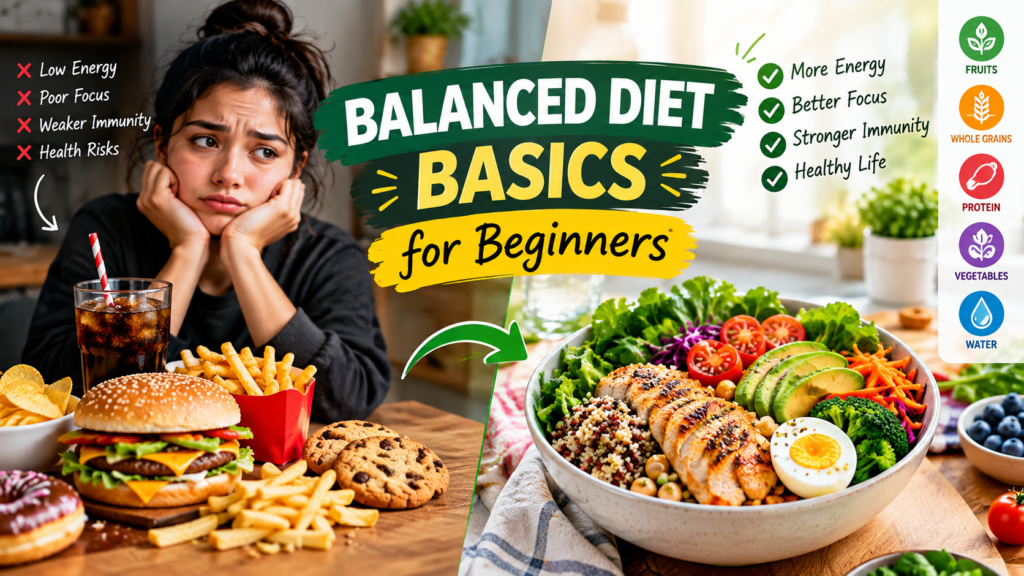
Quick Answer: A balanced diet for beginners means eating a mix of vegetables, fruits, whole grains, protein foods, and dairy or fortified alternatives across the day, in sensible portions. Build most meals on one plate, cook simply, and keep staples stocked so good choices stay easy.
A Simple Place to Start
Many new cooks hear “eat balanced” and still wonder what that looks like on a real plate. This guide explains balanced diet basics for beginners through everyday kitchen skills: building a plate, stocking a pantry, picking simple cooking methods, and storing food safely. You will learn what each food group adds to a meal, how to portion without stress, and which mistakes to skip.
This article is for general educational and buying-guidance purposes only. It does not replace the manufacturer’s official manual, food safety guidance, or professional advice. Materials, specifications, and care instructions can vary by product and should be confirmed with the manufacturer before purchase or use. For product defects, suspected food-safety issues, or injuries such as burns or cuts, contact the manufacturer, a qualified professional, or seek medical help as needed.
What a Balanced Diet Means in a Home Kitchen
A balanced diet means eating a variety of foods from the main food groups, so your meals bring different nutrients across the day and week. Think in patterns, not perfect meals. A great dinner followed by a simple lunch the next day still fits the pattern. U.S. dietary guidance, such as the materials shared by the USDA, groups foods into vegetables, fruits, grains, protein foods, and dairy or fortified alternatives.
In a real kitchen, balance shows up as three habits: variety, sensible portions, and simple preparation. Choose this approach if you want a starting point that needs no apps or math: one vegetable, one protein, one grain or starchy food, and a little healthy fat per meal.
Note: Needs differ by age, activity, culture, and health. This guide covers general kitchen habits, not personal nutrition plans.
Balanced Diet Basics for Beginners: The Five Food Groups
Each group plays a different role on the plate. Knowing the role helps you swap foods without losing balance.
Food Groups at a Glance
How to Build a Balanced Plate Step by Step
The plate method turns balanced diet basics for beginners into one repeatable routine. Here is a quick picture of the flow before you cook.
Plate-building flow
Half the plate
About a quarter
About a quarter
Small healthy fat
Starting with vegetables keeps the plate from becoming all starch or all meat. Treat the proportions as a guide, not a strict rule.
- Pick the vegetable first. Fresh, frozen, or canned all work. Rinse canned ones if you want less sodium.
- Add a protein. Beans, eggs, fish, poultry, tofu, or lean meat all fit.
- Add a grain or starchy food. Choose whole grains when you can.
- Add a little healthy fat. Olive oil, nuts, or avocado work well.
- Season for flavor. Herbs, citrus, garlic, and spices make simple food enjoyable.
- Check the plate. Look for color, texture, and a good mix before you serve.
A realistic example: Monday dinner could be sheet-pan chicken with broccoli and carrots, plus a scoop of brown rice and a squeeze of lemon. Tuesday could be bean and vegetable chili with whole-grain toast. Both meals use the same plate pattern with different flavors, which keeps cooking from feeling repetitive.
Tip: Frozen vegetables are already washed and cut, and they keep for weeks. Many home cooks find them convenient for busy nights.
Stock a Pantry That Makes Balance Easy
A flexible pantry is the fastest way to practice balanced diet basics for beginners on a tired weeknight. These four zones cover most needs. The FDA also offers guidance on reading Nutrition Facts labels.
Pantry shelf
Keep oats, brown rice, whole-wheat pasta, canned beans, and canned tomatoes. These shelf-stable items build most meals quickly.
Refrigerator
Stock eggs, yogurt, leafy greens, and carrots. Keep raw meat on the lowest shelf so juices cannot drip onto ready-to-eat foods.
Freezer
Frozen vegetables, fruit, and fish fillets help when fresh food runs out. Label bags with the date so older items get used first.
Flavor shelf
Keep a few oils, vinegar, dried herbs, and spices. Good seasoning makes beans and vegetables something you actually want to eat.
Cooking Methods That Keep Meals Simple
Method changes the feel of a meal as much as the ingredients do. Roasting, steaming, sautéing, simmering, and grilling are all beginner friendly. Choose roasting if you want hands-off vegetables. Choose steaming for quick, plain sides. Avoid deep frying as an everyday habit if you want lighter meals. Check the manufacturer’s guidance if you use an air fryer or pressure cooker.
Warning: Hot oil and steam can burn quickly. Turn pot handles inward, lift lids away from your face, and keep water away from hot oil. If you have food allergies, read every ingredient label, every time.
A Weekly Routine You Can Actually Follow
A short weekly routine matters more than a perfect menu. This checklist shows what many home cooks find manageable.
Weekly kitchen checklist
Four small tasks are easier to keep than a full meal-prep day. Skip any step that does not fit your week.
The next chart shows where beginners can focus first.
Practical guide: Typical routine priority
Relative guide only, not scientific data.
Habits beat fancy cooking. Master vegetables, protein, and grains before worrying about elaborate recipes.
Food Safety When You Cook and Store Meals
Balanced meals only help if the food is safe. Refrigerate perishable food within two hours, or within one hour when the room is above 90°F, and keep your refrigerator at 40°F or below. FoodSafety.gov explains safe temperatures in detail.
Safe Practice vs Risky Practice
When you are unsure about a leftover, this path can help you decide.
Leftover decision path
Discard it.
Discard it.
Reheat to 165°F.
When in doubt, throw it out.
The two discard paths protect you from the most common mistakes. Only food that passes both checks should be reheated.
Accuracy and Safety Note: Time and temperature guidance changes by food type. Confirm details with official sources, and check your appliance manual for correct refrigerator and cooking settings.
Common Problems and What Usually Causes Them
Problem vs Likely Cause
Kitchen Tools That Make Balance Easier
You do not need special gear. A few basic tools can make cooking vegetables, proteins, and grains smoother.
Tool Fit Guide
This dashboard shows how often each tool tends to matter in a beginner kitchen.
Tool fit dashboard
Start with the knife, pan, and containers. Add the scale later only if you want more precision.
Beginner Mistakes to Avoid
Most early slip-ups are small and easy to fix. Knowing them helps you apply balanced diet basics for beginners with more confidence.
Mistake vs Better Choice
When to Contact a Professional or Manufacturer: Talk with a doctor or registered dietitian about medical conditions, allergies, pregnancy, or special needs. Contact the manufacturer for appliance faults, damaged cords, or unclear care steps. Seek medical help for serious burns, deep cuts, or allergic reactions.
Frequently Asked Questions
What are balanced diet basics for beginners?
They are simple habits: eat a variety of foods from all main food groups, keep portions sensible, and cook with simple methods. Most beginners start with the plate method.
How much of my plate should be vegetables?
A common starting point is about half the plate, with protein and grains each filling roughly a quarter. Adjust based on your needs and appetite.
Do I need to count calories to eat a balanced diet?
Not to get started. Variety and the plate method are enough for most beginners. A registered dietitian can help with personal targets.
Are frozen vegetables a good choice?
Yes, they can be a convenient option. They are washed and cut, and they last longer than fresh. Check labels for added sauces or salt.
How long can cooked leftovers stay in the fridge?
Generally three to four days at 40°F or below. Reheat leftovers to 165°F before eating, and discard food left out too long.
Can I eat balanced on a budget?
Yes. Beans, eggs, oats, frozen vegetables, and seasonal produce are often affordable and fit easily into balanced meals.
Can I prep balanced meals ahead for the week?
Yes. Cook grains and proteins ahead, wash vegetables, and store everything in labeled airtight containers. Plan to eat prepped meals within three to four days.
Final Thoughts
Balanced eating grows from small, repeatable habits. Build your plate, keep staples stocked, cook simply, and store leftovers safely. Check manufacturer instructions for any appliance you use, follow food-safety guidance, and speak with a doctor or registered dietitian for personal needs or serious concerns. Use balanced diet basics for beginners as a flexible starting point, then adjust as your skills grow.
