
By Michael Hayes
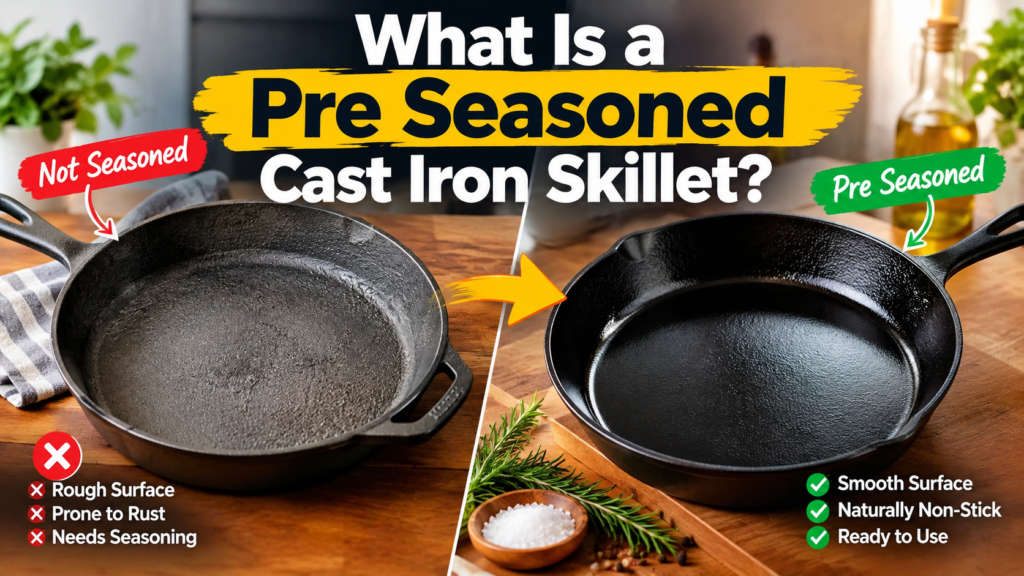
Quick Answer: What is a pre seasoned cast iron skillet? It is a cast iron pan that the maker has already coated with baked-on oil, so it is ready to cook in right away. The layer protects the iron, but it still needs gentle care and thin oil after cleaning.
Cast iron has a reputation for being hard to start with. A pre-seasoned skillet removes the first big hurdle, because the factory has already done the seasoning step. This guide explains what that coating is, how to care for it, and what to check before you buy.
Trust Note: This article is for general educational and buying-guidance purposes only. It does not replace the manufacturer’s official manual, food safety guidance, or professional advice. Materials, specifications, and care instructions can vary by product and should be confirmed with the manufacturer before purchase or use. For product defects, suspected food-safety issues, or injuries such as burns or cuts, contact the manufacturer, a qualified professional, or seek medical help as needed.
What Is a Pre Seasoned Cast Iron Skillet?
A pre-seasoned skillet is a cast iron pan that arrives with a thin layer of oil already baked onto the metal. This layer is called seasoning. It is not a spice or a flavor. It is a hard, dark coating formed when oil is heated until it bonds to the surface.
Bare cast iron has a rough surface and can rust fast. Seasoning helps fill tiny pits, protects the iron from moisture, and gives food a smoother surface to release from. Many home cooks find a seasoned pan easier to use, though results vary by pan and by how it is cared for.
Beginner check: Look for the words “pre-seasoned” on the label or product page. The pan should look dark and slightly satin, not bright gray.
Note: “Pre-seasoned” describes a starting coating, not a permanent finish. Seasoning builds up and can wear down with use and cleaning.
Pre-Seasoned vs Unseasoned vs Enameled Cast Iron
| Cast Iron Type | Ready to Cook? | Care Level | Choose This If… |
|---|---|---|---|
| Pre-seasoned | Usually, after a wash and dry | Moderate | You want an easy start |
| Unseasoned | No, it needs your own seasoning | Higher | You enjoy hands-on pan care |
| Enameled | Yes, no seasoning needed | Lower | You prefer simpler cleanup |
How Factory Seasoning Works
Makers usually spread a thin film of food-safe oil over the pan, then heat it so the oil hardens. Repeating this builds a tougher layer. Exact oils and methods differ by brand, so check the manufacturer’s notes for your pan.
Seasoning does not make cast iron behave like a coated nonstick pan. Eggs and fish can still stick, especially when the pan is cold or the layer is new. Think of it as a surface that improves with regular use.
Example: After cooking bacon, wipe the pan clean and add a thin film of oil. Over a few weeks of use, the surface often looks darker and feels smoother.
Here is a simple first-use routine for a new pan.
First-use routine
Step 1
Rinse and wipe
Step 2
Dry completely
Step 3
Rub on thin oil
Step 4
Heat gently, then cook
Read the flow from step 1 to step 4. Drying and thin oil protect the surface most. Always check your pan’s manual, because some makers suggest a different first step.
Tip: Start with foods that have some fat, like bacon, sausage, or burgers. They are forgiving while the surface settles in.
Who Should Choose One
Choose this if you want to start cooking soon and are willing to do light upkeep. Avoid this if you want a pan you can toss in the dishwasher or leave soaking overnight. Check the manufacturer’s guidance if you cook on a glass-top stove or find heavy pans hard to lift.
Many beginners search for what is a pre seasoned cast iron skillet before buying a first pan. The short answer is that it is a starter-ready option, not a no-care one.
Common Skillet Problems and Likely Causes
| Problem | Likely Cause | What to Try |
|---|---|---|
| Food sticks | Cold pan, little fat, or thin seasoning | Preheat gently and add some oil |
| Sticky surface | Too much oil left on the pan | Wipe off extra, then heat the pan |
| Orange spots | Moisture left on the iron | Scrub, dry well, rub on thin oil |
| Dull, patchy look | Wear from scrubbing or acidic foods | Clean gently and re-oil after drying |
Use this quick path when your pan looks or feels off.
Troubleshooting path
Orange spots?
Scrub gently, dry, add thin oil.
Surface sticky?
Wipe off extra oil, then heat.
Food sticking?
Preheat longer and add fat.
Flaking or deep rust?
Stop and contact the maker.
Start at the left and stop at the first match. Most surface issues come from moisture or too much oil. Flaking, cracks, or warping are reasons to ask the manufacturer.
Warning: Cast iron handles and pan sides stay very hot. Use dry oven mitts, never wet towels, and keep the pan away from children. For serious burns, get medical help right away.
How to Use and Care for Your Skillet Step by Step
Once you understand what is a pre seasoned cast iron skillet, the care routine makes more sense. You are protecting a coating, not just washing a pan.
Wash by hand
Rinse with warm water and a soft brush or sponge. A little mild soap is fine for many pans, but follow your manufacturer’s advice.
Dry right away
Wipe the pan, then warm it briefly on low heat so no moisture is left on the iron.
Add thin oil
Rub a very thin layer of cooking oil inside the pan. Wipe off the extra until the surface looks almost dry.
Preheat gently
Heat the pan for a few minutes on low to medium before adding food. Sudden high heat can stress the pan.
Store it dry
Keep it in a dry spot. If you stack pans, place a paper towel between them.
Safe Habits vs Risky Habits
| Safer Habit | Riskier Habit | Why It Matters |
|---|---|---|
| Dry the pan after washing | Leaving it wet in the sink | Moisture can lead to rust |
| Let the pan cool first | Pouring cold water into a hot pan | Sudden changes may harm the pan and cause steam burns |
| Check meat with a food thermometer | Judging doneness by color alone | Color can mislead you |
| Use a soft brush | Hard scrubbing with harsh tools | Rough scrubbing can wear the coating |
Keep this checklist near your stove after each use.
After-cooking checklist
Most of these steps take only a few minutes. If you must rush, never skip drying, because moisture is the usual cause of rust.
Safety Note: Brands and finishes differ, and some seasoning methods are not meant for every cooktop. Confirm heat limits and cleaning rules in the official manual. For safe cooking temperatures, see USDA and FoodSafety.gov.
What to Check Before You Buy
A good listing shows the size, weight, material, and care steps. Look for clear text about the seasoning. Be careful with promises like “never sticks” or “lasts forever,” because no cookware can guarantee that.
Experienced-cook observation: Heavier pans hold heat well but are harder to lift. Beginner check: If a pan feels too heavy to move with one hand, a smaller size may suit you better.
Cooktop and Use Fit
| Cooktop or Use | General Fit | What to Check |
|---|---|---|
| Gas stove | Commonly used | Start on low to medium heat |
| Electric coil | Commonly used | The pan should sit flat |
| Glass-top | Use with care | Heavy, rough bottoms can scratch; read the cooktop manual |
| Induction | Often works | Confirm compatibility with the maker |
| Oven | Often oven-safe | Check temperature limits and handle materials |
This dashboard sums up how this pan type fits daily cooking.
Skillet fit dashboard
Weight
Heavy for most home cooks
Heat holding
Often steady once hot
Care effort
Moderate, but quick
Learning curve
Beginner-friendly start
Use this as a general guide, not a test result. Weight and care are the main trade-offs. Your own stove and habits matter most.
Buying Mistakes vs Better Choices
| Common Mistake | Better Choice |
|---|---|
| Buying by price alone | Compare weight, finish, size, and care notes |
| Picking a size too big for your burner | Match the pan to your stove and storage space |
| Expecting nonstick results on day one | Plan for oil, preheating, and practice |
| Trusting vague listing claims | Read the manufacturer’s page and manual |
This chart shows which routine habits usually deserve the most attention.
Practical guide: Typical routine priority
Dry fully
Thin oil film
Gentle preheat
Avoid long soaking
Re-oil when dull
These bars are a practical guide, not lab data. Drying and a thin oil film take little effort but protect the pan most. Relative difficulty is low to moderate for all five habits.
Contact the Manufacturer: Reach out if your pan arrives rusty, cracked, or warped, the coating flakes badly, or the handle loosens. For recalls or safety reports, visit CPSC. For burns or deep cuts, seek medical help.
Helpful Products to Consider
This article may contain affiliate links. If you buy through these links, we may earn a small commission at no extra cost to you. We only mention products that fit the topic and recommend checking current specs and care instructions directly with the manufacturer.
Pre-Seasoned Cast Iron Skillet
A pre-seasoned skillet is the main item for this topic. Compare size, weight, and care notes on each listing before you choose.
Cast Iron Cleaning Brush and Scraper
A soft brush and a scraper can help lift food bits without harsh scrubbing. Read each tool’s description to make sure it suits your pan.
Frequently Asked Questions
What is a pre seasoned cast iron skillet?
It is a cast iron pan that comes with a baked-on oil coating from the factory. You can usually cook in it after washing and drying, but it still needs regular care.
Do I need to season a pre-seasoned skillet again?
Not right away, but many cooks add thin layers over time. If the pan looks dull or food sticks more, a light re-oiling may help. Follow the manufacturer’s guidance.
Is a pre-seasoned skillet nonstick?
Not like a coated nonstick pan. Food may release better as the seasoning builds, but eggs and fish can still stick at first.
Can I use soap on a pre-seasoned cast iron skillet?
A little mild soap is fine for many pans, but check the maker’s care guide. Rinse well, dry right away, and add a thin film of oil.
Can I put a pre-seasoned skillet in the dishwasher?
Most makers advise against it, because water and harsh detergent can strip seasoning and cause rust. Hand washing is usually safer.
What should I do if my skillet rusts?
Scrub off the rust gently, rinse, dry fully, and rub on a thin layer of oil. If rust is deep or the pan is damaged, contact the manufacturer.
Final Thoughts
Now that you know what is a pre seasoned cast iron skillet, you can choose and care for one with more confidence. Check the manufacturer’s instructions, confirm care and cooktop needs, and follow food-safety guidance when cooking. If a pan is defective or you get burned, contact the maker or seek medical help.
