
By Michael Hayes
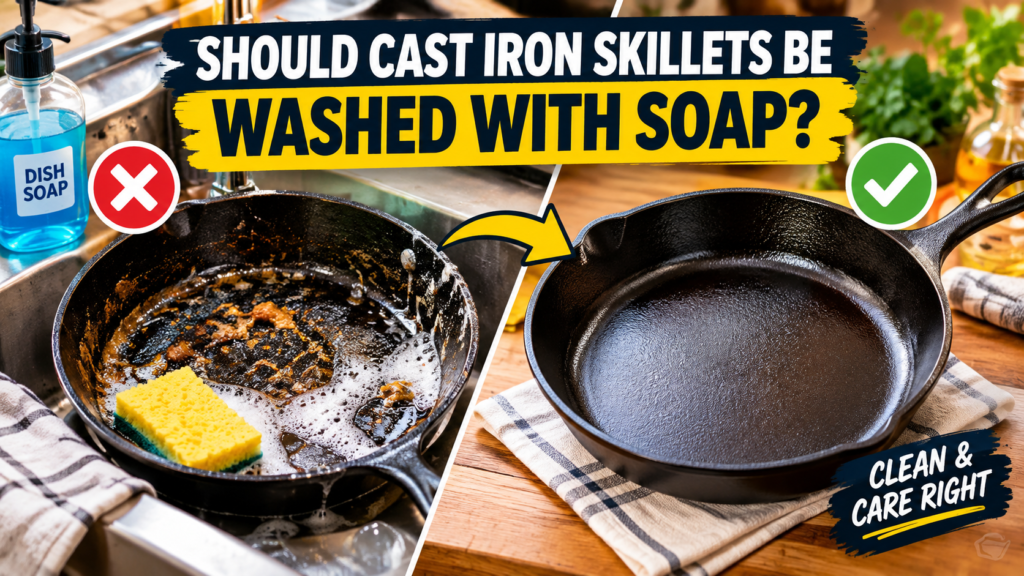
Quick Answer: Should cast iron skillets be washed with soap? Usually, yes. A little mild dish soap, a quick scrub, and full drying are generally fine for a seasoned pan. Skip soaking, harsh cleaners, and the dishwasher, and check your manufacturer’s care guide.
Washing Cast Iron With Soap: What Actually Matters
Many cooks still ask, should cast iron skillets be washed with soap, or will it ruin the pan? Older advice said never, but today’s milder dish soaps changed the picture. Still, cast iron is bare metal with a thin, cooked-on oil coating, so a few habits really do matter. In this guide, you will learn when soap is fine, how to wash a skillet step by step, what to avoid, and how to fix sticky or rusty spots.
Topics: Kitchen Tips • Cookware • Cast Iron Care • Home Cooking
This article is for general educational and buying-guidance purposes only. It does not replace the manufacturer’s official manual, food safety guidance, or professional advice. Materials, specifications, and care instructions can vary by product and should be confirmed with the manufacturer before purchase or use. For product defects, suspected food-safety issues, or injuries such as burns or cuts, contact the manufacturer, a qualified professional, or seek medical help as needed.
Why Cast Iron Care Advice Feels So Confusing
Cast iron has been used for generations, and much of the care advice was passed along by word of mouth. Older soaps were often stronger and could dull a pan’s surface, so the rule of “no soap ever” stuck around. Today’s dish soaps are generally milder, which is why advice has shifted. The details still matter, though, because the pan’s protection depends on a thin layer of baked-on oil.
How Seasoning Protects Your Skillet
Seasoning is oil that has been heated until it bonds to the iron and forms a slick coating. It helps food release and can slow rust. A well-built coating is not wiped away by one gentle wash, but heavy scrubbing, long soaking, and strong chemicals can wear it down. Think of it like the finish on a wooden table: gentle, regular care keeps it going.
Soap vs Hot Water vs Salt Scrub
So, Should Cast Iron Skillets Be Washed With Soap?
For most seasoned pans, a small amount of mild dish soap is generally fine when you wash quickly and dry right away. Many manufacturers now say the same, but their wording differs, so read your pan’s care sheet. The goal is to clean without soaking, scraping off the seasoning, or leaving water behind.
Choose soap if…
Your pan is greasy, smells off, or just cooked raw meat or fish. Mild soap helps lift fats that water alone may leave behind.
Skip soap if…
Only a few crumbs and a light oil film remain. Hot water and a stiff brush can handle that. Also skip it if your manufacturer says so.
Note: Enameled cast iron and vintage pans can have different care rules. Check the manufacturer’s guidance before using soap or any scrubber.
Step-by-Step: How to Wash Cast Iron With Soap
Follow these steps after cooking for a clean, protected pan.
- Let it cool. Never put a hot pan under cold water, since sudden temperature changes may crack cast iron.
- Scrape out food. Use a spatula or pan scraper to remove loose bits.
- Rinse and add soap. Use warm water and a pea-sized drop of mild dish soap.
- Scrub gently. A brush, sponge, or chainmail scrubber works. Use light pressure on seasoned areas.
- Rinse and dry fully. Towel-dry right away, then warm the pan on low heat for a minute or two to drive off moisture.
- Oil lightly. Rub on a very thin layer of cooking oil and wipe off the extra until the surface looks satin, not wet.
Tip: Too much oil is a common reason pans turn sticky. If you can see oil pooling, wipe more away.
Here is the routine at a glance.
Wait until safe
Mild soap
Towel, then heat
Thin layer
Drying and oiling come after the wash. Those last two steps protect the pan between uses.
Troubleshooting Sticky, Rusty, or Dull Pans
Problem vs Likely Cause
Use this path when you are unsure what to do next.
Most problems come down to washing, drying, and a thin oil layer. If damage looks deep, ask the manufacturer.
Safe Habits vs Risky Habits
The real question is not only should cast iron skillets be washed with soap, but how you do it. Small habits decide whether the pan stays smooth for years.
Recommended Practice vs Risky Practice
Warning: Do not use oven cleaner or strong lye-based products on a skillet unless the manufacturer says to. They can strip seasoning and are not meant for cookware that touches food.
Food Safety Basics for Cast Iron
Many people searching “should cast iron skillets be washed with soap” are really asking about food safety. Cast iron is sturdy, but it is not self-cleaning. Raw chicken, fish, and eggs can leave residue, so a proper wash matters. Use clean towels and sponges, and keep raw foods away from ready-to-eat items. For official handling guidance, visit FoodSafety.gov.
Safety Note: Hot cast iron can cause serious burns. Use dry oven mitts, turn handles inward, and let pans cool before washing. For a serious burn, seek medical help right away.
Use this quick checklist after cooking.
If you can check every box, the pan is ready to store until the next meal.
Pan Types and Cleaning Tools
Soap Fit by Pan Type
The right tool depends on the job in front of you.
Gentle tools handle most jobs. Save stronger scrubbing for rust or heavy buildup.
Common Mistakes and Better Choices
Mistake vs Better Choice
This chart is a practical guide, not lab data.
Drying ranks first because lingering water is a common reason rust appears.
Contact the Manufacturer or a Professional: Reach out if your pan has cracks, flaking enamel, or unclear care instructions. For injuries such as burns, seek medical help. You can learn about reporting unsafe products at CPSC.
Helpful Tools for Cast Iron Cleanup
This article may contain affiliate links. If you buy through these links, we may earn a small commission at no extra cost to you. We only mention products that fit the topic and recommend checking current specs and care instructions directly with the manufacturer.
Cast Iron Chainmail Scrubber
Can help lift stuck-on food without much effort. Many home cooks find it convenient for tough spots.
Stiff Nylon Dish Brush
Can make daily washing easier. Many home cooks find a sturdy brush simple to rinse and reuse.
Frequently Asked Questions
Should cast iron skillets be washed with soap?
Usually, yes. A small amount of mild dish soap, a quick wash, and full drying are generally fine for a seasoned pan. Check your manufacturer’s care guide.
Will soap remove cast iron seasoning?
Modern mild soap usually does not strip a well-bonded coating when used briefly. Heavy scrubbing, soaking, and strong cleaners are bigger risks.
Can I put a cast iron skillet in the dishwasher?
This is generally not recommended. Long wet cycles and strong detergent can cause rust and wear down the seasoning.
How do I dry cast iron after washing?
Towel-dry right away, then warm the pan on low heat for a minute or two. Finish with a very thin coat of oil.
What should I do if my cast iron skillet is rusty?
Scrub off the rust with a brush or scrub pad, wash, dry fully, and oil lightly. Re-season if the surface looks bare.
Is it safe to cook in a skillet after washing it with soap?
Yes, if you rinse well and dry the pan. Rinsing removes soap residue, and warming the pan helps drive off moisture.
Can I use soap on enameled cast iron?
Often yes, but enameled pieces have different care rules. Check the manufacturer’s guide before using abrasive scrubbers.
Final Thoughts
Soap is not the enemy of cast iron; neglect is. A quick wash with mild soap, thorough drying, and a thin oil layer fit most home kitchens. Check your manufacturer’s instructions, follow food-safety guidance, and seek help for burns or damaged pans. So, should cast iron skillets be washed with soap? For most seasoned pans, yes, as long as you keep it gentle.
