
By Olivia Bennett
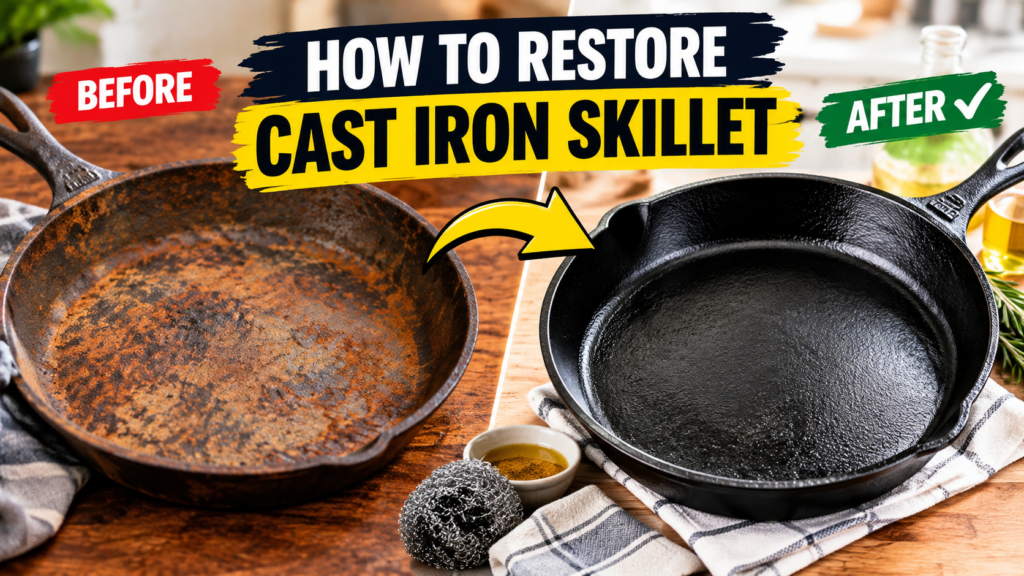
Quick Answer: To restore cast iron, scrub off rust and old buildup, soak briefly in vinegar and water if needed, rinse, dry completely, then rub on a thin coat of oil and bake the pan upside down. Repeat the oil-and-bake step for a smoother surface.
A rusty, sticky, or flaking skillet is not always a lost cause. Many old pans can return to everyday use with some scrubbing, careful drying, and fresh oil. This guide explains how to restore cast iron skillet pans safely, which tools help, and which mistakes can damage the iron. You will learn how to judge damage, remove rust, rebuild the seasoning, and keep the pan in good shape.
Kitchen TipsCookwareCast Iron CareHome Cooking
This article is for general educational and buying-guidance purposes only. It does not replace the manufacturer’s official manual, food safety guidance, or professional advice. Materials, specifications, and care instructions can vary by product and should be confirmed with the manufacturer before purchase or use. For product defects, suspected food-safety issues, or injuries such as burns or cuts, contact the manufacturer, a qualified professional, or seek medical help as needed.
What Restoring a Cast Iron Skillet Really Means
Restoring means bringing a neglected pan back to a clean, dry, evenly oiled surface. It usually involves removing rust or heavy buildup, then building new seasoning. Seasoning is a thin, hardened layer of oil on the iron, and it gives a pan its smooth, dark finish.
Choose a full restoration if the pan has rust patches, a sticky film, or flaking black bits. Skip it if the pan only looks dull, because a normal wash and light oiling may be enough. Check the manufacturer’s guidance if your pan has a special coating.
Is Your Skillet Worth Saving?
Before you learn how to restore cast iron skillet pans, inspect the metal in good light. Surface rust, dull spots, and sticky residue are usually fixable. Deep cracks, a wobble on a flat counter, or heavy pitting are harder problems. Experienced cooks often run a fingertip across the cooking surface to feel for rough areas.
Restoration Methods Compared
The flow below shows the general order of the work.
Practical guide: restoration routine
Inspect
Scrub
Rinse and dry
Oil thinly
Bake and cool
Most mistakes happen when someone skips drying or oils too thickly. Follow the order and keep each coat thin.
Tools and Supplies You Need
Stiff Brush
A firm brush loosens food and light rust. Pick one that will not shed bristles into the pan.
Steel Wool or Chainmail
These help with stubborn rust and old buildup. Use steady pressure, then rinse away all loose rust.
White Vinegar and Water
A half-and-half mix is often used on rust. Keep the soak short and check it often.
Oil and a Lint-Free Cloth
Many home cooks use a neutral cooking oil. Wipe until the pan looks almost dry before baking.
How to Restore Cast Iron Skillet Step by Step
Work in a ventilated kitchen and wear gloves while scrubbing.
Tip: Choose thin coats over thick ones. Several light layers usually give a smoother, more even surface than one heavy coat.
Warning: Hot cast iron stays hot for a long time. Use dry oven mitts, never touch the handle without checking it, and keep a window open or the vent fan on because baking oil can smoke.
Problem vs Likely Cause
If your first attempt did not go perfectly, this table may help. People who try how to restore cast iron skillet steps for the first time often see these problems.
Use this simple path to decide what to do next.
Practical guide: what to do next
Scrub, dry, and re-oil.
Scrub or briefly soak, then re-season fully.
Stop heating it and consider replacing it.
Follow the manufacturer’s care guide instead.
Most pans land in the first two groups. Cracks matter most, because a cracked pan can break when heated.
Safety Notes Before You Heat the Pan
Safety Note: Do not cook on a pan with active rust or loose flaking bits. Wash and dry it fully first. For general kitchen and food-handling basics, see FoodSafety.gov.
Safer Practice vs Risky Practice
Use this checklist to keep the pan in shape once it is restored.
Practical guide: care checklist
☐ Rinse and scrub gently
☐ Dry fully on low heat
☐ Wipe on a few drops of oil
☐ Check for rust spots
☐ Re-oil and bake if dull
☐ Store in a dry cabinet
Drying and light oiling matter more than any special product. A few minutes after each meal protects hours of restoration work.
Note: Enameled cast iron and pre-seasoned pans from some brands have their own care rules. Do not use steel wool on enamel.
When to Contact a Professional or Manufacturer: Contact the maker if a new pan arrives cracked or warped, or if the handle loosens. If a pan breaks and causes injury, seek medical help for burns or cuts. You can also report product hazards to the U.S. Consumer Product Safety Commission.
Choosing Oil and Scrubbing Tools
Many beginners ask how to restore cast iron skillet pans without damaging them, and the right oil and scrubber help a lot. Always check the oil label for its smoke point and keep the oven temperature within what your oil and pan maker recommend.
Oil and Scrubber Fit
This dashboard matches tools to the level of damage.
Practical guide: tool fit
A scrub pad and oil are often enough. Skip the soak.
Use steel wool and a short vinegar soak. Re-season fully after.
Start with the gentlest option and move up only if the rust stays.
Common Mistakes and Better Choices
Mistake vs Better Choice
This bar chart shows rough habit priorities, not lab data.
Typical routine priority (practical guide, not scientific data)
Drying and thin coats lead the list because they prevent most repeat rust and stickiness.
Helpful Tools to Consider
This article may contain affiliate links. If you buy through these links, we may earn a small commission at no extra cost to you. We only mention products that fit the topic and recommend checking current specs and care instructions directly with the manufacturer.
Cast Iron Chainmail Scrubber
Many home cooks find this convenient for lifting stuck-on food. Use gentle pressure on fresh seasoning.
Heat-Resistant Oven Mitts
These can make handling a hot skillet during baking feel more secure. Check the temperature rating on the label.
Frequently Asked Questions
Is it safe to learn how to restore cast iron skillet pans at home?
Yes, for most bare cast iron pans. Use gloves, ventilate the kitchen, handle hot iron with mitts, and follow your oven manual.
Can I use steel wool on a cast iron skillet?
Yes, on bare iron with rust or heavy buildup. Rinse away loose dust, then dry and re-season. Avoid it on enameled pans.
How long can I soak a skillet in vinegar?
Keep it short and check about every 30 minutes. Long soaks can pit the iron, so remove the pan once the rust loosens.
What oil should I use to re-season?
Many home cooks use a neutral cooking oil in thin coats. Check the label for smoke point and wipe off the excess.
Is light rust on cast iron a big problem?
Usually not. Scrub it off, dry the pan, and re-season. Do not cook on a pan with active rust.
Can I restore an enameled cast iron pan the same way?
No. Enamel has a coating that can be damaged by harsh scrubbing. Follow the manufacturer’s care instructions.
When should I replace a cast iron skillet instead?
Consider replacing it if it is cracked, badly warped, or deeply pitted. Contact the manufacturer if a new pan arrives damaged.
Final Thoughts
Learning how to restore cast iron skillet pans takes patience, but the routine is simple: scrub, dry, oil thinly, and bake. Check the manufacturer’s instructions, confirm whether your pan is bare or coated, and follow basic food-safety guidance. If a pan is cracked or someone is burned or cut, contact the maker or seek professional or medical help.
