
By Michael Hayes
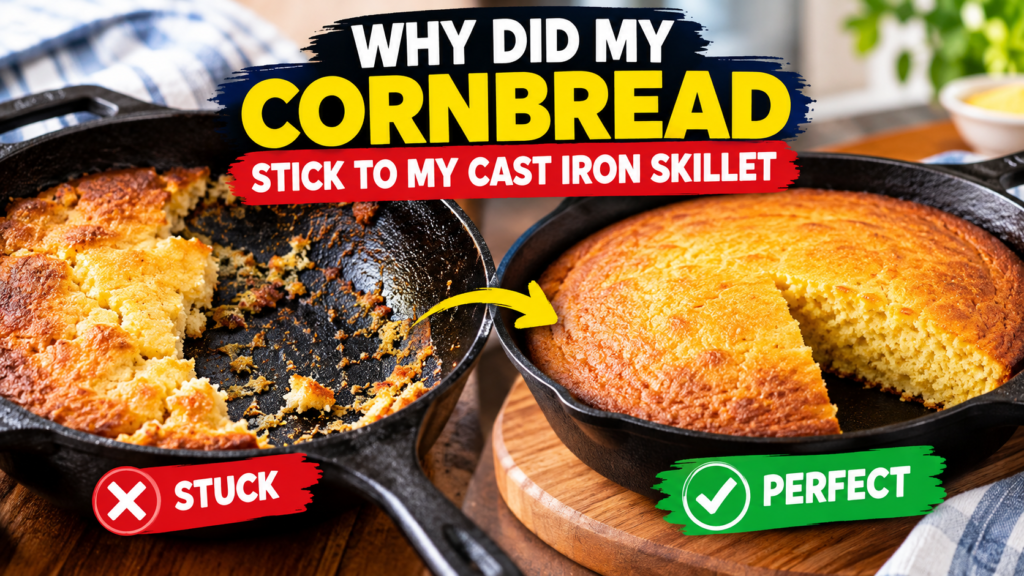
Quick Answer: Why did my cornbread stick to my cast iron skillet? Usually the pan was not hot enough, the fat was too thin, or the seasoning was weak. Preheat the skillet with oil, pour in batter so it sizzles, and rest the bread five minutes before loosening.
A stuck cornbread is frustrating, especially when the top looks perfect and the bottom stays glued to the pan. Heat, fat, seasoning, sugar, and timing all work together, so the cause is rarely just one thing.
In this guide, you will learn the most common causes, how to rescue a stuck pan of cornbread, and a simple routine for a clean release next time.
This article is for general educational and buying-guidance purposes only. It does not replace the manufacturer’s official manual, food safety guidance, or professional advice. Materials, specifications, and care instructions can vary by product and should be confirmed with the manufacturer before purchase or use. For product defects, suspected food-safety issues, or injuries such as burns or cuts, contact the manufacturer, a qualified professional, or seek medical help as needed.
Why Did My Cornbread Stick to My Cast Iron Skillet? The Short Version
Cornbread batter is full of starch, sugar, and proteins that bond to metal as they cook. Cast iron looks smooth, but its surface has tiny rough spots. Seasoning and hot fat fill those spots and form a barrier between batter and metal.
When the barrier is thin, or the pan is cold, the batter grips the surface before a crust forms. Choose to fix heat and fat first if you are unsure where to start, because those two changes solve most sticking problems.
Cornbread Pan Methods Compared
Check the Seasoning First
Seasoning is a thin, baked-on layer of oil that fills the small rough spots in the metal. It works like a natural non-stick surface, though not a perfect one. Patchy, dull, or tacky seasoning gives batter places to grab.
Look at the cooking surface before you bake. A smooth, dark, slightly glossy finish is a good sign. Bare gray spots, orange rust, or a sticky feel mean the pan needs work first. Experienced cooks often use a fried egg as a test, since eggs slide easily on well-seasoned iron. Choose to bake if the surface is smooth and slick. Avoid baking if you see rust or flaking, and check the manufacturer’s guidance for special finishes.
Note: A pre-seasoned skillet is a starting point, not a finished surface. Many new pans need repeated cooking with fat before baked batters release easily. Enameled cast iron is different, so follow the maker’s care instructions.
Here is how a well-run cornbread bake flows from start to finish.
Practical guide: Preheat-to-Release Flow
The sizzle in step three is your best live signal. If you do not hear it, the pan was probably too cool, and sticking becomes more likely.
Heat and Fat Matter Most
When batter hits a hot, oiled surface, the bottom sets and forms a crust right away. That crust is what lets cornbread release. Batter poured into a cold pan sits against the metal and slowly bonds to it.
Fat is the second factor. Bacon drippings, vegetable oil, shortening, or lard coat the surface. Butter adds flavor, but its milk solids can brown and cling, so many home cooks use neutral oil in the pan and keep butter in the batter. Picture a quick butter wipe in a cold pan: the edges brown, but the center bottom tears. Heating the pan with oil first usually solves it.
Sticking Problem vs Likely Cause
Warning: A preheated skillet and its handle stay extremely hot. Use dry oven mitts, and never pour water into hot oil. If the oil starts smoking heavily, turn off the heat and let it cool before continuing.
Tip: Swirl the oil so it climbs the sides, not just the center. When it shimmers, pour in the batter right away. Many home cooks find this one step prevents most edge sticking.
Sugar, Batter, and Timing
If you still wonder why did my cornbread stick to my cast iron skillet after fixing heat and fat, look at the recipe and your timing. Sweet recipes with extra sugar, honey, or syrup stick more because sugar caramelizes against hot metal. Low-fat batters made with skim milk and no added fat also grip the pan, so a tablespoon or two of melted fat in the batter can help.
Timing matters too. Steam collects under the bread as it sits, and cornbread left to cool fully in the pan can glue itself down. Choose to rest the bread briefly if it tears. Avoid pulling it out right away, since the crumb is still fragile.
If your cornbread still sticks, follow this decision path from top to bottom.
Practical guide: Troubleshooting Path
Work through only one change per bake. That way you learn which fix actually mattered for your pan and your recipe.
Safe Practice vs Risky Practice
Accuracy and Safety Note: Cornbread contains eggs and dairy in many recipes, so treat it as a perishable food. Cool it and refrigerate leftovers within about two hours, and see FoodSafety.gov for current storage guidance.
How to Bake Cornbread That Releases Cleanly
Follow these steps for a repeatable routine. Always adjust temperatures and times to your own recipe.
Good habits after baking protect your seasoning and prevent sticking later.
Practical guide: Care Checklist Dashboard
Use hot water and a brush or scrubber. Remove stuck bits gently.
Towel dry right away. Warm the pan briefly to drive off moisture.
Wipe on a very thin coat. Buff off any extra so it does not turn tacky.
Keep it in a dry spot. A paper towel inside can absorb stray moisture.
Drying is the step most beginners skip. Moisture leads to rust, and rust is one of the fastest ways to lose a smooth baking surface.
How to Rescue Stuck Cornbread Right Now
Stay calm and let the bread rest a few minutes so the crumb firms up. Run a thin silicone or wooden spatula around the edge, then slip it under one wedge at a time. If the bottom still holds, set the skillet on a burner over low heat for about 30 to 60 seconds to loosen the crust, using mitts. Serving wedges straight from the pan is a fine backup plan.
Skillet Type and Cornbread Fit
A few simple tools can make cornbread easier to release and the pan easier to maintain.
Practical guide: Tool Fit Dashboard
Slides under edges without gouging the seasoning. Choose this over metal tools.
Helps weakly seasoned pans release the bread. Check that it is rated for your oven temperature.
Lifts stuck bits during cleaning. It is gentler on seasoning than harsh abrasives.
Cast iron handles get very hot in the oven. Keep one within reach before you start.
Start with the spatula and mitts, since they matter most for safe, clean release. Add the others as you find a need.
Clean and Reseason Without Making Sticking Worse
Pan care is also part of the answer to why did my cornbread stick to my cast iron skillet, since leftover residue and a scraped seasoning layer both invite sticking next time. Soak briefly in hot water, scrub with a brush or chainmail, rinse, and dry fully. A little mild soap is generally fine for modern cast iron, but confirm with the manufacturer. If bare patches remain, reseason by following the maker’s instructions.
Cleaning Mistake vs Better Choice
When to Contact a Professional or Manufacturer: Reach out to the maker if the finish flakes heavily, the pan is cracked, or the handle is loose. You can also review safety information at CPSC.gov. For a serious burn or a grease fire that spreads, call emergency services.
Not every habit carries equal weight. This chart shows which ones tend to matter most.
Typical routine priority
Practical guide only. These bars are not scientific or lab-tested data.
Heat, fat, and seasoning sit at the top for most home cooks. Resting and sugar adjustments matter, but they usually come after the basics are right.
This article may contain affiliate links. If you buy through these links, we may earn a small commission at no extra cost to you. We only mention products that fit the topic and recommend checking current specs and care instructions directly with the manufacturer.
Helpful Cast Iron Items
Pre-Seasoned Cast Iron Skillet
Many home cooks find a pre-seasoned skillet convenient for cornbread. It can be a practical starting point, though seasoning still builds with regular use.
Cast Iron Chainmail Scrubber
A scrubber like this can make cleaning stuck cornbread bits easier. Many home cooks find it a gentler option than harsh abrasives.
Frequently Asked Questions
Why did my cornbread stick to my cast iron skillet?
The most common reasons are a skillet that was not hot enough, too little fat, weak seasoning, or taking the bread out too soon. Sugar in the batter can also make sticking more likely. Fix heat, fat, and seasoning first.
Do I need to grease a seasoned cast iron skillet for cornbread?
Yes, in most cases. Seasoning helps, but a layer of hot fat gives cornbread extra protection and a crisper crust. Heat the oil or drippings in the skillet until it shimmers before adding batter.
Should the skillet be hot before I pour in cornbread batter?
Usually yes. Batter that sizzles on contact starts forming a crust right away, which helps it release. Use oven mitts, because the pan and handle will be very hot.
How long should cornbread rest before I remove it from cast iron?
Rest it about five to ten minutes. This lets the crumb set so it holds together. Loosen the edges with a thin silicone or wooden spatula, then turn it onto a rack. Do not let it cool completely in the pan.
Can I use parchment paper in a cast iron skillet for cornbread?
Often yes, if the paper is rated for your oven temperature. A parchment round on the bottom can help new or weakly seasoned pans release bread. Check the package instructions and keep paper edges from hanging over the rim.
Does stuck cornbread ruin cast iron seasoning?
Not usually. Hard scraping or harsh scrubbing can damage the seasoning layer, though. Clean gently with hot water and a brush, dry the pan fully, and wipe on a thin layer of oil. Reseason if you see bare gray patches.
Final Thoughts
So, why did my cornbread stick to my cast iron skillet? It usually comes down to heat, fat, seasoning, and a little patience. Fix those, and most pans release cleanly.
Check the manufacturer’s instructions for your exact pan, follow food-safety guidance for leftovers, and seek professional or medical help for serious burns, fires, or damaged cookware.
