
By Michael Hayes
Quick Answer: No, most home cooks do not need a garlic press, but it can help if you use a lot of garlic, want a smooth paste, or find chopping tiring. A sharp knife, a rasp grater, or a simple smash-and-mince method works well for most meals.
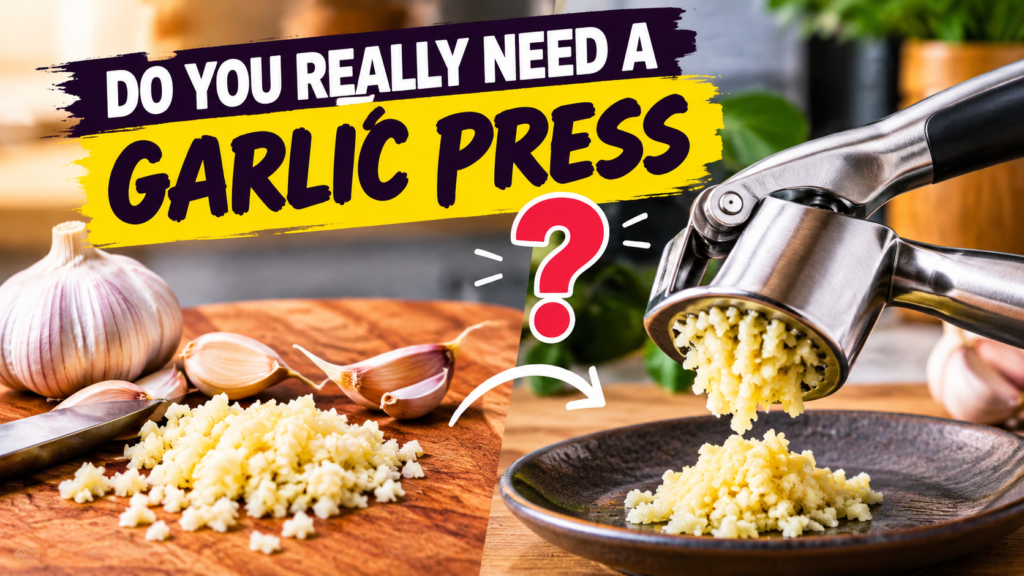
Garlic shows up in almost every savory kitchen, so the tools for prepping it get plenty of attention. So, do you really need a garlic press, or is it one more gadget for the drawer? This guide explains what a press does, when it helps, and what to use instead. You will also learn how to choose, use, and clean one safely.
This article is for general educational and buying-guidance purposes only. It does not replace the manufacturer’s official manual, food safety guidance, or professional advice. Materials, specifications, and care instructions can vary by product and should be confirmed with the manufacturer before purchase or use. For product defects, suspected food-safety issues, or injuries such as burns or cuts, contact the manufacturer, a qualified professional, or seek medical help as needed.
What a Garlic Press Actually Does
A garlic press is a hand tool with two handles, a small chamber, and a plate of tiny holes. You squeeze a clove through the holes and it comes out as fine pulp. It is often used when a recipe calls for minced or crushed garlic.
Why it matters: finer garlic pieces release more of garlic’s sharp flavor, so pressed garlic can taste stronger than sliced garlic. Many home cooks like that punch in dressings but find it too strong in mild soups.
Beginner check: If the recipe says “minced” or “crushed,” a press is one option. If it says “sliced” or “smashed,” you can skip it.
Experienced-cook observation: Many cooks use a press on busy nights and a knife when garlic should turn soft and sweet.
Do You Really Need a Garlic Press? A Simple Decision Rule
For most home kitchens, the honest answer is no. A sharp knife and a cutting board can do what a press does. A press is a convenience tool, not a requirement.
- Choose this if you cook with garlic often, find chopping tiring, or want smooth garlic for sauces.
- Avoid this if you use garlic now and then, have little drawer space, or dislike washing small parts.
- Check the manufacturer’s guidance if you want to press unpeeled cloves or use a dishwasher.
Note: A press does not guarantee better flavor. Fresh garlic and cooking time matter just as much.
Garlic Press vs Other Ways to Prepare Garlic
| Method | Texture | Cleanup | Good for |
|---|---|---|---|
| Garlic press | Fine pulp | Holes can clog | Dressings, quick sauces |
| Sharp knife | Chunky to fine | Knife and board | Most everyday cooking |
| Rasp-style grater | Very fine paste | Small grater to rinse | Marinades, raw sauces |
| Smash and mince | Rough to medium | Board and knife | Stir-fries, roasts |
| Jarred minced garlic | Small, even bits | None | Convenience; flavor can differ |
Texture decides most choices. Finer garlic tastes sharper, while larger pieces taste milder.
When a Garlic Press Is Worth Owning
Heavy garlic use
If garlic is in most dinners, a press can save repeated chopping. It may also mean less handling.
Hand comfort
Some people find chopping tiring. Squeezing may feel easier, so test the handles first.
Smooth sauces
Pressed garlic can blend into dressings without chunks. That helps if someone dislikes bits of garlic.
Steady texture
Pressing gives a similar texture each time. That helps when you follow a recipe closely.
When You Can Skip It
Skip the press if your cooking is simple and your knife is sharp. Smashing a clove with the flat of a knife loosens the skin and makes mincing quick. Realistic example: for pasta with two cloves, a knife is usually faster from start to cleanup. For light cooks, the question do you really need a garlic press usually ends in a no.
Tip: Add a pinch of salt to chopped garlic and drag the flat of the knife across it to make a paste.
Warning: Cloves can slip. Use a stable board and curl your fingertips. Keep presses away from small children, since the handles can pinch.
Common Garlic Press Problems and Likely Causes
| Problem | Likely cause | What to try |
|---|---|---|
| Hard to squeeze | Large clove or small chamber | Cut the clove in half |
| Hard to clean | Pulp dried in the holes | Rinse right away; use a small brush |
| Garlic tastes harsh | Fine texture releases strong flavor | Use less, or chop instead |
| Handles feel loose | Weak build or too much force | Check with the manufacturer |
| Garlic stuck in chamber | Design or peel left on | Scrape out with a knife tip |
A Simple Routine for Choosing a Garlic Method
Use this quick flow the next time a recipe calls for garlic.
Sliced, minced, or paste?
Chunky is mild; fine is sharp.
Knife, press, or grater.
Rinse tools right away.
Texture comes before tool choice. Starting there helps you avoid buying a gadget you rarely use.
Garlic Safety and Food Handling
Wash your hands, board, and tools after raw meat before prepping garlic you will eat raw. Keep peeled or pressed garlic covered in the refrigerator and use it soon. For more basics, visit FoodSafety.gov.
Accuracy and Safety: Homemade garlic-in-oil is a known food-safety concern. Keep it refrigerated, use it quickly, and check current guidance at FoodSafety.gov.
Safe Practice vs Risky Practice with Garlic Tools
| Situation | Safer practice | Risky practice |
|---|---|---|
| Leftover pressed garlic | Cover, refrigerate, use soon | Leave out for hours |
| Garlic in oil | Refrigerate, use quickly | Store at room temperature |
| After raw meat | Wash board and tools first | Reuse them right away |
| Cleaning a press | Rinse soon after use | Let pulp dry in the holes |
| Cutting garlic | Stable board, curled fingers | Rushing with wet hands |
Materials and Build: What to Look For
Garlic presses are often made from stainless steel, aluminum, zinc alloy, or plastic parts. Quality varies by product, so check the manufacturer’s page for materials and care.
Garlic Press Materials and Kitchen Fit
| Material | Often chosen for | Watch for |
|---|---|---|
| Stainless steel | Sturdy feel, easy rinsing | Weight and handle comfort |
| Aluminum | Lighter weight | Care rules, especially dishwashers |
| Zinc alloy | A solid, heavy feel | Finish care instructions |
| Plastic parts | Comfortable grips | Wear and heat exposure |
Which Garlic Tool Fits Your Kitchen?
This dashboard shows which tool often fits which kitchen.
Good for frequent garlic users. It gives smooth pulp with little effort.
The best all-around choice. It costs nothing extra if you already own one.
Makes fine paste quickly. It suits marinades and raw sauces.
Fast and simple. Flavor can differ from fresh, so check the label.
Treat it as a starting point. Your habits and hand comfort should decide.
Buying Guide: Questions to Ask First
Before you buy, ask again: do you really need a garlic press, or just a sharper knife? If a press still sounds useful, check these points.
- Chamber size: Choose this if your cloves are large. Avoid this if the chamber looks tiny.
- Handle feel: Choose this if the handles feel comfortable and steady.
- Cleaning: Check the manufacturer’s guidance before using a dishwasher.
How to Use and Clean a Garlic Press
If a press fits your kitchen, this routine helps keep it working well.
Keep this checklist near the sink.
Garlic Press Care Checklist
Quick rinsing is the most useful habit, because dried pulp is hardest to remove. A weekly check helps catch loose handles early.
Contact the Manufacturer or a Professional: If a press cracks, bends, or pinches unexpectedly, stop using it and contact the manufacturer. For deep cuts or pinch injuries that bleed heavily, seek medical help. Product safety concerns can also be reported through the CPSC.
Common Mistakes vs Better Choices
| Mistake | Better choice |
|---|---|
| Buying a press for one clove a week | Use a knife or the smash method |
| Letting pulp dry in the holes | Rinse right after use |
| Assuming finer is always better | Match texture to the dish |
| Forcing a large clove | Cut it in half first |
| Ignoring care labels | Follow the manufacturer’s instructions |
How Hard Is Each Method?
This practical guide compares the effort each method usually takes.
Practical guide: Relative difficulty
The bars show relative difficulty for typical home cooks, not measured results. Pressing is easy to do but adds cleanup, while knife work asks for more skill.
Troubleshooting Path: Is Your Press Worth Keeping?
Follow this path if your press frustrates you.
Yes: try halving the clove.
Yes: try a knife or rasp grater.
Yes: stop using it and contact the manufacturer.
Use this path as one more way to answer do you really need a garlic press in your own kitchen.
Garlic Tools Worth a Look
This article may contain affiliate links. If you buy through these links, we may earn a small commission at no extra cost to you. We only mention products that fit the topic and recommend checking current specs and care instructions directly with the manufacturer.
Stainless Steel Garlic Press
A press can be a handy option if you cook with garlic often. Check handle comfort and care instructions on the product page.
Rasp-Style Grater
A small rasp grater is a common alternative for fine garlic paste. Review size and care details on the product page.
Frequently Asked Questions
Do you really need a garlic press to cook well?
No. A sharp knife and a cutting board handle nearly every garlic task. A press is a convenience tool for people who use a lot of garlic.
Is pressed garlic stronger than chopped garlic?
Often, yes. Finer pieces release more of garlic’s sharp flavor, so many cooks use less when pressing.
Can I press garlic without peeling it?
Some presses are designed for it, but not all. Check the manufacturer’s instructions for your model.
How do I clean a garlic press?
Rinse it soon after use, brush the holes, and dry it. Follow the manufacturer’s care steps, especially about dishwashers.
What can I use instead of a garlic press?
A knife, a rasp-style grater, or the smash-and-mince method all work. Pick the texture your dish needs.
Is it safe to store pressed garlic?
Keep it covered in the refrigerator and use it soon. Be careful with garlic in oil, and read FoodSafety.gov guidance.
Final Thoughts
Do you really need a garlic press? For most kitchens, not really, but it can be a helpful tool for frequent garlic users. Choose the method that fits your dish, check the manufacturer’s instructions and care labels, follow food-safety guidance, and seek medical or professional help if you are injured or a product fails.
