
By Michael Hayes
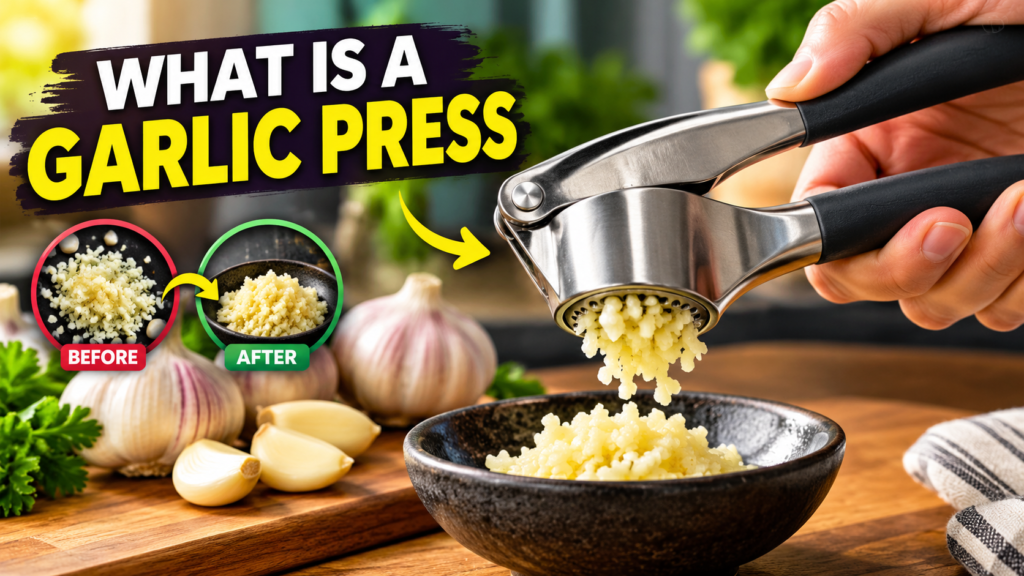
Quick Answer: A garlic press is a hand-held kitchen tool that squeezes garlic cloves through small holes to make a fine, juicy mince. It saves chopping time and gives a strong garlic flavor, which suits sauces, marinades, dressings, and quick sautés.
If you have ever asked, “What is a garlic press, and does my kitchen need one?” this guide keeps it simple. Garlic is in countless everyday dishes, and how you cut it changes how strong it tastes. You will learn how a press works, how to use and clean it, how to handle garlic safely, and how to choose one.
This article is for general educational and buying-guidance purposes only. It does not replace the manufacturer’s official manual, food safety guidance, or professional advice. Materials, specifications, and care instructions can vary by product and should be confirmed with the manufacturer before purchase or use. For product defects, suspected food-safety issues, or injuries such as burns or cuts, contact the manufacturer, a qualified professional, or seek medical help as needed.
What Is a Garlic Press and How Does It Work?
A garlic press has two handles joined by a hinge. One side holds a small chamber with tiny holes. The other side has a plunger that fits into the chamber. You place a clove inside, squeeze the handles, and soft garlic pushes out through the holes.
Why does this matter? Pressing breaks open many cells at once, so the flavor often tastes sharper than sliced garlic. Beginners can check the result easily: pressed garlic looks like a paste with a little juice. Experienced cooks also notice that a press leaves bits of pulp in the chamber, so a small amount is wasted.
Choose a press if you cook with garlic several times a week and want a fast, even mince. Avoid it if you only want mild, visible pieces in a dish.
Garlic Press vs Other Ways to Prepare Garlic
Common Types of Garlic Presses
Most presses look alike, but small design choices change how easy they are to use. Here are four common styles you will see when shopping.
Standard Lever Press
The classic two-handle design is simple and widely available. It suits everyday cooking, though very large cloves may need cutting first.
Large-Chamber Press
A bigger chamber can hold more garlic per squeeze. Many cooks like it for bigger batches, but it takes more drawer space.
Rocker-Style Crusher
This tool rocks over the clove instead of squeezing it. It can feel natural for some hands, yet cleanup depends on the design.
Press with Built-In Cleaner
Some models include a small cleaning tab for the holes. That can make cleanup quicker, but follow the manufacturer’s care instructions.
When a Garlic Press Is Worth Using
Think about how you cook. A press shines in a quick pan sauce, a salad dressing, or a marinade where garlic should melt into the dish. In a slow roast or a stir-fry that needs small visible bits, a knife often gives better texture. For example, a weeknight pasta sauce needs garlic fast, so pressing two cloves takes seconds. Check the manufacturer’s guidance if you plan to press unpeeled cloves, because designs differ.
Tip: Add pressed garlic near the end of cooking. Garlic can turn bitter if it browns too hard, so a short cook time keeps the flavor friendly.
How to Use a Garlic Press Step by Step
Pressing garlic takes less than a minute once you know the order. This flow shows the basic routine at a glance.
Practical guide: Routine flow
1. Prep
Separate one clove and trim the tough root end.
2. Load
Place the clove in the chamber and close the handles.
3. Press
Squeeze slowly and evenly.
4. Clean
Rinse the press right after use.
Notice that cleaning is part of the routine, not an extra job. Garlic dries and sticks fast, so a quick rinse saves effort later.
Step 1: Prep the clove. Peel it if your press needs that, or check the maker’s note on unpeeled garlic.
Step 2: Load the chamber. Set the clove inside, then bring the handles together.
Step 3: Squeeze. Use steady pressure until the clove flattens. Do not force a stiff press.
Step 4: Scrape. Lift the pressed garlic off the plate with a knife tip or spoon.
Step 5: Rinse. Rinse the press right away and let it dry.
Common Garlic Press Mistakes
Small habits make a big difference. These are the mistakes beginners make most often, each with a simple fix.
Mistake vs Better Choice
Cleaning and Caring for a Garlic Press
Garlic residue is easiest to remove while it is still wet. Rinse the press under running water right after use, then push a small brush or a toothpick through the holes if needed. Many presses are dishwasher safe, but the label and the manufacturer’s guidance decide that, not a guess. Dry the press fully before storing it.
Common Problems and Likely Causes
A short weekly check keeps a press working well. Use this dashboard as a quick reminder.
Practical guide: Care checklist
✓ Rinse fast: Rinse within minutes of use.
✓ Check holes: Look for blocked holes.
✓ Dry well: Let it air dry fully.
✓ Store clean: Keep it in a dry drawer.
If you can tick all four boxes, the press is likely in good shape. Skipping one, usually drying, is where rust and odors start.
Warning: Do not use a press with a cracked part, a loose hinge, or sharp edges. A broken piece can pinch your fingers or snap while you squeeze.
Safe Garlic Handling in a Home Kitchen
A press is only one step. How you store pressed garlic matters too. Fresh pressed garlic is best used right away, and leftovers should go in a covered container in the refrigerator. Garlic stored in oil needs extra care, because it can carry food-safety risks. Read the FoodSafety.gov guidance before you try it.
Safer Habits vs Risky Habits
Safety Note: Homemade garlic in oil can be a serious food-safety risk if stored wrong. Follow USDA guidance, and when you are unsure, throw it out.
If your press acts up, this simple path can help you decide what to do next.
Practical guide: Troubleshooting path
Start: Press feels stuck or very hard?
Try this: Cut the clove in half and press again.
Still hard? Clear the holes and check the handles.
Stop: If a part is bent or cracked, contact the manufacturer.
Most problems end at the second step. Only damage means the tool needs replacing.
How to Choose the Right Garlic Press
Start with comfort. Long, sturdy handles are easier on your hands, and a smooth hinge helps the press close evenly. Then look at the material, chamber size, and how easy the holes look to clean. Before you buy, ask what is a garlic press going to do in your kitchen each week? For one or two cloves at a time, a simple standard press is usually enough. Choose a larger chamber if you cook for a crowd.
What Is a Garlic Press Made Of? Material Fit
Match the tool to your cooking style. This dashboard shows which type tends to fit which cook.
Practical guide: Tool fit dashboard
Light cooking: A standard press.
Weekly cooking: A sturdy press.
Big batches: A large chamber.
Smaller hands: Longer handles.
Pick the row that sounds most like your kitchen. If two fit, choose the one that looks easier to clean.
Not every feature carries the same weight. This chart shows a relative guide, not test data.
Practical guide: Typical routine priority when choosing
Comfortable handles
Easy cleaning
Sturdy material
Chamber size
Comfort and cleaning usually matter most for daily use. Chamber size matters mainly if you often cook big batches.
Note: Prices and features change often. Always confirm current specs and care instructions with the manufacturer before you buy.
When to Contact the Manufacturer or a Professional: Contact the maker if the hinge cracks, a part breaks, or the care guide is unclear. For a deep cut or a serious burn, seek medical help. You can also report a dangerous product to the CPSC.
This article may contain affiliate links. If you buy through these links, we may earn a small commission at no extra cost to you. We only mention products that fit the topic and recommend checking current specs and care instructions directly with the manufacturer.
Garlic Press Options to Consider
Stainless Steel Garlic Press
A sturdy-style press can make daily cooking easier. Many home cooks find this style convenient for one or two cloves.
Large-Chamber Garlic Press
A larger chamber may suit bigger batches. Check handle comfort and care notes before you choose.
Garlic Press FAQs
What is a garlic press used for?
A garlic press crushes garlic cloves into a fine mince or paste. Cooks use it for sauces, dressings, marinades, and quick sautés when they want strong garlic flavor without chopping.
What is a garlic press made of?
Many are made of stainless steel or other metals, and some have plastic or coated parts. Materials vary, so check the product details and care guide.
Do you need to peel garlic before using a press?
It depends on the design. Some presses can handle unpeeled cloves, while others cannot. Follow the manufacturer’s instructions.
Is pressed garlic stronger than chopped garlic?
Pressed garlic often tastes sharper because the clove is crushed finely. If you want a milder taste, slice or chop it instead.
How do you clean a garlic press?
Rinse it right after use, clear the holes with a small brush, and dry it fully. Check the label before using a dishwasher.
When should you stop using a garlic press?
Stop if it has cracks, loose parts, rust, or sharp edges. Contact the manufacturer for help or replace it.
Final Thoughts
Whether you are still asking what is a garlic press or ready to buy one, the main idea is simple: it is a quick way to turn garlic into a fine mince. Pick a comfortable, easy-to-clean model, rinse it right away, and store pressed garlic safely. Always follow the manufacturer’s instructions, and seek professional or medical help for serious problems.
