
By Michael Hayes
Quick Answer: What does a garlic press do? It squeezes garlic cloves through small holes, turning them into fine pulp and juice. This spreads strong garlic flavor evenly through sauces, marinades, and dressings and saves chopping time. The main tradeoff is cleaning the tool afterward.
Garlic adds flavor to almost every savory dish, but peeling and mincing it can slow you down. So, what does a garlic press do, and is it worth the space in your drawer? This guide explains how the tool works, when it helps, how to use and clean it, and what to look for before you buy.
This article is for general educational and buying-guidance purposes only. It does not replace the manufacturer’s official manual, food safety guidance, or professional advice. Materials, specifications, and care instructions can vary by product and should be confirmed with the manufacturer before purchase or use. For product defects, suspected food-safety issues, or injuries such as burns or cuts, contact the manufacturer, a qualified professional, or seek medical help as needed.
What Does a Garlic Press Do in the Kitchen?
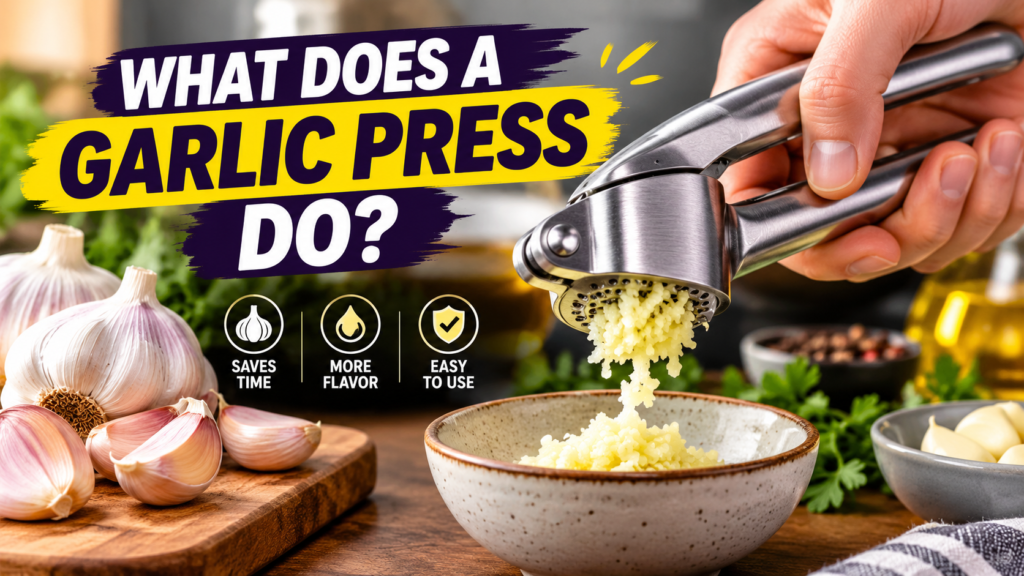
A garlic press is a hand tool with two lever arms, a small chamber, and a plate of tiny holes. You place a clove in the chamber and squeeze the handles. The clove is forced through the holes as soft pulp and juice.
Crushing breaks open more of the garlic’s cells than slicing does, so pressed garlic often tastes sharper than minced garlic. It also blends into food, which means fewer chunky bites. Many home cooks like that for sauces, dressings, and marinades.
Choose a press if you cook with garlic often and want smooth, even flavor. Skip it if you prefer mild, chunky garlic or dislike extra cleanup.
Garlic Press vs Other Prep Methods
Here is the basic motion from clove to pan.
Remove the root end
Place clove in chamber
Close the handles
Stir into your dish
The whole process takes seconds, which is the main reason people reach for a press on busy nights.
When a Garlic Press Is Most Useful
A press shines when garlic needs to disappear into the dish. Think tomato sauce, salad dressing, hummus, garlic butter, and marinades for chicken or vegetables. So what does a garlic press do that a knife cannot? Mostly, it saves time and gives a smoother texture. Choose a knife instead when you want visible slices in roasted dishes or stir-fries.
Note: Some presses handle unpeeled cloves, and others do not. Check the manufacturer’s instructions for your model.
How to Use a Garlic Press Step by Step
Using one is simple. These steps work for most hand presses.
Tip: If garlic keeps sticking, rinse the press under hot running water right after use, then clear the holes with a small brush.
Flavor, Cooking Tips, and Common Problems
What does a garlic press do to flavor? It makes it stronger and sharper, so start with less than a recipe calls for if you are used to minced garlic. Add pressed garlic near the end of sautéing, usually in the last 30 to 60 seconds, so it softens without browning too far.
Warning: Burnt garlic tastes bitter. If it turns dark brown in the pan, start over with fresh garlic instead of hoping the flavor will fade.
Garlic Press Problems and Likely Causes
If your press is not working well, follow this quick path.
Most problems come from loading too much or cleaning too late. Damaged hardware is the one issue worth stopping for.
How to Choose a Garlic Press
Look at material, clove capacity, handle comfort, and cleanup. Heavier, sturdier models can feel easier to squeeze, but weight alone does not guarantee quality. Confirm current specs with the manufacturer before you buy.
Material and Style Fit Guide
Use this practical guide to decide which features matter most for you.
Practical guide: feature priority
Top priority
High priority
High priority
High priority
If you cook for a family, capacity and handle comfort tend to matter most. For occasional use, easy cleanup may decide it.
Accuracy note: Material, finish, and dishwasher guidance vary by product. Always confirm care instructions with the manufacturer, and stop using any press with cracks or a loose hinge.
How to Clean and Care for a Garlic Press
Garlic dries into a sticky paste, so quick cleaning matters most. Rinse first, then wash with warm soapy water and a brush. If the manufacturer says it is dishwasher safe, you can use that instead.
Use this checklist after each use.
Short, regular care is easier than scrubbing dried garlic later.
Safe Practices vs Risky Practices
Safety note: Do not store garlic-in-oil mixtures at room temperature. Follow current guidance from FoodSafety.gov and the FDA.
Common Garlic Press Mistakes to Avoid
Mistake vs Better Choice
This chart compares how hard each garlic task usually feels. It is a rough guide, not tested data.
Practical guide: Relative difficulty
Pressing is quick, but cleanup is where the effort goes, which is why rinsing early helps.
When to contact the manufacturer or a professional: Contact the manufacturer if your press cracks, bends, or has a loose hinge. Seek medical help for deep cuts or any injury that will not stop bleeding. If you think a product is dangerous, you can report it to the CPSC.
This article may contain affiliate links. If you buy through these links, we may earn a small commission at no extra cost to you. We only mention products that fit the topic and recommend checking current specs and care instructions directly with the manufacturer.
Garlic Press Options to Browse
Stainless Steel Garlic Press
Can make daily garlic prep faster. Many home cooks find a simple metal press easy to rinse.
Easy-to-Clean Garlic Press
May suit cooks who dislike scrubbing the holes. Check the product page for how cleaning works.
Garlic Press FAQs
What does a garlic press do?
It crushes garlic cloves by forcing them through small holes. This makes fine pulp and juice that blends easily into sauces, dressings, and marinades.
Do you peel garlic before using a garlic press?
It depends on the model. Some presses handle unpeeled cloves, but many cooks peel first for easier pressing. Check the manufacturer’s instructions for your press.
Is pressed garlic stronger than minced garlic?
Often, yes. Crushing breaks open more cells, so the flavor can taste sharper. Start with less, then add more to taste.
Is a garlic press worth it?
It can be if you cook with garlic often and want smooth texture quickly. If you rarely use garlic or dislike cleaning small tools, a knife may be enough.
How do you clean a garlic press?
Rinse it right after use, brush the holes, and wash with warm soapy water. Dry it fully. Check the manufacturer’s guidance before using a dishwasher.
What should I look for when buying a garlic press?
Look for comfortable handles, room for a full clove, a sturdy hinge, and easy cleanup. Confirm specs and care rules with the manufacturer.
Final Thoughts
So, what does a garlic press do best? It turns garlic into smooth pulp fast, which suits sauces, dressings, and marinades. Rinse it right away, add pressed garlic late in cooking, and confirm material and care rules with the manufacturer. For food safety questions, follow trusted guidance, and seek medical help for any serious cut or injury.
