
By Michael Hayes
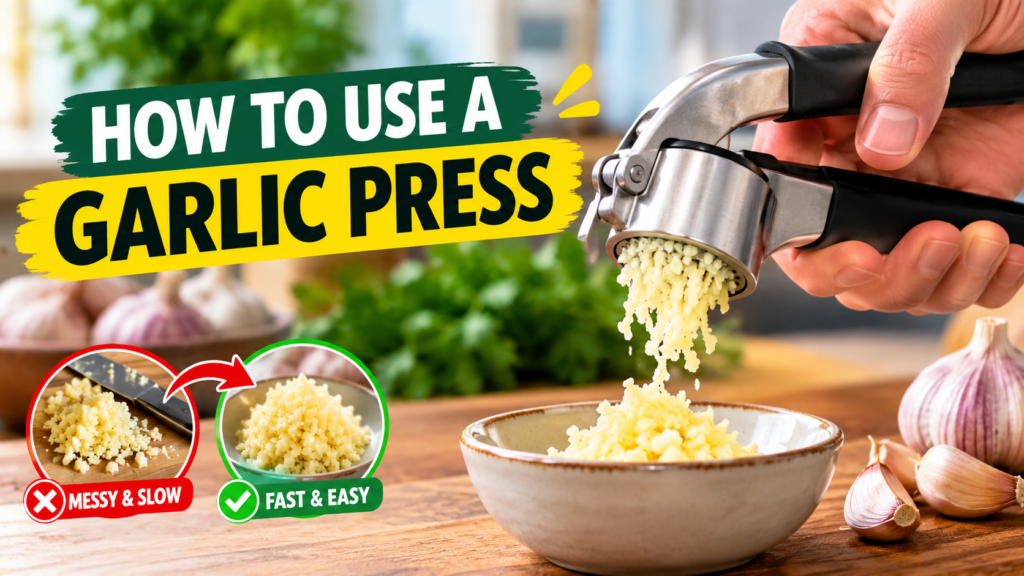
Quick Answer: Here is how to use a garlic press: peel a clove, place it in the chamber, and squeeze the handles slowly. Scrape the pressed garlic off the plate, add it to your dish, and rinse the press right away so garlic does not dry in the holes.
A garlic press can turn a fresh clove into fine garlic pulp in seconds. It helps most when you want garlic to blend into sauces, dressings, and marinades. Using it well also saves time and keeps the cleanup simple.
In this guide you will learn the basic steps, how to fix common problems, how to clean the tool, and what to look for if you are shopping for a new one.
Disclaimer: This article is for general educational and buying-guidance purposes only. It does not replace the manufacturer’s official manual, food safety guidance, or professional advice. Materials, specifications, and care instructions can vary by product and should be confirmed with the manufacturer before purchase or use. For product defects, suspected food-safety issues, or injuries such as burns or cuts, contact the manufacturer, a qualified professional, or seek medical help as needed.
What a Garlic Press Does and When It Helps
A garlic press squeezes a peeled clove through small holes. The result is fine garlic pulp and juice that melts into the dish. Many home cooks like it because it is quick and works well when garlic should blend in rather than show up as pieces.
Choose a press if you want a smooth, strong garlic flavor in soups, dips, or pasta sauce. Avoid it if you want visible slices for a stir-fry or roasted vegetables. Check the manufacturer’s guidance if your tool has a special design, such as a rocker or a twist style.
Garlic Press vs Other Ways to Prep Garlic
How to Use a Garlic Press Step by Step
These steps work for most hand-held presses. Read your manual first, since designs vary.
This short flow shows the routine most cooks repeat every time they press garlic.
Practical guide: the four-move routine
Remove the skin and trim the root end. A clean clove loads faster and leaves no skin behind.
Set the clove in the chamber, cut side down. Halve big cloves so the handles close easily.
Press with slow, even pressure. Scrape the pulp off the plate and into your dish.
Rinse before garlic dries. This one habit prevents most clogged holes.
The last move matters most for long-term use. Cooks who rinse right after pressing rarely fight with stuck garlic later.
Tip: Press garlic into a small bowl instead of straight over a hot pan. This keeps steam and splatter away from your hand. Fine pressed garlic can brown fast and taste bitter, so add it near the end of sautéing.
Peeled or Unpeeled: Getting Cleaner Results
Peeling first is the safest habit because it works in every press. Pressing unpeeled cloves can leave skins stuck in the chamber, and not every model is made for it. If you want to skip peeling, test one clove and see whether the skin stays behind.
Experienced cooks also notice that old, dry cloves give less juice. Fresh, firm garlic usually presses more easily and tastes brighter.
Note: Chamber sizes differ. A small chamber may need half a clove at a time, while a larger one may take a whole clove. Check the product instructions to see what your press is made to hold.
Common Problems and Likely Causes
Most trouble comes from clove size, dry garlic, or a clogged plate. Check the table below before you blame the tool.
Garlic Press Problems and Likely Causes
If your press still acts up, this decision path helps you pick the right fix in order.
Practical guide: troubleshooting path
The first two checks are free and fast. A damaged handle is different, because forcing it can pinch your fingers or break the tool.
Safe Garlic Pressing Habits
Pressing garlic is simple, but a few habits keep it clean and safe. Wash your hands and the press before use. Keep raw garlic tools away from ready-to-eat foods when you can.
Safer Habits vs Risky Habits
Accuracy and Safety Note: Garlic mixed into oil and kept at room temperature can create a food-safety risk. Make only what you will use, keep leftovers refrigerated, and read current guidance at FoodSafety.gov or the FDA website.
Warning: Never force a press that feels cracked, bent, or loose. A slipping handle can pinch your fingers or send garlic flying toward your face.
Cleaning and Care After Pressing
Cleaning is part of how to use a garlic press well. Garlic dries into a sticky film that blocks the holes. Rinse right away, soak in warm soapy water if needed, and push a small brush or pick through the holes from the back. Dry it fully before storing.
Many presses can go in the dishwasher, but not all. Check the manufacturer’s care instructions for your model, and rinse off garlic bits first.
Use this dashboard as a simple care routine you can keep near the sink.
Practical guide: care checklist
Rinse under warm water right away. Tap out any garlic left in the chamber.
Soak the press for a short time. Then clear each hole with a small brush or pick.
Dry the press fully, including the hinge. Store it where the handles will not get bent.
Check the handles and hinge for cracks or looseness. Stop using the tool if you see damage.
Short, frequent cleaning beats a long scrub later. The hinge check takes seconds and catches problems before they cause an injury.
When to Contact the Manufacturer or a Professional: Contact the manufacturer if a handle bends, a hinge cracks, or the press has sharp edges. If you pinch or cut yourself and bleeding will not stop, seek medical help. You can also learn about product safety reports at CPSC.gov.
Choosing a Garlic Press That Fits Your Kitchen
Before you practice how to use a garlic press, it helps to have one that fits your hand and your cooking. Check the maker’s description for material, capacity, and cleaning instructions, because details vary by product.
Garlic Press Features and Who They Fit
This fit dashboard compares two kitchen situations so you can decide quickly.
Practical guide: tool fit
Cook sauces, soups, and dressings often. You also want fast prep with fewer chopping steps.
Prefer visible slices or very small amounts. A knife or fine grater may suit those jobs better.
Neither choice is wrong. Pick the tool that matches the texture your recipe needs and the cleanup you are willing to do.
Common Mistakes and Better Choices
The bars below show a typical routine priority for everyday pressing. They are a practical guide only, not lab data or statistics.
Typical routine priority (practical guide, not scientific data)
Cleaning first, then prep, then occasional checks. If you only build one habit, make it the quick rinse.
This article may contain affiliate links. If you buy through these links, we may earn a small commission at no extra cost to you. We only mention products that fit the topic and recommend checking current specs and care instructions directly with the manufacturer.
Garlic Press Options to Browse
Stainless Steel Garlic Press Options
Many home cooks find a sturdy metal press convenient for daily cooking. Compare chamber size and care steps before choosing.
Garlic Press With Cleaning Brush Options
A press that comes with a cleaning tool can make clearing the holes easier. Confirm what is included in each listing.
Frequently Asked Questions
What is the simplest way to learn how to use a garlic press?
Peel one clove, place it in the chamber, and squeeze the handles slowly. Scrape the pressed garlic off the plate, add it to your dish, and rinse the press right away so garlic does not dry in the holes.
Do you need to peel garlic before using a garlic press?
Peeling first works in every press. Some models are made for unpeeled cloves, but that varies, so check the manufacturer’s instructions before skipping the peel.
How do you clean a garlic press?
Rinse it right after use, then soak it in warm soapy water if garlic has dried on. Clear the holes with a small brush or pick, rinse well, and let it dry fully.
Can you put a garlic press in the dishwasher?
Some can go in the dishwasher and some cannot. Check the manufacturer’s care instructions for your model, and rinse off garlic bits first so the holes do not stay clogged.
Why is my garlic press hard to squeeze?
The clove may be too large or too dry. Cut it in half, use fresher garlic, and clear any clogged holes. If the handles feel bent or loose, stop using it and contact the manufacturer.
Is pressed garlic stronger than chopped garlic?
Many cooks find it tastes stronger because pressing breaks up more of the garlic. Start with less than you think you need, taste the dish, and add more if you want.
Final Thoughts
Once you know how to use a garlic press, it becomes one of the quickest ways to add garlic flavor to everyday meals. Peel the clove, press slowly, and rinse right away.
Always check the manufacturer’s instructions for your model, follow food-safety guidance for garlic and oil, and seek medical help for any serious pinch, cut, or injury.
