
By Olivia Bennett
Quick Answer: Why use a garlic press? It crushes peeled cloves in seconds, saving time and giving a strong, even garlic flavor. It works best for sauces, soups, and marinades, while a knife suits milder, sliced garlic.
Garlic shows up in soups, pasta sauces, stir-fries, and marinades, so how you prepare it matters every week. Many home cooks wonder why use a garlic press when a sharp knife already works. This guide explains what a press does, when it helps, when to skip it, and how to choose and clean one.
This article is for general educational and buying-guidance purposes only. It does not replace the manufacturer’s official manual, food safety guidance, or professional advice. Materials, specifications, and care instructions can vary by product and should be confirmed with the manufacturer before purchase or use. For product defects, suspected food-safety issues, or injuries such as burns or cuts, contact the manufacturer, a qualified professional, or seek medical help as needed.
Why Use a Garlic Press in Everyday Cooking?
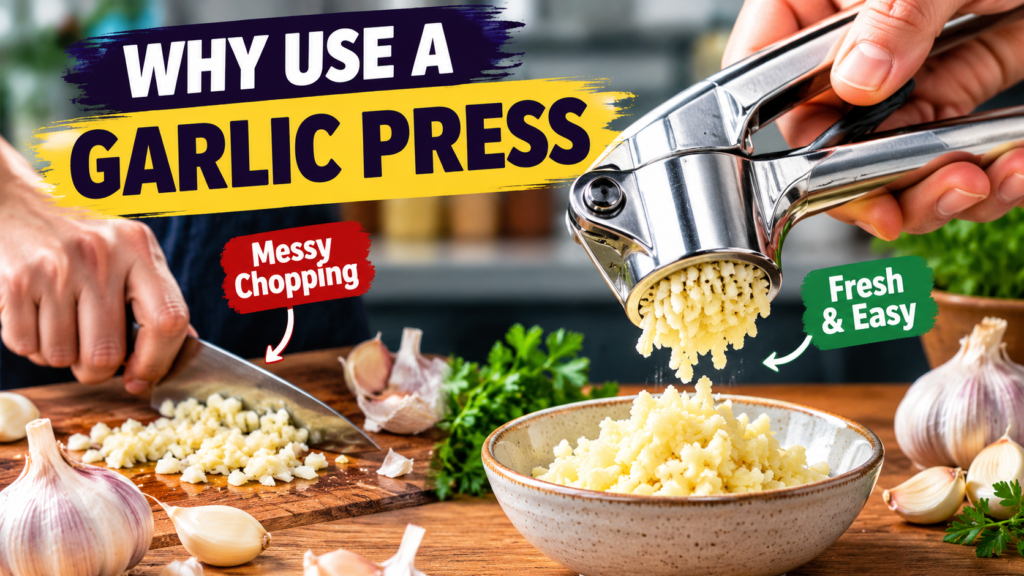
A garlic press forces a clove through small holes. This breaks open many of the garlic’s cells, which is what releases its sharp aroma. The result is a fine, wet pulp that blends into hot oil, sauce, or dressing quickly.
The main reasons home cooks reach for one are speed, consistent texture, and comfort. If you cook for a family most nights, crushing six cloves takes far less effort than mincing them. A press also helps cooks who find fine knife work tiring or awkward.
Picture a weeknight chili that needs five cloves. By hand, that means peeling, smashing, and chopping; with a press, you load and squeeze.
How a Garlic Press Changes Flavor
Finely crushed garlic often tastes stronger and sharper than slices or chunks, because more of the cut surface is exposed. Choose a press if you want garlic to disappear into the dish, such as in aioli, hummus, or a tomato sauce. Avoid it if you want mellow, sweet garlic pieces in a slow sauté.
Experienced cooks often notice that pressed garlic can taste harsher when it is raw, so they use less in dressings.
Note: Crushed garlic browns and burns faster in a hot pan than sliced garlic. Add it near the end of cooking, or lower the heat first, so it does not turn bitter.
Garlic Press vs. Other Mincing Methods
Here is a simple routine that keeps pressing quick and tidy.
Peel and load the garlic before heating the pan, since crushed garlic cooks fast and should not wait.
When a Garlic Press Helps and When to Skip It
Choose a press if you cook garlic-heavy meals, make marinades, or prepare food in batches. Many home cooks find it convenient when a recipe calls for four or more cloves. Skip it if you only need one small clove, because cleaning the press can take longer than chopping.
So why use a garlic press at all? For larger amounts, it gives faster, more even results. Experienced cooks often keep both a press and a sharp knife, picking the tool that suits the dish.
Tip: Some presses can crush unpeeled cloves, but not all do. Check the manufacturer’s instructions, and peel the clove if your model jams.
Common Press Problems and Likely Causes
How to Use a Garlic Press Step by Step
Follow these six steps for smooth, tidy results.
- Separate a clove from the bulb and trim the hard root end.
- Peel the clove unless the manufacturer says the skin can stay on.
- Place the clove in the chamber, keeping it flat so it does not jam.
- Close the handles with steady, even pressure over a clean bowl or cutting board.
- Scrape the pulp from the plate with a small knife or spoon.
- Rinse the press right away before garlic dries.
If you are unsure whether to reach for the press, this quick path can help.
Treat this as a starting point. Your recipe, your pan, and your taste matter more than any rule.
Warning: Do not force a jammed press or pry garlic out with a sharp knife tip. A slipped blade can cut you, and a bent handle can pinch your fingers. Open the press and clear it slowly.
Safer Garlic Habits vs. Risky Habits
For storage rules on garlic in oil and other prepared foods, see guidance from FoodSafety.gov and the FDA.
Safety Note: Garlic stored in oil can create food-safety risks if it is not handled and stored correctly. Keep crushed garlic refrigerated, use it promptly, and read official guidance before preparing it ahead.
Cleaning and Caring for Your Garlic Press
Garlic dries into a hard paste quickly, so rinse the press soon after use. A small brush, or the cleaning tool some models include, can push bits out of the holes. Whether the press is dishwasher-safe depends on the product, so follow the manufacturer’s care instructions.
Use this short checklist after each meal.
A quick rinse is usually easier than scrubbing dried garlic later.
Choosing a Garlic Press: Material and Size
Start with a simple question: why use a garlic press in your own kitchen—speed, texture, or comfort? Then look at the build. Many presses are metal, but the exact metal, coating, and finish vary by brand. Look for a sturdy hinge, a chamber large enough for your usual cloves, and handles that feel comfortable in your hand. Check the product page for care notes instead of assuming a press is dishwasher-safe or rust-resistant.
Choose a longer-handled press if you want easier squeezing. Avoid very small chambers if you often cook with large cloves.
Press Style and Kitchen Fit
This practical guide compares how each tool fits a typical home kitchen.
No single tool wins every time. Keep a sharp knife handy and add a press if you use garlic often.
When to Contact Someone: Stop using a press that cracks, has sharp edges, or snaps under normal pressure, and contact the manufacturer. You can report dangerous product defects to the CPSC. For a deep cut or serious injury, seek medical help.
Common Mistakes With Garlic Presses
Most problems come from small habits, not from the tool itself. A few simple changes can make a press easier to live with.
Mistakes and Better Choices
This practical guide shows relative difficulty, not tested data.
Pressing is usually the easiest step, while cleaning is where many people lose patience. Rinsing right away narrows that gap.
This article may contain affiliate links. If you buy through these links, we may earn a small commission at no extra cost to you. We only mention products that fit the topic and recommend checking current specs and care instructions directly with the manufacturer.
Garlic Press Options to Browse
Stainless Steel Garlic Press
A sturdy metal press can make daily cooking easier for families that use garlic often. Compare handle length and chamber size before choosing.
Garlic Press With Cleaning Tool
Some models include a small cleaner that may help with stuck pulp. Many home cooks find this convenient, but confirm what is included on the product page.
Garlic Press FAQs
Why use a garlic press if I can mince garlic by hand?
A press is faster for several cloves and gives an even, fine texture. Mincing by hand gives you more control and a milder taste.
Does a garlic press change the flavor of garlic?
Yes. Crushed garlic is usually sharper and stronger than chopped or sliced garlic, so use less if you are unsure.
Do you have to peel garlic before using a press?
It depends on the model. Some presses can crush unpeeled cloves, but check the manufacturer’s instructions first.
How do you clean a garlic press?
Rinse it soon after use, brush out the holes, and dry it fully. Follow the manufacturer’s care label before using a dishwasher.
Is crushed garlic safe to store?
Keep it refrigerated and use it promptly. Avoid storing garlic in oil at room temperature, and review guidance from FoodSafety.gov or the FDA.
When should I replace a garlic press?
Replace it if the hinge bends, parts crack, or edges become sharp. Contact the manufacturer if it fails under normal use.
Final Thoughts
So, why use a garlic press? It makes the most sense when you cook with garlic often and want a fine, strong texture. Keep a sharp knife for gentler flavor, check the manufacturer’s instructions for care, follow food-safety guidance for storage, and seek medical help for serious cuts or burns.
