
By Michael Hayes
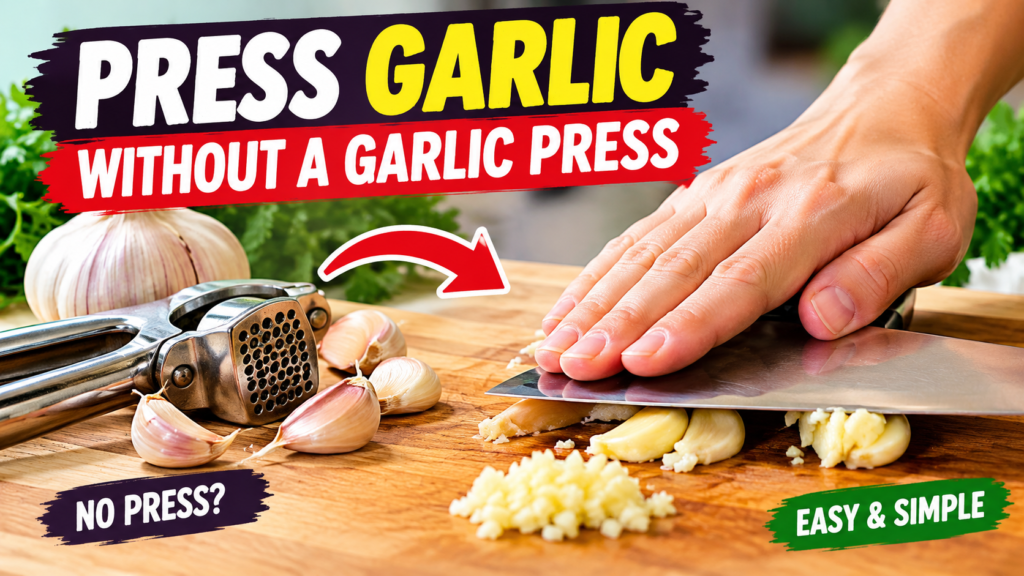
Quick Answer: To press garlic without a garlic press, peel a clove, crush it flat with the side of a chef’s knife, then mince it finely with a rocking motion. Sprinkle a pinch of salt and scrape the knife across the pile until it forms a paste. A fine grater also works well for small amounts.
No garlic press? No problem.
Many home cooks start a recipe, notice the garlic press is missing or dirty, and stop. You do not have to. Learning how to press garlic without a garlic press takes a knife, a cutting board, and a minute or two. This guide shows simple methods, what each one does to flavor and texture, and how to stay safe while you work.
This article is for general educational and buying-guidance purposes only. It does not replace the manufacturer’s official manual, food safety guidance, or professional advice. Materials, specifications, and care instructions can vary by product and should be confirmed with the manufacturer before purchase or use. For product defects, suspected food-safety issues, or injuries such as burns or cuts, contact the manufacturer, a qualified professional, or seek medical help as needed.
How to Press Garlic Without a Garlic Press: What It Really Means
A garlic press forces a peeled clove through small holes. That breaks the cells inside the clove and releases the sharp flavor garlic is known for. When you skip the press, the goal is the same: break the clove down into a fine mince or a smooth paste. The finer you go, the stronger and more even the garlic flavor tends to be.
The best method depends on your dish. A soup may only need rough pieces. A dressing or marinade often tastes better with a smooth paste. Many home cooks find a knife handles most jobs, and a grater or mortar covers the rest.
Realistic example: You are making a quick pasta sauce that calls for four cloves. Mince them with a knife and add them to warm oil. For a salad dressing, use a salt paste so no sharp bits stay in the bowl.
Beginner check: if you can still see chunks, keep going. If the garlic looks wet and sticky, you have reached paste, which works well in sauces.
Comparison of No-Press Garlic Methods
| Method | Best for | Texture | Effort |
|---|---|---|---|
| Knife mince | Everyday cooking | Fine to medium | Medium |
| Salt paste with knife | Dressings, marinades | Smooth | Medium |
| Fine grater | Small amounts | Very fine | Low |
| Mortar and pestle | Sauces, dips | Smooth paste | Medium |
Prep the Garlic and Your Station
Choose firm heads with dry, papery skin. Skip cloves that are soft, shriveled, or moldy. Press the flat side of a knife on each clove to loosen the skin, then remove the root end and peel. If you see a green sprout in the center, many cooks remove it because it can taste bitter.
Set a damp paper towel under your cutting board so it does not slide. Use a sharp knife, since dull blades slip more easily.
Note: Clove sizes vary, so taste as you cook and adjust the amount.
Choose this if… you want speed and control: a chef’s knife is a good fit. Avoid this if… the clove is large: a small paring knife gives you less leverage.
Step-by-Step: How to Press Garlic Without a Garlic Press
What can go wrong: a wet, sliding clove can slip under the blade, so dry the garlic and the board first.
Experienced-cook observation: slow, even rocking gives better results than hard chopping, and it keeps the garlic from scattering.
Garlic Routine at a Glance
Here is the full routine from start to finish.
Read the flow from left to right. Most of your time goes into the middle steps. If a recipe only needs a rough mince, stop after step four and skip the salt.
Other Ways to Break Down Garlic
If the knife method does not suit you, try one of these.
Fine Grater
A small rasp-style grater turns a clove into a fine pulp fast. It works best for one or two cloves.
Mortar and Pestle
Pound the clove with a pinch of salt until it turns to paste. This suits dips and sauces.
Fork and Salt
Mash a minced clove against a plate with a fork and salt. It is slow but needs no special tools.
Rough Chop
Some dishes, like roasts and braises, need only coarse pieces. Slice or chop and move on.
Tip: Rinse the grater right after use, before the garlic dries. A small brush helps clear the holes.
Garlic cooks quickly. Fresh minced garlic can brown in under a minute in hot oil, and browned garlic often tastes bitter. Many cooks add it after the onions or near the end of cooking.
Troubleshooting Common Garlic Problems
Problem vs Likely Cause
| Problem | Likely cause | Better move |
|---|---|---|
| Uneven pieces | Rushing the chop | Rock the knife slowly |
| Bitter taste | Green sprout or browned garlic | Remove sprout; lower the heat |
| Sticks to the knife | Wet, sticky paste | Wipe the blade between passes |
| Burns in the pan | Heat too high | Add garlic late, over medium heat |
Choosing the Right Garlic Texture
Use this quick path to pick a method.
The answer depends on volume and texture. Small amounts suit a grater, and larger batches go faster with a knife.
Stay Safe While Working With Garlic
Knife work is the main risk here. Keep your board steady, your blade sharp, and your attention on the task. Staying careful matters most when you learn how to press garlic without a garlic press, because you will use a sharp blade for the whole job. Garlic is also easy to cross-contaminate, so wash hands, board, and knife after handling raw meat.
Warning: Never press down on the blade with the sharp edge facing your hand.
Safety Check: Garlic stored in oil at room temperature can create conditions where harmful bacteria grow. Use fresh garlic soon, refrigerate leftovers, and review guidance at FoodSafety.gov and USDA.
Safe Practice vs Risky Practice
| Safe practice | Risky practice |
|---|---|
| Curled fingertips on the board | Flat fingers near the blade |
| Stable board on a damp towel | Board that slides |
| Refrigerating leftover garlic promptly | Leaving it out for hours |
| Washing the board after raw meat | Reusing it right away |
Garlic Cleanup Checklist
Here is a short cleanup routine.
Work through the list once cooking ends. It keeps garlic odor down and cuts the risk of cross-contamination.
Which Tool Fits Your Kitchen?
If you want to master how to press garlic without a garlic press, a few tools make it easier. Check the manufacturer’s guidance if your grater or mortar has a special coating or finish, since cleaning rules can differ.
Tool Fit Guide
| Tool | Fits best when | Check before using |
|---|---|---|
| Chef’s knife | You cook often | Handle feels secure |
| Rasp-style grater | You need paste fast | Holes clear easily |
| Mortar and pestle | You make sauces | Bowl size fits batch |
| Fork | You have nothing else | Plate is stable |
Tool Comparison Dashboard
Here is how each tool compares in everyday use.
Knife, grater
Grater, mortar
Knife
Knife
Use the dashboard as a guide. No tool wins every category, so match the tool to the dish.
This article may contain affiliate links. If you buy through these links, we may earn a small commission at no extra cost to you. We only mention products that fit the topic and recommend checking current specs and care instructions directly with the manufacturer.
Rasp-Style Zester Grater
Can turn a clove into a fine paste with very little chopping.
Mistakes and Better Choices
Mistake vs Better Choice
| Mistake | Better choice |
|---|---|
| Chopping an unpeeled clove | Peel first |
| Using a dull knife | Sharpen or swap |
| Mincing far ahead | Prep close to cooking |
| Burning garlic | Add late, medium heat |
Which Garlic Method Is Hardest?
Here is a rough comparison of effort.
Practical guide: Relative difficulty
This is a practical guide, not lab data. Knife work takes practice, while a grater suits beginners.
When to Contact a Professional or Manufacturer
Get help when needed: Seek medical help for deep cuts or bleeding that will not stop. Contact the manufacturer if a knife handle loosens or a grater is damaged. Contact a doctor or local health department if you suspect a food-safety problem.
Frequently Asked Questions
Can I use a knife instead of a garlic press?
Yes. Crush the clove flat, then mince it with a rocking motion.
How do I make garlic paste without a press?
Mince the clove, add a pinch of salt, and scrape the knife across it until smooth.
Is it hard to learn how to press garlic without a garlic press?
Most beginners get decent results after a few tries. Go slowly and keep fingers curled.
Is grated garlic stronger than chopped garlic?
Finer pieces usually taste stronger because more of the clove is broken down.
How long can I keep minced garlic?
Use it soon. Refrigerate leftovers in a sealed container and check USDA guidance.
How do I get garlic smell off my hands?
Many home cooks rub their hands on stainless steel under cold water, then wash with soap.
Final Thoughts
Once you know how to press garlic without a garlic press, a missing tool never has to slow you down. Follow safe knife habits and check manufacturer instructions for any grater or knife you use. Seek medical or professional help when needed.
