
By Michael Hayes
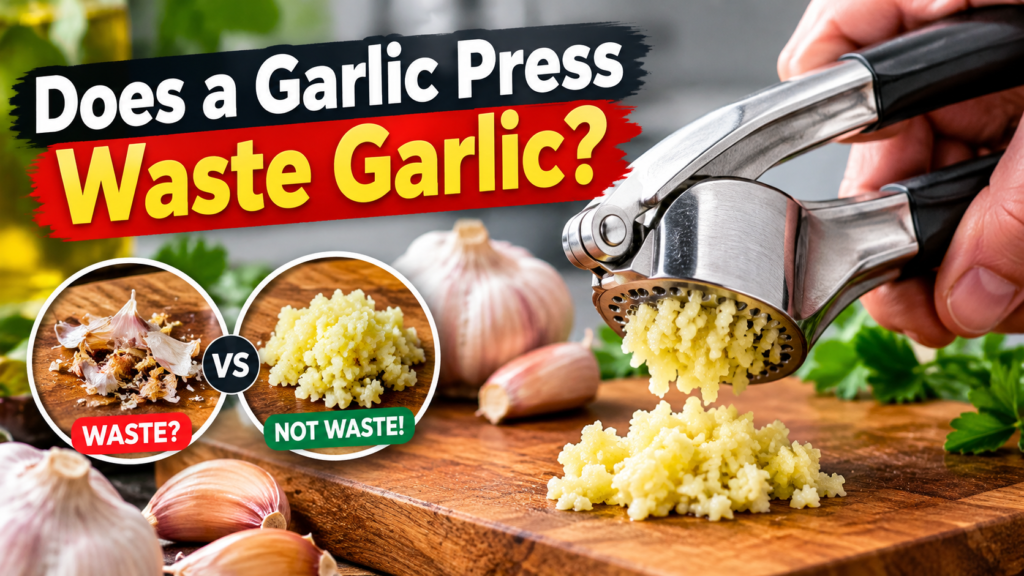
Quick Answer: Does a garlic press waste garlic? A little. Most garlic goes into your food, but some stays in the chamber and holes, and skins add to the loss. Firm cloves, careful peeling, and scraping the plate can help you waste less.
Garlic is cheap, but nobody likes tossing good cloves. Many cooks ask, does a garlic press waste garlic, or is that just a kitchen myth? This guide shows where the loss really happens, how a press compares with other methods, how to waste less, and how to choose and clean one.
garlic press waste garlic yield peeling and trimming press cleaning
Please Read
This article is for general educational and buying-guidance purposes only. It does not replace the manufacturer’s official manual, food safety guidance, or professional advice. Materials, specifications, and care instructions can vary by product and should be confirmed with the manufacturer before purchase or use. For product defects, suspected food-safety issues, or injuries such as burns or cuts, contact the manufacturer, a qualified professional, or seek medical help as needed.
How a Garlic Press Works
A garlic press has a hinged chamber and a plate with small holes. You place a clove inside and squeeze the handles. The clove is forced through the holes as a soft, wet paste.
So, does a garlic press waste garlic? A little. Some garlic stays in the chamber and the holes. If your press needs peeled cloves, you also lose a bit to skins. Many home cooks find the loss minor, but it is real.
Note: Leftover garlic in the press is still garlic. You can often scrape it out. What truly goes in the trash is mostly the skin, the root end, and any bits you cannot reach.
Garlic Prep Methods Compared
| Method | Garlic left behind | Texture | Best for |
|---|---|---|---|
| Garlic press | Some stays in chamber and holes | Fine, wet paste | Sauces, dressings |
| Chef’s knife | Very little | Rough mince or slices | Sautés and roasts |
| Fine grater | A small stub of clove | Very fine paste | Dips and raw uses |
Beginner check: Think about your last garlic dish. If you could see garlic pieces, a knife may have been fine. If the garlic melted into the sauce, a press probably suited the recipe. Experienced cooks often use both tools, depending on the dish.
Where the Waste Really Comes From
Does a garlic press waste garlic mostly in the chamber, the holes, or the peel? Usually all three, in small amounts. Fixing the right one saves the most garlic.
Common Problems and Likely Causes
| Problem | Likely cause | Easy fix |
|---|---|---|
| Lump stuck in chamber | Clove too big | Cut it in half first |
| Clogged holes | Dried or old cloves | Use firm cloves, rinse fast |
| Skin left behind | Skin not removed well | Peel first or follow manufacturer directions |
| Stiff handles | Dense clove | Cut into smaller pieces |
Here is a simple flow for a low-waste press routine.
Practical guide: Low-Waste Press Routine
→
→
→
→
→
Read the flow left to right. Savings come early, when you pick firm cloves, and late, when you scrape the plate before rinsing. Skipping steps usually costs a little more garlic.
Peeling, Trimming, and Clove Size
Does a garlic press waste garlic more than peeling does? Often it is the other way around. Much of the loss has nothing to do with the press. Skin and root ends go in the trash however you prep. Small cloves have more skin for each bit of garlic, so they feel more wasteful. Large cloves give more garlic per peel.
Realistic example: You need three cloves for soup. Pick the largest ones from the outer ring of the bulb. You peel less and press fewer pieces. Some cooks also remove a green sprout in the center, since it can taste bitter to some people.
Choose a press if…
You want fast, fine garlic for sauces and dressings. You also need garlic that melts into the dish.
Avoid a press if…
You need only a few thin slices for a pan. A knife is quicker and leaves less behind.
Tip: Press down on the clove with the flat of a knife to loosen the skin. Peeling takes seconds and the garlic stays whole.
How to Use a Garlic Press With Less Waste
Choose firm cloves. Soft, shriveled cloves squish and stick. Pick larger cloves when you can.
Trim and peel. Cut off the hard root end. Remove the skin unless the manufacturer says you can press unpeeled cloves.
Fit the clove. If it is too big, cut it in half and place the cut side toward the plate.
Press slowly. Squeeze steadily over your bowl or pan. Slow pressure pushes more garlic through.
Scrape and rinse. Scrape the underside of the plate with a small knife, then rinse the press before the garlic dries.
Warning: Keep fingers away from the hinge when you squeeze. Use care with sharp tips when clearing holes. Never force a clove that will not fit.
If the press is hard to squeeze, follow this path.
Practical guide: When the Press Feels Stuck
This path keeps you from forcing the tool. Forcing can bend handles or pinch fingers, so a smaller clove is the safer fix.
Cleaning and Care
Dried garlic clogs holes fast, and a clogged press wastes more of the next clove. Rinse right after use. For packed holes, soak the press briefly in warm soapy water, then use a brush.
Check whether your press is dishwasher safe before using one. Materials and finishes differ, so follow the manufacturer’s instructions.
Use this short checklist after each use.
Practical guide: After-Use Checklist
You do not need every item every time. Rinsing and drying matter most. Check the hinge now and then.
Contact the manufacturer if: handles bend or crack, the plate separates, or the finish flakes. Stop using a damaged press. For a cut or pinch that keeps bleeding, get medical help.
Safe Habits vs Risky Habits
| Situation | Safer practice | Risky practice |
|---|---|---|
| Pressed garlic | Use soon, or cover and refrigerate | Leave it out for hours |
| Garlic in oil | Follow USDA guidance, refrigerate | Store at room temperature |
| Clearing holes | Use a brush with care | Poke with fingers or a blade |
| Cleaning | Rinse right away | Leave garlic to dry for days |
Safety note: Garlic stored in oil can create food-safety risks. Read current guidance at FoodSafety.gov and USDA before preserving garlic at home.
Choosing a Press That Wastes Less
Presses differ in chamber size, hole pattern, handle length, and material. Check the product page and the manufacturer’s instructions instead of guessing. Many cooks keep a press for sauces and a knife for sautés, so the choice is less about right or wrong and more about the dish.
Press Design and Material Fit
| Feature | What to look for | Choose this if |
|---|---|---|
| Chamber size | Fits a large clove | You buy big bulbs |
| Handles | Longer, comfortable grip | Squeezing tires your hands |
| Plate | Hinged or removable plate | You dislike scraping |
| Material | Sturdy metal, with confirmed care steps | You plan to use it often |
Use these four checks as a quick buying filter.
Practical guide: Press Fit Dashboard
Large Clove Fit
Look for a chamber that holds a whole clove. This means less cutting and fewer small leftovers.
Easy to Clean
Open holes and a hinged plate often rinse faster. Faster cleanup helps you waste less next time.
Hand Comfort
Handle length changes how hard you squeeze. Pick a grip that feels steady in your hand.
Storage Space
A bulky press can crowd a drawer. Think about where you will keep it before you buy.
Pick the one or two checks that matter most in your kitchen. Fit and cleaning usually matter more than extras.
Tools Worth Considering
This article may contain affiliate links. If you buy through these links, we may earn a small commission at no extra cost to you. We only mention products that fit the topic and recommend checking current specs and care instructions directly with the manufacturer.
Stainless Steel Garlic Press
A metal press suits cooks who want quick, fine garlic paste. Check the listing for chamber size and care steps.
Fine Garlic Grater
A fine grater is a handy comparison tool when you only need a little garlic. Check the listing for material and cleaning notes.
Mistakes That Increase Garlic Waste
So, does a garlic press waste garlic more than other tools? For most cooks the difference is small. What matters is your habits and how often you cook with garlic. A simple decision rule: if garlic will melt into the dish, press it. If you want visible pieces, cut it.
Common Mistakes vs Better Choices
| Mistake | Better choice |
|---|---|
| Pressing tiny cloves | Use larger cloves or chop them |
| Waiting to rinse | Rinse right away |
| Tossing stuck garlic | Scrape it out and add it to the dish |
| Forcing a big clove | Cut it in half first |
| Using a press for two slices | Use a knife instead |
This chart shows rough effort, not lab data.
Practical guide: Relative Difficulty
Pressing garlic
Grating garlic
Chopping with a knife
Cleaning a press
Shorter bar = easier. A practical guide, not a measurement.
A press is among the easiest ways to prep garlic, yet cleanup takes more effort than many expect. A knife takes more skill but leaves little behind. Match the method to your recipe and your time.
Frequently Asked Questions
Does a garlic press waste garlic?
A small amount, yes. Some garlic stays in the chamber and holes, and skins and root ends are discarded. Scraping the plate and choosing larger cloves can help.
Do I need to peel garlic before using a press?
It depends on the model. Some presses are made for unpeeled cloves, while others work better with peeled ones. Check the manufacturer’s instructions.
Is pressed garlic stronger than chopped garlic?
Many cooks find pressed garlic tastes sharper because it is crushed very finely. Start with less, taste, and add more if needed.
How do I get leftover garlic out of a press?
Scrape the underside of the plate with a small knife, then rinse right away. A brush can help with clogged holes.
Is a knife better than a press for saving garlic?
A knife usually leaves less behind but takes more time. A press is faster when you want a fine, soft texture.
Can I store pressed garlic?
It is best to use it soon. If you refrigerate it, keep it covered and follow FoodSafety.gov guidance. Avoid leaving it in oil at room temperature.
Final Thoughts
Does a garlic press waste garlic? Only a little, and often less than you expect when you use it with care. Pick firm cloves, trim and peel carefully, scrape the plate, and rinse right away. Check the manufacturer’s instructions for peeling, cleaning, and dishwasher use. Follow food-safety guidance for stored garlic, and seek medical help for a deep cut or pinch injury.
