
By Michael Hayes
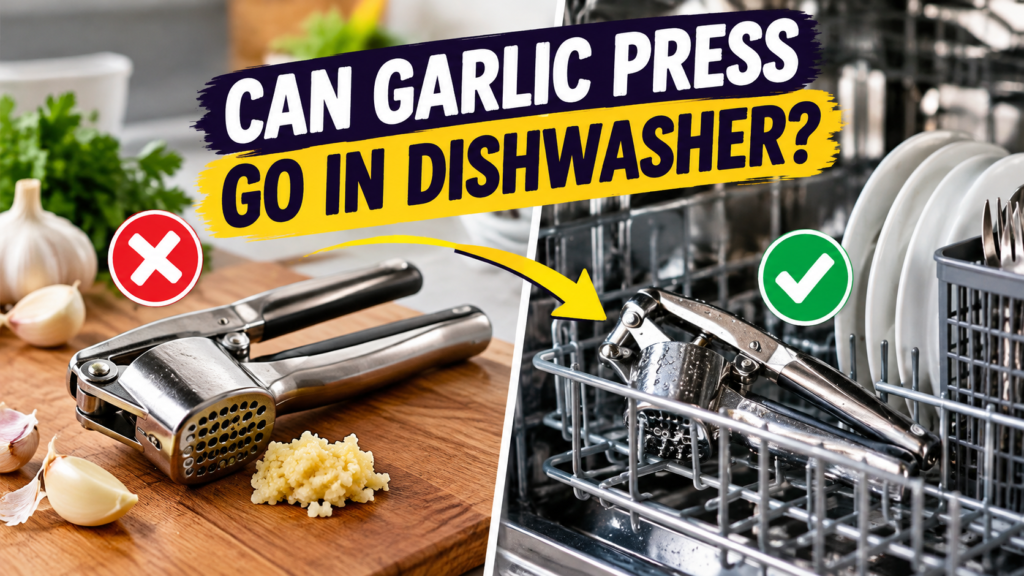
Quick Answer: Can garlic press go in dishwasher? Often yes, but only if the maker says it is dishwasher safe. Many stainless steel presses are labeled for the top rack, while plastic parts, painted finishes, and wooden handles may need hand washing. Rinse garlic pulp right away, then check the manufacturer’s instructions.
A garlic press saves time, but it is one of the harder kitchen tools to clean. Tiny holes trap pulp, and the hinge hides small bits of garlic. That is why many home cooks search “can garlic press go in dishwasher” before they load the machine.
In this guide, you will learn how materials and hinges change the answer, how to check your own press, how to clean it step by step, and when to ask the maker for help.
Trust and Accuracy Note
This article is for general educational and buying-guidance purposes only. It does not replace the manufacturer’s official manual, food safety guidance, or professional advice. Materials, specifications, and care instructions can vary by product and should be confirmed with the manufacturer before purchase or use. For product defects, suspected food-safety issues, or injuries such as burns or cuts, contact the manufacturer, a qualified professional, or seek medical help as needed.
Can Garlic Press Go in Dishwasher? The Short Version
It depends on the press. Some garlic presses are made for the dishwasher, and others are not. Two presses can look almost the same and still have different care rules. The difference often comes from the metal, any coating, the hinge, and any plastic or wood parts.
A plain stainless steel press is often listed as dishwasher safe, but that is not true for every brand. A press with a painted handle, a soft grip, or a wooden part may fade, crack, or swell in hot water and strong detergent.
Note: “Dishwasher safe” is a label from the maker, not a general kitchen rule. If your press has no label and no manual, hand washing is the cautious choice.
How Material and Build Change the Answer
The table below gives a simple starting point. It is a practical guide, not a lab result, so confirm details with your product’s instructions.
Garlic Press Materials Compared
| Material | Dishwasher outlook | Main concern |
|---|---|---|
| Plain stainless steel | Often labeled dishwasher safe | Pulp stuck in holes |
| Zinc or aluminum alloy | Many makers suggest hand washing | Dull or spotted finish |
| Painted or coated metal | Varies by product | Coating may fade or chip |
| Plastic or nylon parts | Varies widely | Heat can warp thin parts |
| Wood or bamboo handle | Usually hand wash | Wood can swell and crack |
Choose this if you want an easy dishwasher routine: plain stainless steel with a clear care label. Avoid this if your press has a worn coating, a wooden handle, or a loose hinge. Check the manufacturer’s guidance if the material is unclear.
How to Check If Your Press Is Dishwasher Safe
Start with the easy clues. Look at the box, the paper insert, or the product page where you bought it. Many brands print a small dishwasher symbol or the words dishwasher safe. If you find nothing, search the brand and model on the maker’s official site. If there is still no answer, hand washing is the safer default.
Tip: Save a photo of the care label or the product page when you buy a new press. Kitchen tools often lose their packaging, and labels are easy to forget.
This decision path turns the label check into a quick routine.
Dishwasher Decision Path
↓
Read the path from top to bottom. Any “no” or “unsure” answer leads to hand washing, which is the safer fallback. A skipped label check may shorten the life of a good tool.
Why Garlic Presses Are Hard to Clean
Garlic is sticky, and the press forces it through tiny holes. When pulp dries, it can harden inside the basket and hinge. A quick rinse right after use usually makes cleanup easier. Many experienced cooks keep a small brush near the sink for this reason.
Spray from a dishwasher may not reach packed holes. So even when the answer to can garlic press go in dishwasher is yes, pre-rinsing still matters.
Common Garlic Press Problems and Likely Causes
| Problem | Likely cause | Practical fix |
|---|---|---|
| Pulp left after a wash | Garlic dried before washing | Rinse right away, then brush |
| Garlic smell lingers | Residue in hinge or holes | Hand wash with soap, then air dry |
| Dull or spotted finish | Heat or harsh detergent over time | Try hand washing next time |
| Loose or squeaky hinge | Wear or trapped water | Dry fully, then contact the maker |
| Warped plastic part | High dishwasher heat | Stop machine washing |
How to Clean a Garlic Press Step by Step
This routine fits presses the maker says are dishwasher safe. For hand wash only presses, skip the dishwasher step.
Warning: Do not reach into a dishwasher for small tools right after a cycle, because items can be hot. Stop using a press with cracks, sharp edges, or a hinge that could pinch your fingers.
Here is the same routine as a flow you can picture at the sink.
Same-Day Garlic Press Routine
→
→
→
→
The order matters. Rinsing and clearing the holes come before any wash method. Many cooks find that this one habit helps more than anything else.
Safe Habits vs Risky Habits
Safe Practice vs Risky Practice
| Safe practice | Risky practice |
|---|---|
| Rinse right after pressing | Leaving pulp to dry for hours |
| Press open on the top rack | Packing it tightly in a crowded basket |
| Mild dish soap and a soft brush | Steel wool or harsh scrubbing |
| Air drying until fully dry | Storing it while wet |
| Following the care label | Guessing from looks alone |
Accuracy and Safety Note: Garlic residue left on a tool can spoil and smell, and any tool that touches food should be washed well. For general kitchen food safety guidance, see FoodSafety.gov.
Use this checklist as a monthly care check for your press.
Garlic Press Care Checklist
A press that fails two or more checks may need hand washing, a deeper clean, or a replacement. Check the manufacturer’s guidance first.
Choosing a Press That Is Easy to Clean
Cleaning ease often comes down to design. These are general patterns, not rankings of specific brands.
Press Styles and Cleaning Fit
| Press style | Cleaning outlook | Best fit |
|---|---|---|
| Basic hinged press | Simple, but holes can clog | Everyday cooks who rinse fast |
| Press with flip-out basket | Often easier to empty | People who dislike brushing |
| Small compact press | Quick to rinse | Cooks pressing a few cloves |
| Press with soft grips | May need hand washing | Comfort seekers who read labels |
This dashboard shows what to weigh when you shop.
Easy-Clean Fit Dashboard
Shopping priority here is a practical guide, not a test result. If you mostly use the dishwasher, put the care label first.
Helpful Tools to Consider
This article may contain affiliate links. If you buy through these links, we may earn a small commission at no extra cost to you. We only mention products that fit the topic and recommend checking current specs and care instructions directly with the manufacturer.
Stainless Steel Garlic Press
A plain metal press can be easier to wash and dry. Pick a listing that clearly states dishwasher-safe care, and confirm it with the maker.
Small Kitchen Cleaning Brush
A small brush can push pulp out of tiny holes before washing. Choose one that is gentle on metal and easy to rinse.
Common Mistakes and When to Call the Maker
Most mistakes start with a guess. Asking “can garlic press go in dishwasher” is smart, but skipping the label check can lead to a dull finish.
Mistakes and Better Choices
| Mistake | Better choice |
|---|---|
| Assuming all presses are dishwasher safe | Check the label or manual first |
| Letting pulp dry on the press | Rinse it right after use |
| Using sharp tools in the holes | Use a soft or blunt brush |
| Keeping a damaged press | Replace it or ask the maker |
Contact the Manufacturer: If a hinge snaps, a coating flakes, or the press has sharp edges, stop using it. Contact the maker, or visit CPSC.gov for product safety information. Seek medical help for deep cuts.
This chart ranks common care tasks by effort.
Practical guide: Relative difficulty
Longer bars mean more effort in a typical home kitchen. This is a relative difficulty guide, not a measured result. Early rinsing keeps you in the easy zone.
Frequently Asked Questions
Can garlic press go in dishwasher?
Sometimes. It is safe only when the maker says the press is dishwasher safe. If there is no label, hand wash it.
Should I rinse a garlic press before the dishwasher?
Yes. Rinsing and clearing the holes helps because dishwasher spray may not remove packed pulp.
Which rack is best for a garlic press?
If the label allows machine washing, many people use the top rack with the press open. Check your manual for rack guidance.
How do I remove garlic smell from a press?
Wash it by hand with warm water, mild dish soap, and a soft brush. Then rinse well and air dry fully.
Can dishwashing damage a garlic press finish?
It may, especially with painted, coated, or soft-grip parts. Heat and strong detergent can dull some finishes over time.
What should I do if my garlic press hinge feels loose?
Stop using it if it could pinch or break. Dry it fully and contact the manufacturer about repair or replacement.
Final Thoughts
The answer to “can garlic press go in dishwasher” comes down to your press and its care label. Check the manufacturer’s instructions, confirm the materials, rinse pulp early, and follow food safety guidance. If a press is damaged or causes injury, contact the maker or seek medical help.
