
By Michael Hayes
Quick Answer: Plain, uncoated cast iron skillets from reputable makers are not made with lead, and lead is rarely a concern. Risk is higher with vintage pans of unknown history, painted or glazed finishes, chipped enamel, and unbranded imports. When unsure, contact the maker or use a lab test.
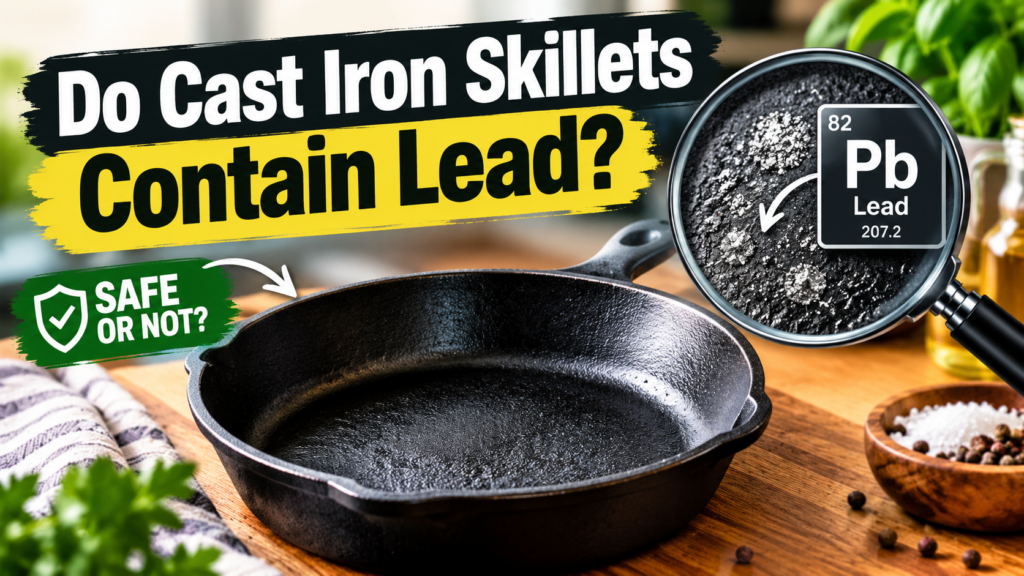
If you have ever wondered do cast iron skillets contain lead, you are asking a smart question. Cast iron is a kitchen staple, but cookware safety matters, especially in homes with young children. You will learn which pans are rarely a concern, which deserve a closer look, and how to check your own skillet.
This article is for general educational and buying-guidance purposes only. It does not replace the manufacturer’s official manual, food safety guidance, or professional advice. Materials, specifications, and care instructions can vary by product and should be confirmed with the manufacturer before purchase or use. For product defects, suspected food-safety issues, or injuries such as burns or cuts, contact the manufacturer, a qualified professional, or seek medical help as needed.
Do Cast Iron Skillets Contain Lead? The Short Answer
In most cases, no. Plain cast iron is made by melting iron and pouring it into molds. Lead is not part of that recipe, and skillets from established makers are not designed to include it. The better question is whether a specific pan has a coating, glaze, residue, or unknown history that could add lead to the surface.
Think of it as a risk ladder. A new, uncoated skillet sits near the bottom. A chipped, colorful, or unmarked pan sits higher. Choose a plain pan from a maker you can contact if you want the simplest path. Check the manufacturer’s guidance if your pan is old, decorated, or enameled.
Note: This guide covers lead, not iron. Plain cast iron can add small amounts of iron to food, which is a separate topic.
Why Plain Cast Iron Rarely Has a Lead Problem
A plain skillet is a solid piece of iron with a seasoning layer of baked-on oil. Seasoning is not a glaze, and it adds no metals when built with ordinary cooking oil. Many home cooks find this simple construction reassuring because there are fewer layers to question.
Experienced cooks also know that origin matters. A new pan with a clear brand and a customer service line is easier to verify than a mystery pan from a flea market bin.
Do Cast Iron Skillets Contain Lead? A Quick Comparison by Type
Here is a simple flow you can use whenever you pick up a skillet.
Skillet Check Flow (practical guide)
If you cannot get past step three, treat the pan as unknown and test it or skip it.
Where Lead Concerns Can Come From
Lead worries around cookware usually come from added materials, not from plain iron. Back to the main question: do cast iron skillets contain lead when they are old? It depends on the finish and history. Enamel, glaze, and decorative paint are the usual suspects, and some people report surface residue on vintage pieces.
The FDA has also warned about several imported metal cookware items sold in the US, which are different from plain cast iron. Check FDA notices and CPSC recalls for products you own.
Problem vs Likely Cause
Warning: Do not simmer acidic foods like tomato sauce in a pan with damaged enamel or an unknown coating. Acid can increase how much metal moves into food. Pause use until you have checked the pan.
How to Check Your Skillet Step by Step
This decision path shows how the steps fit together when you are unsure.
Safety Decision Path (practical guide)
Most skillets exit at the first branch. The rest need a little detective work.
Tip: Photograph the underside and any marks. It makes emailing a maker or seller much easier.
Swab Kits vs Lab Tests for Old Pans
Home swab kits can be a quick screening step, but they have limits. Follow each kit’s directions, and do not treat one negative result as a guarantee for a pan you use daily. A lab test costs more but gives a clearer answer for a treasured heirloom.
Use this checklist to keep your skillet in good shape once you know it is a good fit.
Care Checklist Dashboard (practical guide)
Small habits catch most problems early, long before they affect your cooking.
Safe Habits vs Risky Habits
A few everyday choices make the biggest difference for cookware safety.
Safe Practice vs Risky Practice
Accuracy and Safety Note: Lead exposure matters most for young children and during pregnancy. If you worry someone may have been exposed, ask a doctor whether blood lead testing makes sense.
Choosing a Skillet You Can Trust
Before buying, ask the question again for that exact model: do cast iron skillets contain lead in this brand’s line? A maker that answers clearly is a good sign. Choose plain iron if you want simplicity. Avoid pans with no brand and no care information. Check the manufacturer’s guidance if you are considering enameled cast iron.
Material Fit: Which Pan Suits Which Cook
This dashboard matches common situations to a sensible starting point.
Skillet Fit Dashboard (practical guide)
A new plain skillet keeps things simple.
Inspect and test, then decide.
Intact enamel or stainless steel suits you.
Look for a brand mark and no damage.
No single pan fits everyone, so match the pan to how you cook.
Here is how most careful cooks tend to prioritize their routine.
Typical routine priority (practical guide, not scientific data)
Knowing what you own comes first. Upkeep matters, but it cannot fix an unknown coating.
DIY vs Manufacturer or Professional Help
When to Contact the Manufacturer or a Professional: Reach out if a coating is chipped, the pan has no known history, or you believe it is defective. You can also report product concerns to the CPSC. If someone may have been exposed, ask a doctor about next steps.
This article may contain affiliate links. If you buy through these links, we may earn a small commission at no extra cost to you. We only mention products that fit the topic and recommend checking current specs and care instructions directly with the manufacturer.
Plain Pre-Seasoned Cast Iron Skillet
A simple uncoated skillet can make daily cooking easier and removes coating questions. Confirm materials and care steps with the maker.
Lead Test Swab Kit
A swab kit may help you screen an older pan at home. It is a screening step, not a lab test.
Frequently Asked Questions
Do cast iron skillets contain lead?
Plain, uncoated skillets from reputable makers are not made with lead and are rarely a concern. Vintage, painted, glazed, damaged, or unbranded pieces deserve a closer look and the maker’s guidance.
Is vintage cast iron safe to cook in?
Many people use it daily, but its history is unknown. Inspect the surface, clean it well, and consider lab testing if you plan to cook in it often.
Can enameled cast iron contain lead?
Enamel quality varies by maker and age. Confirm materials with the manufacturer, and stop using any pan with chipped or peeling enamel.
Do home lead swab kits work on cast iron?
They can be a quick screening step, but they have limits. A negative swab is not a guarantee, and a lab test gives a clearer answer for pans you value.
Does cooking tomato sauce in cast iron add lead?
Acid can increase how much metal moves from a pan into food, and it can also wear down seasoning. Skip long acidic simmers in damaged or unknown pans.
Who should I contact if I think my skillet is unsafe?
Stop using it and contact the manufacturer. You can also report concerns to the CPSC, and ask a doctor about blood lead testing if you think someone was exposed.
Final Thoughts
So, do cast iron skillets contain lead? Plain, uncoated cast iron rarely does, but finish and history matter. Check the manufacturer’s instructions, confirm material and care needs, follow food-safety guidance, and seek professional or medical help for serious concerns.
