
By Michael Hayes
Quick Answer: A seasoned cast iron skillet has a thin, baked-on layer of cooking oil that bonds to the metal. This dark, smooth coating helps food release, slows rust, and improves with regular use. It is not a chemical nonstick coating, and it needs gentle care and thorough drying.
If you have ever wondered what is a seasoned cast iron skillet, you are not alone. The name sounds like flavor, but it is really about a protective surface. In this guide, you will learn how seasoning forms, how to spot it, how to build it at home, and how to care for it.
seasoned cast ironskillet seasoningcast iron carenatural nonstick surface
This article is for general educational and buying-guidance purposes only. It does not replace the manufacturer’s official manual, food safety guidance, or professional advice. Materials, specifications, and care instructions can vary by product and should be confirmed with the manufacturer before purchase or use. For product defects, suspected food-safety issues, or injuries such as burns or cuts, contact the manufacturer, a qualified professional, or seek medical help as needed.
What Is a Seasoned Cast Iron Skillet, in Plain Words?
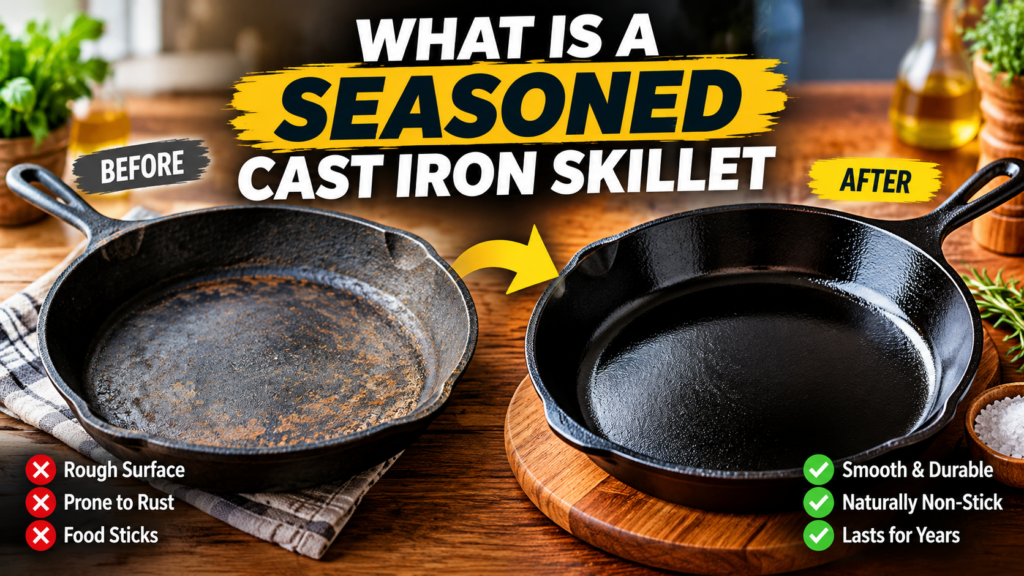
A seasoned skillet is a pan with a thin, hard coating of baked oil on its cooking surface. Raw cast iron is porous and rough up close. Seasoning fills in that roughness and creates a smoother, darker finish.
Seasoning is not flavor stuck to the pan. Think of it as a thin shell of baked fat, not old food. Food bits get washed away. The coating stays.
Beginner check: a good surface looks even and slightly satin, and feels smooth once cool.
Choose a seasoned skillet if you want a classic pan you can build up over time. Avoid it if you want zero hand-care. Check the manufacturer’s guidance if your pan is enameled or has a special coating.
How Seasoning Forms on Cast Iron
When a thin layer of oil is heated past its smoke point on iron, it changes. The liquid turns into a hard, slick film. Cooks often call this process polymerization. Each thin layer bonds to the one below it.
Thin layers matter. A thick coat can turn sticky or uneven, so many home cooks use several thin coats. Regular cooking with a little fat also adds small amounts over time, which is why older pans often look darker.
Seasoned Cast Iron vs Other Common Skillets
| Skillet type | Surface | Needs seasoning? | Care level |
|---|---|---|---|
| Seasoned cast iron | Baked-on oil coating | Yes, and it builds over time | Hand-wash, dry fully, oil lightly |
| Bare cast iron | Raw iron that can rust | Yes, before regular use | High until a layer forms |
| Nonstick coated pan | Factory nonstick coating | No | Follow the label for tools and heat |
| Enameled cast iron | Glass-like enamel layer | Usually not on the enamel; check the manual | Follow the manufacturer’s care steps |
Here is the basic routine in four stages.
Practical guide: seasoning routine
Each pass adds a thin layer, so patience matters more than extra oil. A sticky pass usually means too much oil.
How to Tell If a Skillet Is Properly Seasoned
To judge what is a seasoned cast iron skillet in real life, watch for four signs.
Even color
A good surface looks dark and fairly uniform.
Smooth feel
Once cool and clean, it should feel smooth, not sticky or gritty.
No flaking
Black flecks on a paper towel can mean loose seasoning.
Better release
Eggs are a common test. Release improves with preheating and enough fat.
Common Skillet Problems and Likely Causes
| Problem | Likely cause | First thing to try |
|---|---|---|
| Sticky or tacky surface | Oil layer was too thick or not baked long enough | Rebake, and use thinner coats next time |
| Orange or reddish spots | Rust from moisture or soaking | Scrub gently, dry fully, and re-season |
| Black flakes | Uneven or thick seasoning layer | Scrub loose spots and re-season in thin coats |
| Food sticks | Cold pan or too little fat | Preheat longer and add a little fat |
Note: A brand-new skillet may need extra cooking time before it feels slick. An older pan may need only a light touch-up.
Use this quick path when your skillet looks or feels off.
Practical guide: troubleshooting path
Rust and cracks need a different response than stickiness.
How to Season a Cast Iron Skillet at Home
Now that you know what is a seasoned cast iron skillet, here is how to build one. Follow the pan maker’s instructions first. These steps show a common method.
Tip: Open a window and turn on the vent fan. Seasoning can make light smoke.
Warning: A hot skillet stays hot for a long time. Use dry oven mitts, keep children and pets away, and never leave a hot pan or oven unattended.
Accuracy and Safety: Oven temperatures, oils, and times vary by product. If flames appear, turn off the heat, keep the oven door closed, and call emergency services if the fire does not go out.
Safe Habits vs Risky Habits
| Area | Safer practice | Riskier practice |
|---|---|---|
| Drying | Dry right away, then warm briefly | Air-drying or soaking |
| Oil amount | Thin coat wiped nearly dry | Heavy coat baked on |
| Leftovers | Move food to a container | Storing cooked food in the pan |
| Handles | Use mitts after any heat | Bare hands on a recently heated handle |
Everyday Care and Cleaning
Many modern guides say mild dish soap is fine on a well-seasoned pan, though some brands disagree. Avoid long soaks and the dishwasher, since water and harsh detergent can cause rust.
Acidic foods, such as tomato sauce or vinegar, can dull a young seasoning layer during long simmering.
Use this checklist after each cook.
Practical guide: care checklist
It takes about two minutes and protects the surface from rust.
Contact the manufacturer or a professional: Reach out if your skillet is cracked, warped, rough, or has a loose handle. For product safety concerns, see the CPSC. For food-safety questions, see FoodSafety.gov. For serious burns, seek medical help.
Tools That Protect the Surface
Tool and Material Fit for a Seasoned Skillet
| Tool | Fit | Note |
|---|---|---|
| Wooden spoon | Good | Gentle on the coating |
| Metal spatula | Fair | Fine for many cooks, but it may scratch young seasoning |
| Steel wool | Use caution | Can strip seasoning, so save it for rust and then re-season |
| Paper towel and oil | Good | Handy for a thin wipe-down |
Which Cooking Jobs Suit a Seasoned Skillet?
Cast iron holds heat well, so it shines at some jobs. Use this view as a rough guide.
Practical guide: fit for everyday jobs
Higher bars mean an easier match. Lower bars mean extra care, not never.
Common Mistakes and Better Choices
Mistakes vs Better Choices
| Mistake | Better choice |
|---|---|
| Using too much oil when seasoning | Wipe until the pan looks almost dry |
| Soaking overnight | Wash, dry, and oil right away |
| Skipping the preheat | Heat the pan a few minutes before adding food |
| Storing it damp | Warm briefly, then store dry |
| Scrubbing with steel wool every time | Use a brush and save steel wool for rust |
This chart shows a typical order of priority.
Practical guide: typical routine priority
Drying comes first because rust is the fastest way to lose a good surface.
Buying Guide: What to Look For
When you shop, remember what is a seasoned cast iron skillet: a pan with a baked-on oil layer, not a chemical nonstick coating. Many new skillets are sold pre-seasoned.
Choose a pre-seasoned pan if you want to cook soon. Choose bare cast iron if you enjoy building your own surface. Check the manufacturer’s guidance for glass-top or induction cooktops. A 10-inch to 12-inch size fits most home cooks.
This article may contain affiliate links. If you buy through these links, we may earn a small commission at no extra cost to you. We only mention products that fit the topic and recommend checking current specs and care instructions directly with the manufacturer.
Pre-Seasoned Cast Iron Skillet, 10 to 12 Inch
A handy starting point if you want a pan that already has a factory seasoning layer. You can build on it with regular cooking.
Cast Iron Seasoning Oil or Conditioner
A simple way to add thin upkeep coats after the pan is clean and dry. Check the label and the maker’s care guide first.
Frequently Asked Questions
What is a seasoned cast iron skillet?
It is a cast iron pan with a thin, baked-on layer of cooking oil. The coating helps food release and slows rust, and it can improve with regular use.
How can I tell if my cast iron skillet is seasoned?
Look for a dark, even, smooth surface that is not sticky or flaky. A patchy or rusty look usually means it needs fresh seasoning.
Is a seasoned cast iron skillet the same as nonstick?
No. Seasoning is a baked oil layer that builds over time, while nonstick pans use a factory coating. Food can still stick if the pan is cold or the fat is low.
Can I use soap on a seasoned cast iron skillet?
Many modern care guides say mild dish soap is fine, but brands differ. Check the manufacturer’s instructions, skip long soaks, and dry the pan fully right away.
How often should I re-season a cast iron skillet?
There is no fixed schedule. Re-season when the surface looks dull, patchy, or rusty, or when food sticks more than usual.
Does a new pre-seasoned skillet need more seasoning?
Many can be used right away, and the surface often improves with use. Follow the manufacturer’s instructions, and add thin coats if it looks dull or uneven.
Final Thoughts
Understanding what is a seasoned cast iron skillet makes the pan far less mysterious. It is a baked oil layer that you protect with drying, light oiling, and regular cooking. Check the manufacturer’s instructions, follow food-safety guidance, and seek medical help for serious burns.
