
By Michael Hayes
Quick Answer: Wipe out loose food while the pan is warm, scrub with hot water and a brush or scraper, use a little mild soap if needed, dry right away on the stove, then rub in a very thin coat of cooking oil.
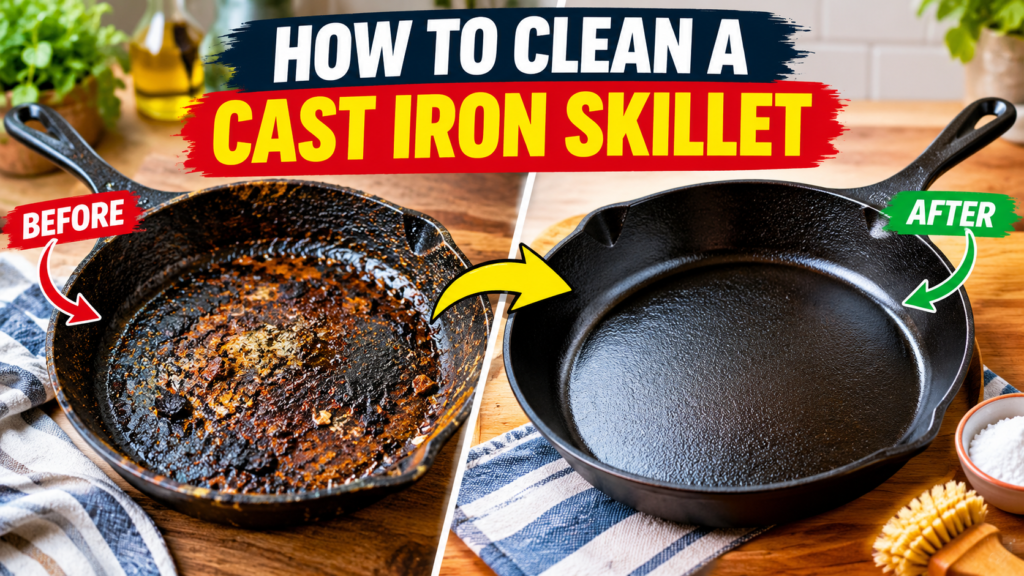
Cast iron can last for years, but a few bad habits lead to sticking, rust, and a rough surface. This guide explains how to clean a cast iron skillet so food comes off without stripping the seasoning. You will learn a daily routine, fixes for stuck food and rust, tool choices, and mistakes to skip.
This article is for general educational and buying-guidance purposes only. It does not replace the manufacturer’s official manual, food safety guidance, or professional advice. Materials, specifications, and care instructions can vary by product and should be confirmed with the manufacturer before purchase or use. For product defects, suspected food-safety issues, or injuries such as burns or cuts, contact the manufacturer, a qualified professional, or seek medical help as needed.
Why Cast Iron Needs Different Care
A traditional cast iron pan relies on seasoning, a thin layer of baked-on oil that helps food release and helps protect the metal from rust. Good cleaning removes food, not that layer. A dark, slightly uneven surface is normal and usually means the pan is doing its job.
Pans differ. Bare, pre-seasoned, and enameled cast iron do not all follow the same rules, so check the manufacturer’s instructions first. This article covers bare and pre-seasoned skillets. Choose a gentle method first if the pan looks smooth and dark. Move to a stronger method only if food stays stuck or rust appears.
Cast Iron Cleaning Methods Compared
This simple flow shows the order most home cooks follow after dinner.
Most nights, these four moves are enough. Skip the extra steps unless the pan needs them.
How to Clean a Cast Iron Skillet After Every Use
A steady routine matters more than a strong scrub. These steps work for most seasoned pans and take only a few minutes.
Tip: Less oil is better. A thick coat turns sticky and can feel tacky on the next use, so wipe the pan as if you meant to remove it all.
Fixing Common Cast Iron Problems
Most skillet problems trace back to heat, moisture, or too much or too little oil. Matching the symptom to the cause saves you from over-scrubbing.
Problem vs. Likely Cause
Use this decision path when a pan looks bad after cooking.
Work down the path one step at a time. Stronger methods cost you seasoning, so use them last.
Soap, Water, and Common Myths
Older advice says never to use soap on cast iron. That rule dates from harsher soaps. Many manufacturers now say a little mild dish soap is fine on well-seasoned pans, as long as you rinse and dry right away. Avoid it if your manufacturer says otherwise. Long soaking and dishwashers are the bigger risks.
Recommended Practice vs. Risky Practice
Warning: Never pour cold water into a very hot skillet. The pan can crack, and hot steam can burn your hands and face.
Accuracy and Safety Note: After cooking raw meat or poultry, wash the pan, your hands, and nearby surfaces well to prevent cross-contamination. For general food-safety guidance, see FoodSafety.gov.
This checklist keeps the whole routine in one place.
Drying and thin oiling matter most. If you only remember two items, remember those.
Removing Rust and Resetting a Neglected Pan
Surface rust looks scary but is often fixable. Scrub the spots with steel wool or a fine scrubber, wash, dry fully, and apply a thin coat of oil. Then reseason following your manufacturer’s directions. The same basic approach to how to clean a cast iron skillet still applies here, just with a firmer scrub and an extra seasoning step.
Note: Deep pitting, cracks, or a pan that rocks on the burner may not be worth saving. Check the manufacturer’s guidance if you are unsure.
Choosing the Right Cleaning Tools
You do not need many tools. Choose a soft brush for daily use, a scraper for stuck bits, and steel wool only for rust. Learning how to clean a cast iron skillet is easier when each tool has a clear job.
Tool Fit Guide
The meter below is a rough guide to how often each tool earns a place in a normal routine.
The bars show everyday use, not lab data. If you find yourself reaching for steel wool weekly, look at drying and oiling habits instead.
Common Mistakes and Better Choices
Most damage comes from a handful of habits. Swapping each one takes seconds.
Mistake vs. Better Choice
This priority meter shows which habits tend to matter most in a normal week.
The meter is a practical guide, not a measured result. Moisture control comes first, and soap is the least of your worries.
When to Contact the Manufacturer or a Professional: Contact the maker if a new pan arrives cracked or badly warped, or if the coating on an enameled pan chips. You can also report product hazards to the Consumer Product Safety Commission. For serious burns, seek medical help right away.
This article may contain affiliate links. If you buy through these links, we may earn a small commission at no extra cost to you. We only mention products that fit the topic and recommend checking current specs and care instructions directly with the manufacturer.
Cleaning Tools Many Home Cooks Find Useful
Cast Iron Chainmail Scrubber
Can make it easier to lift baked-on residue without harsh chemicals. Use light pressure so you do not wear down the seasoning.
Pan Scraper
Many home cooks find a scraper convenient for lifting stuck food after a short simmer. Pair it with a soft brush for everyday washing.
Frequently Asked Questions
What is the easiest way to clean cast iron after cooking?
Wipe out food while the pan is warm, wash with hot water and a brush, dry on the stove, and rub in a thin coat of oil.
Is it safe to use soap when learning how to clean a cast iron skillet?
Often yes. A small amount of mild dish soap is generally fine on a well-seasoned pan if you rinse and dry it right away. Check your manufacturer’s instructions.
How do I remove stuck-on food from cast iron?
Simmer a little water in the pan for a few minutes, then scrape gently. Coarse salt or a chainmail scrubber can help with stubborn spots.
Can I put a cast iron skillet in the dishwasher?
It is not recommended. Long water exposure and harsh detergent can strip the seasoning and cause rust.
How do I get rust off cast iron?
Scrub the rust with steel wool, wash, dry completely, and oil the pan. Reseason it following the manufacturer’s directions.
Why does my cast iron feel sticky after cleaning?
Usually too much oil was left on the pan. Wash it, dry it, and re-oil with a much thinner coat.
When should I stop using a cast iron skillet?
Stop if the pan is cracked, badly warped, or deeply pitted. Contact the manufacturer for guidance.
Final Thoughts
Knowing how to clean a cast iron skillet comes down to a few habits: clean it while warm, dry it fully, and oil it thinly. Always check the manufacturer’s instructions for your exact pan, follow food-safety guidance after cooking raw meat, and seek professional or medical help for cracked cookware or serious burns.
