
By Olivia Bennett
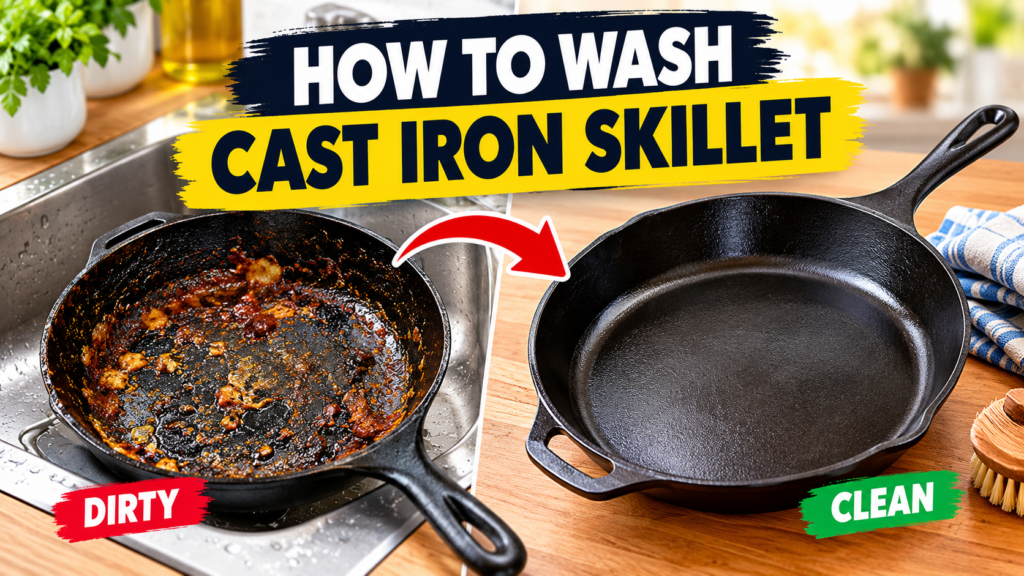
Quick Answer: Here is how to wash cast iron skillet pans in four moves: scrape off food, scrub with hot water and a stiff brush, dry right away, then wipe on a thin coat of oil. Use a little mild soap only if needed.
A cast iron skillet can last for decades, but only if you clean it the right way. Wash it too harshly and the dark, slick seasoning wears thin. Leave it wet and rust shows up fast. Many beginners worry about this, so they either avoid cleaning the pan or treat it too gently.
This guide explains how to wash cast iron skillet pans in a simple routine. You will learn what tools help, how to handle stuck food, what to avoid, and when to ask the manufacturer for help.
This article is for general educational and buying-guidance purposes only. It does not replace the manufacturer’s official manual, food safety guidance, or professional advice. Materials, specifications, and care instructions can vary by product and should be confirmed with the manufacturer before purchase or use. For product defects, suspected food-safety issues, or injuries such as burns or cuts, contact the manufacturer, a qualified professional, or seek medical help as needed.
Why Cast Iron Needs Different Cleaning
Cast iron is a porous metal. Over time, cooking oil bakes into a thin, hard layer called seasoning. That layer gives the pan its slick, dark finish and helps protect the metal from rust. Your goal when cleaning is to remove food and grease without stripping that layer.
Not every cast iron pan is the same, so check what you own before you scrub.
Bare Cast Iron
This is the classic black pan. It relies on seasoning, so it needs prompt drying and a light coat of oil after washing.
Enameled Cast Iron
This pan has a glossy coating and does not rely on seasoning. Its care rules are different, so follow the maker’s instructions.
Washing Methods Compared
Note: A new pan, a pre-seasoned pan, and a vintage pan can all behave a little differently. If your pan came with care instructions, those come first.
How to Wash Cast Iron Skillet Step by Step
This routine works for most bare cast iron pans after normal cooking. It takes about five minutes.
A simple five-step flow. The chart below shows the order. Follow it from left to right.
Washing Routine Flow
Drying and oiling are the steps people skip most often. They are also the steps that prevent rust, so treat them as part of the washing, not extras.
- Let the pan cool a little. Wash it while it is warm, not scorching. Sudden temperature changes can stress the metal, so avoid running cold water into a very hot pan.
- Scrape out food bits. Use a wooden spatula or pan scraper to push leftovers into the trash. This keeps grease and crumbs out of your drain.
- Scrub under hot water. A stiff brush or non-metal sponge works for most meals. Add a small drop of mild dish soap if the pan feels greasy.
- Rinse well. Make sure no soap or loose food remains on the cooking surface or the handle.
- Dry right away. Use a clean towel, then set the pan on a low burner for a couple of minutes so hidden moisture evaporates. Handle it with a mitt, because it will be hot.
- Add a thin oil layer. Put a few drops of cooking oil on a paper towel and wipe the inside. Then wipe again until the surface looks barely shiny, not greasy.
Tip: If you cook in the pan most days, keep a brush and a towel right by the sink. A pan that is washed within a few minutes of cooking is far easier to clean than one left sitting.
Warning: Do not soak the skillet in the sink and do not put it in the dishwasher. Standing water is the fastest way to get rust spots.
What to Do With Stuck-On Food
Burnt or stuck food does not mean the pan is ruined. If you are unsure how to wash cast iron skillet pans after a sticky meal, start gently and work up. First, add a little water and simmer it on the stove for a few minutes. Then scrape the softened bits loose with a wooden spatula.
If bits remain, pour out the water, add a spoonful of coarse salt, and scrub with a paper towel or brush. Choose this method if the pan is dry and the food is stubborn. Avoid it if the pan has rust, since salt can sit in damp spots.
Problem vs Likely Cause
A quick decision path. Use this when the pan still looks dirty after a normal wash.
Troubleshooting Path
Start at the top and move down only if the problem remains. Most daily messes never need more than the first step.
Can You Use Soap on Cast Iron?
Many people still believe soap ruins cast iron. Today’s mild dish soaps are generally gentler than old lye-based soaps, and many home cooks use a small amount on a well-seasoned pan without trouble. The key is a quick scrub, a full rinse, and fast drying.
When you think about how to wash cast iron skillet pans after raw meat, soap becomes more helpful. Hot, soapy water helps remove grease and bacteria from the surface. Skip soap only if the manufacturer tells you to for your specific pan.
Recommended Practice vs Risky Practice
Safety Note: After cooking raw meat, poultry, or fish, wash the pan with hot, soapy water and keep it away from ready-to-eat foods. You can read general cleaning and cross-contamination guidance at FoodSafety.gov. Also remember that cast iron handles stay hot, so use a mitt.
Best Tools for Washing Cast Iron
You do not need fancy gear. A few simple tools cover almost every situation. What matters is picking the gentlest tool that still works.
Tool Fit Guide
Tool fit at a glance. This practical guide is not test data. It simply shows how often each tool tends to be useful.
Practical guide: Tool Fit Dashboard
If you only buy one thing, make it a good brush. Add a scraper if you cook sticky foods like eggs or cheese often.
Common Mistakes and Better Choices
Most cast iron problems trace back to a few habits. The good news is that each one is easy to fix once you spot it.
Mistake vs Better Choice
What to focus on first. This chart shows typical routine priority, not scientific data.
Typical routine priority
If you are short on time, dry the pan well and skip the soak. Those two habits protect the surface more than anything else on this list.
Weekly Cast Iron Care Checklist
A quick glance at the pan every week helps you catch problems early. Here is a simple dashboard to follow.
Care Checklist Dashboard
Check the rim, handle, and underside for orange spots.
The surface should feel smooth, not sticky or rough.
Make sure it is solid and does not wobble.
Keep it in a dry cabinet or on a shelf with air flow.
If every box gets a check, your pan is in good shape. If one does not, go back to the matching step earlier in this guide.
When to Contact the Manufacturer or a Professional: Reach out to the maker if the pan is enameled, cracked, warped, or peeling, or if the care guide seems unclear. Report dangerous defects through the Consumer Product Safety Commission. For a serious burn, seek medical help right away.
This article may contain affiliate links. If you buy through these links, we may earn a small commission at no extra cost to you. We only mention products that fit the topic and recommend checking current specs and care instructions directly with the manufacturer.
Helpful Cleaning Tools
Cast Iron Chainmail Scrubber
This type of scrubber can help loosen baked-on food without a harsh pad. Many home cooks find it convenient for stubborn spots.
Pan Scraper
A simple scraper can make it easier to lift stuck bits before you rinse. It may help you avoid more aggressive scrubbing.
Frequently Asked Questions
Can I use soap on a cast iron skillet?
Yes, a small amount of mild dish soap is generally fine on a well-seasoned pan. Rinse well and dry right away. Check the manufacturer’s guidance if your pan is new or specially coated.
Can a cast iron skillet go in the dishwasher?
It is not recommended. Long exposure to water and detergent can dull the seasoning and lead to rust. Hand washing takes only a few minutes.
Should I wash cast iron right after cooking?
Usually yes. Washing while the pan is warm, not scorching, helps food release more easily. Always use a mitt, since the handle stays hot.
How do I clean stuck-on food from cast iron?
Simmer a little water in the pan for a few minutes, then scrape the softened bits loose. If needed, scrub with coarse salt on a dry pan, then rinse, dry, and oil lightly.
Why did my skillet rust after washing?
Moisture left on the metal is the usual cause. Scrub off the rust, rinse, dry fully on low heat, and add a thin coat of oil. If it keeps happening, re-season the pan.
Is it safe to wash cast iron after cooking raw meat?
Yes. Use hot, soapy water, rinse well, and dry the pan fully. Keep it away from ready-to-eat foods until it is clean, and follow current food-safety guidance.
Final Thoughts
Once you know how to wash cast iron skillet pans, the routine becomes quick and almost automatic: scrape, scrub, dry, and oil. Always check the manufacturer’s instructions for your exact pan, follow food-safety guidance after raw foods, and seek medical or professional help for serious burns or product problems.
