
By Michael Hayes
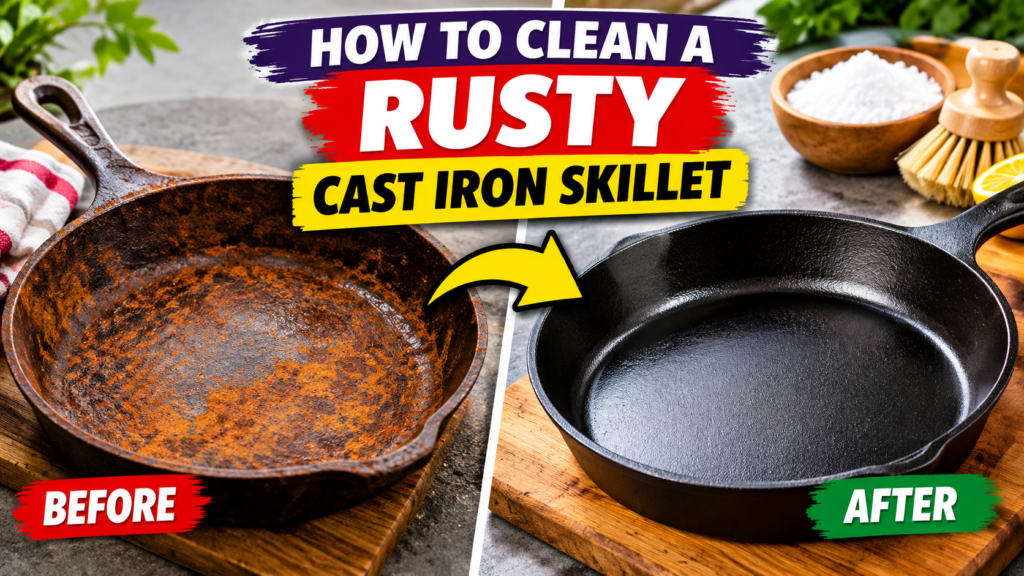
Quick Answer: Here is how to clean a rusty cast iron skillet. Scrub off loose rust with steel wool or coarse salt, soak in a 1:1 vinegar and water mix for up to 30 minutes if needed, rinse, dry fully, and re-season with a thin coat of oil.
A rusty cast iron skillet looks like a lost cause, but most of the time it is not. Orange spots usually come from moisture, soaking, or worn seasoning, and they can often be scrubbed away. Learning how to clean a rusty cast iron skillet saves money and keeps a durable pan in your kitchen for years.
In this guide you will learn what causes rust, which tools work, a simple step-by-step routine, how to re-season the pan, and when a pan is too damaged to keep.
Kitchen TipsCookwareCast Iron CareHome Cooking
This article is for general educational and buying-guidance purposes only. It does not replace the manufacturer’s official manual, food safety guidance, or professional advice. Materials, specifications, and care instructions can vary by product and should be confirmed with the manufacturer before purchase or use. For product defects, suspected food-safety issues, or injuries such as burns or cuts, contact the manufacturer, a qualified professional, or seek medical help as needed.
Why Cast Iron Skillets Rust
Cast iron is bare metal protected by a thin layer of baked-on oil called seasoning. When that layer wears thin or water sits on the metal, iron reacts with oxygen and rust forms. Knowing how to clean a rusty cast iron skillet also helps when you understand why rust shows up in the first place.
Air Drying
Leaving a wet pan in the dish rack gives moisture time to attack bare iron. Rust can appear overnight.
Soaking or Dishwashers
Long soaks and dishwasher cycles strip seasoning. The exposed metal then rusts quickly.
Thin Seasoning
Older or lightly seasoned pans have weak spots. Acidic foods like tomato sauce can wear them down further.
Humid Storage
Damp cabinets, basements, and garages encourage rust. Storing a pan with a lid on can trap moisture too.
Note: Dark, smooth, slightly shiny patches are seasoning, not rust. Rust is orange or reddish-brown and feels rough or powdery.
Check the Damage First
Before you decide how to clean a rusty cast iron skillet, look closely at the rust. Light orange spots or a brown film are usually surface rust and are fixable. Thick flaking rust, deep pits, or cracks are different. Choose cleaning if the surface feels mostly smooth after a quick scrub. Avoid cooking in the pan if it is cracked.
This decision path shows what to do next.
Practical guide: Rust decision path
Most home pans land in the “No” path, which means a little patience and elbow grease is enough.
Rust Removal Methods Compared
Each method suits a different level of rust, so match the method to your pan.
Tools and Supplies for Rust Removal
The right tools make how to clean a rusty cast iron skillet much easier. You do not need anything fancy. Steel wool, a stiff brush, coarse salt, white vinegar, a lint-free towel, and a neutral cooking oil cover most jobs. Use rubber gloves if you soak the pan in vinegar.
Use this dashboard to match your tool to the type of problem.
Practical guide: Tool fit by problem
Coarse salt with a cloth or sponge. Gentle and quick.
Steel wool with a little dish soap. Expect to re-season.
Short vinegar soak, then scrub. Check every 15 minutes.
A chainmail scrubber or stiff brush lifts bits without harsh chemicals.
Start with the gentlest option and move up only if the rust does not budge.
This article may contain affiliate links. If you buy through these links, we may earn a small commission at no extra cost to you. We only mention products that fit the topic and recommend checking current specs and care instructions directly with the manufacturer.
Cast Iron Chainmail Scrubber
Can help lift stuck-on bits and loosened rust, and many home cooks find it easy to rinse clean.
Cast Iron Seasoning Oil or Conditioner
Can make re-seasoning more convenient after rust removal. Confirm usage directions on the label.
How to Clean a Rusty Cast Iron Skillet Step by Step
Here is the full routine. Each stage builds on the one before it.
Practical guide: Rust cleaning routine
Skipping the dry or re-season stage is the most common reason rust comes back.
Step 1: Set up safely. Put on gloves and clear space near the sink. Make sure the pan is cool before you start.
Step 2: Scrub off loose rust. Use steel wool or coarse salt with a cloth. Work in circles until the orange powder stops coming off.
Step 3: Soak only if needed. Mix equal parts white vinegar and water in a basin or the sink. Submerge the pan and check every 15 minutes. Remove it by 30 minutes at most.
Step 4: Scrub and rinse. Scrub again with a brush, then rinse with warm water. The pan will look dull gray, which is normal.
Step 5: Dry completely. Towel dry right away. Then warm the pan on low heat for a few minutes to drive off hidden moisture.
Step 6: Re-season. Follow the next section. Bare iron should never sit uncoated, even for a day.
Warning: Never leave a skillet in vinegar overnight, and never mix vinegar with bleach or other cleaners. Long soaks can pit the iron, and mixed cleaners can release harmful fumes.
Problem vs Likely Cause
If something looks off after cleaning, this table can help you diagnose it.
How to Re-Season After Rust Removal
Re-seasoning rebuilds the protective layer. Rub a very thin coat of oil over the whole pan, including the handle and bottom. Then wipe it off as if you are trying to remove it all. A tiny film is enough. Place the pan upside down in an oven, with foil on a lower rack to catch drips. Many cooks bake at 450–500°F for about an hour, then let the pan cool in the oven. Check the manufacturer’s instructions for the exact temperature your pan can handle.
Tip: If the pan comes out sticky or blotchy, the oil layer was too thick. Wipe it down, then bake again. Two or three thin rounds beat one heavy coat.
Which Oil Fits Re-Seasoning?
Choose an oil that suits oven heat and your budget.
Here is a rough idea of which stages take the most effort.
Practical guide: Relative difficulty
Scrubbing rust
Re-seasoning
Vinegar soak
Rinsing and drying
These bars are a rough practical guide, not measured data. Scrubbing usually takes the most muscle, while drying takes the least effort but matters a lot.
Keep Rust From Coming Back
A simple routine after each use protects the surface. Wipe out food, rinse with hot water, dry fully, and rub in a tiny amount of oil. Store the pan somewhere dry. Check the manufacturer’s guidance if your skillet is enameled, because it needs different care than bare cast iron.
Practical guide: Care checklist
Rinse, scrub gently, and dry right away.
Warm on low heat, then wipe on a thin oil film.
Re-season if the surface looks dull or patchy.
Choose a dry cabinet or hang the pan, and skip damp spaces.
Think of this as a two-minute habit. It prevents far more rust than any deep cleaning can fix later.
Safe Practice vs Risky Practice
These habits decide whether your pan stays rust-free.
Safety Note: Cast iron stays hot long after you turn off the heat. Use oven mitts when handling a pan from the oven, and ventilate your kitchen during seasoning because oil can smoke. For general kitchen safety guidance, visit FoodSafety.gov.
When to Stop and Get Help
Most rust is a cleaning problem, not a replacement problem. A few situations call for a different move.
DIY Cleaning vs Manufacturer Help
Use this table to decide your next step.
When to Contact the Manufacturer or a Professional: Reach out if your pan cracks, a handle comes loose, or the surface keeps flaking after repeated cleaning. For a suspected product defect or a burn injury, contact the maker or seek medical help. You can also review product safety information at CPSC.gov.
Frequently Asked Questions
Can you use a rusty cast iron skillet after cleaning it?
Yes, once all loose rust is removed, the pan is rinsed and dried, and it is re-seasoned. Skip pans that are cracked, deeply pitted, or keep flaking.
How long can I soak a rusty skillet in vinegar?
Check it every 15 minutes and remove it by 30 minutes. Vinegar can pit the iron if left too long, so avoid overnight soaks.
Is rust on cast iron harmful?
Rust can give food a metallic taste and stain it, so remove it before cooking. If you have health concerns, ask a qualified professional.
Can I use steel wool on cast iron?
Yes, steel wool works well for rust removal. It also scrubs off some seasoning, so plan to re-season the pan afterward.
Can I put a rusty skillet in the dishwasher?
No. The dishwasher strips seasoning and traps moisture, which usually makes rust worse. Hand wash and dry it right away.
How do I stop rust from coming back?
Dry the pan right after washing, warm it briefly on the stove, and wipe on a thin film of oil. Store it in a dry place.
Final Thoughts
Now that you know how to clean a rusty cast iron skillet, you can rescue most pans with a scrub, a short soak if needed, careful drying, and a fresh coat of seasoning. Always check the manufacturer’s instructions for your specific pan, and stop using any skillet that is cracked or badly damaged. For burns or other injuries, seek medical help.
