
By Michael Hayes
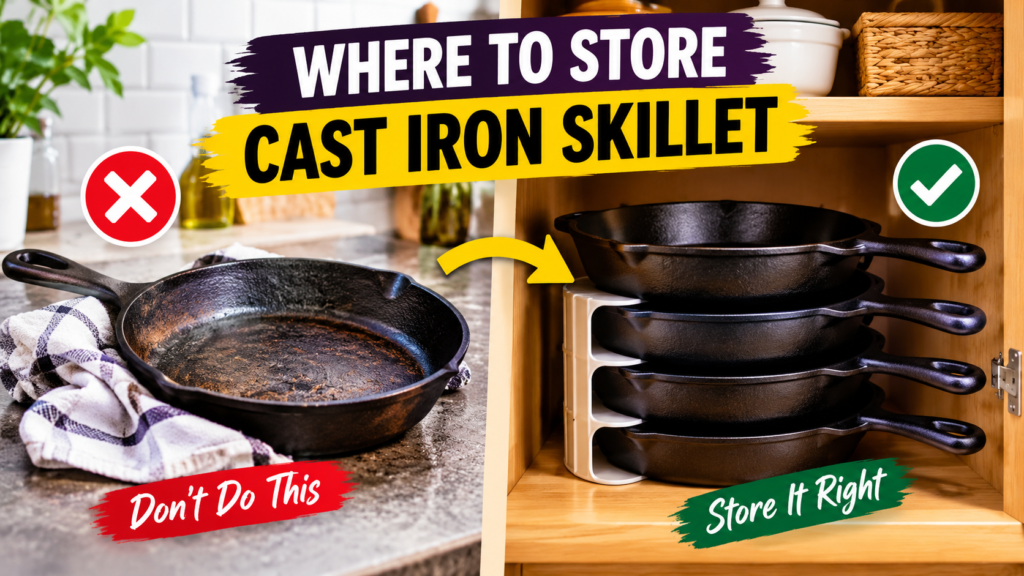
Quick Answer: Where to store cast iron skillet pans? Pick a dry, low-humidity cabinet, drawer, or sturdy hanging rack. Make sure the pan is fully dry and lightly oiled first. Place a paper towel between stacked pans, and never store food inside.
A cast iron skillet can last for many years, but storage matters. Moisture, heavy stacking, and sticky oil can lead to rust and scratches. If you are unsure where to store cast iron skillet pans in your own kitchen, this guide gives clear answers.
You will learn how to prepare the pan, compare storage spots, and avoid common mistakes.
Please Note
This article is for general educational and buying-guidance purposes only. It does not replace the manufacturer’s official manual, food safety guidance, or professional advice. Materials, specifications, and care instructions can vary by product and should be confirmed with the manufacturer before purchase or use. For product defects, suspected food-safety issues, or injuries such as burns or cuts, contact the manufacturer, a qualified professional, or seek medical help as needed.
Why Storage Matters for Cast Iron
Cast iron is strong and simple, but it does not like water. A damp skillet can form orange rust spots. A thin layer of cooking oil helps protect the surface, yet a thick layer can turn sticky in a warm cabinet.
When you decide where to store cast iron skillet cookware, think about dryness, weight, and easy access. Beginner check: touch the pan. If it feels cool, dry, and lightly oiled, it is ready. Many home cooks find that a spot away from sink and dishwasher steam works better.
Storage Spot Comparison
| Storage spot | Best for | Watch out for |
|---|---|---|
| Lower cabinet | Heavy pans used often | Damp areas near the sink |
| Deep drawer | Quiet, tidy storage | Weak drawer slides |
| Wall rack or hooks | Crowded kitchens | Hardware that cannot hold the weight |
| Oven | Extra space | Forgetting it before preheating |
| Stovetop | Daily cooking | Splatter and sticky buildup |
Choose a lower cabinet if you want the simplest option. Avoid the stovetop if you cook with a lot of oil, since splatter can leave a sticky film.
Prepare the Pan Before You Store It
What happens before storage matters as much as the spot. A pan put away wet can rust, and a pan with thick oil can turn tacky. Let it cool, clean it as the manufacturer suggests, and dry it fully. Many cooks warm it briefly on low heat to drive off hidden water. Then wipe on a very thin coat of cooking oil until the surface looks almost dry.
Note: Oiling before storage is a common habit, not a rule for every pan. Some makers give their own instructions, so follow those first.
Here is a simple stove-to-shelf routine you can follow each time.
Drying and wiping off extra oil are easy to rush on a busy night. If you improve only one habit, start with these two.
Where to Store Cast Iron Skillet Pans at Home
Your best spot depends on your space and how often you cook. Here are four common choices.
A lower cabinet keeps the heavy pan close to the stove and easy to lift. Pick one away from the sink and dishwasher.
A deep drawer protects the pan from dust and bumps. Make sure the slides are made for heavy cookware.
A rack frees cabinet space and lets air move around the pan. Use hardware rated for the weight and follow its instructions.
An oven can work as a quiet storage box. Move the pan out before preheating, since oil may smoke.
Choose a cabinet if you want easy, low-effort storage. Choose a hanging rack if cabinets are full and your wall can support one. Avoid hanging the pan if you are unsure about the wall or hardware. Check the manufacturer’s guidance if your pan has a special handle or finish.
Step-by-Step Skillet Storage Routine
Troubleshooting a Stored Skillet
Even careful cooks see problems now and then. Use this table to match what you see with a likely cause.
Problem vs Likely Cause
| Problem | Likely cause | First thing to try |
|---|---|---|
| Orange spots | Moisture trapped on the surface | Scrub gently, dry fully, oil thinly |
| Sticky feel | Too much oil left on | Wipe with a dry cloth |
| Stale smell | Extra oil sitting a long time | Wipe off old oil, use less |
| Dull gray patches | Thin oil layer or rough scrubbing | Re-oil lightly |
Use this path when your skillet looks off after storage.
Most storage problems are surface issues. Cracks or deep damage are different, so stop use and ask the manufacturer.
Warning: Do not store cooked food, tomato sauce, or leftovers in the skillet. Acidic foods can damage the surface, and cooked food should go into the refrigerator in a shallow container soon after cooking. See FoodSafety.gov for timing guidance.
Safe Practices vs Risky Habits
Some habits protect your pan and your hands. Others cause rust, scratches, or accidents.
Safe Practice vs Risky Practice
| Safer practice | Risky practice | Why it matters |
|---|---|---|
| Dry the pan fully | Putting it away damp | Moisture can cause rust |
| Wipe on thin oil | Leaving a greasy layer | Extra oil can turn sticky |
| Use a barrier when stacking | Stacking bare pans | Metal rubbing can scratch |
| Use rated hooks | Using weak hooks | A falling pan can cause injury |
| Remove it before preheating | Leaving it in the oven | Oil may smoke |
Accuracy Note: This guide mainly covers bare or pre-seasoned cast iron. Enameled, coated, and specialty pans can follow different care rules, so confirm details with your pan’s manufacturer.
Small Kitchen and Stacking Ideas
Stacking can save space. The goal is to keep metal from rubbing metal and to keep moisture from getting trapped. Think carefully about where to store cast iron skillet pans you use every week, and keep them within easy reach.
Barrier Material Fit
| Barrier | Works well for | Watch out for |
|---|---|---|
| Paper towel | Quick, low-cost padding | Replace it if it gets damp |
| Dry kitchen towel | Soft, reusable padding | Keep it clean and fully dry |
| Felt pan protector | Neat stacks in cabinets | Check product care notes first |
Tip: Keep the pan you use most on top or at the front. Leave the lid off, or place a paper towel under it, so air can move.
Run through this checklist until the routine becomes a habit.
Each item protects the surface or prevents an accident. A quick glance before closing the cabinet can save you from rust later.
Which Storage Tool Fits Your Kitchen?
You do not need special gear to store cast iron well. Still, a few simple tools may help in a crowded kitchen.
Match the tool to your space. When in doubt, a plain paper towel and a dry cabinet are a good place to start.
Common Mistakes to Avoid
Most storage mistakes come from rushing. Knowing where to store cast iron skillet cookware is only half the job, because preparation matters just as much.
Mistake vs Better Choice
| Mistake | Better choice |
|---|---|
| Storing a damp pan | Dry it on low heat first |
| Using a thick oil coat | Wipe until almost dry |
| Hanging on weak hooks | Use hardware rated for the weight |
| Stacking bare pans | Add a paper towel or protector |
| Keeping it near sink steam | Pick a drier cabinet |
| Leaving food inside | Move it to a proper container |
This chart shows which habits matter most in a typical routine.
Drying and a dry spot come first for most cooks. A rack is helpful, but it depends on your space.
When to Contact the Manufacturer or a Professional
If your skillet has a crack, a loose handle, or flaking metal, stop using it and contact the manufacturer. If a wall rack or hook feels loose, ask a qualified installer. For serious burns, seek medical help right away. You can learn about unsafe product reports at CPSC.gov.
Storage Tools Worth a Look
This article may contain affiliate links. If you buy through these links, we may earn a small commission at no extra cost to you. We only mention products that fit the topic and recommend checking current specs and care instructions directly with the manufacturer.
A pan rack may help keep skillets upright and separate in a crowded cabinet. Check size, weight limits, and materials on the product page.
Soft protectors may help reduce metal-on-metal contact when pans are stacked. Check current specs and care notes before buying.
Frequently Asked Questions
Where to store cast iron skillet in a small kitchen?
Try a dry lower cabinet, a vertical pan rack, or a sturdy wall hook. Keep the pan dry, lightly oiled, and away from sink steam.
Can I store a cast iron skillet in the oven?
Yes, many people do. Make sure the pan is dry and cool, and always remove it before you preheat the oven.
Should I put a lid on a cast iron skillet in storage?
It is better to leave the lid off or place a paper towel between the pan and lid. Trapped moisture can lead to rust.
Can I stack cast iron skillets?
Yes, if you add a paper towel, dry cloth, or pan protector between them. Avoid stacking bare pans, since metal rubbing metal can scratch the surface.
Is it safe to hang a cast iron skillet?
It can be, if the hook or rack is rated for the pan’s weight and installed as the maker directs. If you are unsure about your wall, ask a qualified installer.
Can I store food in a cast iron skillet?
It is best not to. Acidic foods can harm the surface, and leftovers belong in shallow containers in the refrigerator. Check FoodSafety.gov for timing.
Final Thoughts
The best answer to where to store cast iron skillet pans is simple: a dry, stable spot, with the pan clean, dry, and lightly oiled. Check the manufacturer’s instructions for your pan’s finish, follow food-safety guidance for leftovers, and seek medical help for serious burns or injuries.
