
By Michael Hayes
Quick Answer: Can cast iron skillets rust? Yes. Bare iron reacts with water and air, so moisture left on the pan is the main cause. Light rust usually scrubs off, and re-seasoning restores a protective layer. Drying the pan right away and keeping a thin oil film helps prevent it.
A reddish-orange patch on a favorite skillet can feel alarming. If you have ever asked, “can cast iron skillets rust?”, the short answer is yes, and it is usually fixable. This guide explains why rust forms, how to remove it step by step, and which daily habits keep your pan smooth.
This article is for general educational and buying-guidance purposes only. It does not replace the manufacturer’s official manual, food safety guidance, or professional advice. Materials, specifications, and care instructions can vary by product and should be confirmed with the manufacturer before purchase or use. For product defects, suspected food-safety issues, or injuries such as burns or cuts, contact the manufacturer, a qualified professional, or seek medical help as needed.
Can Cast Iron Skillets Rust? What Actually Happens
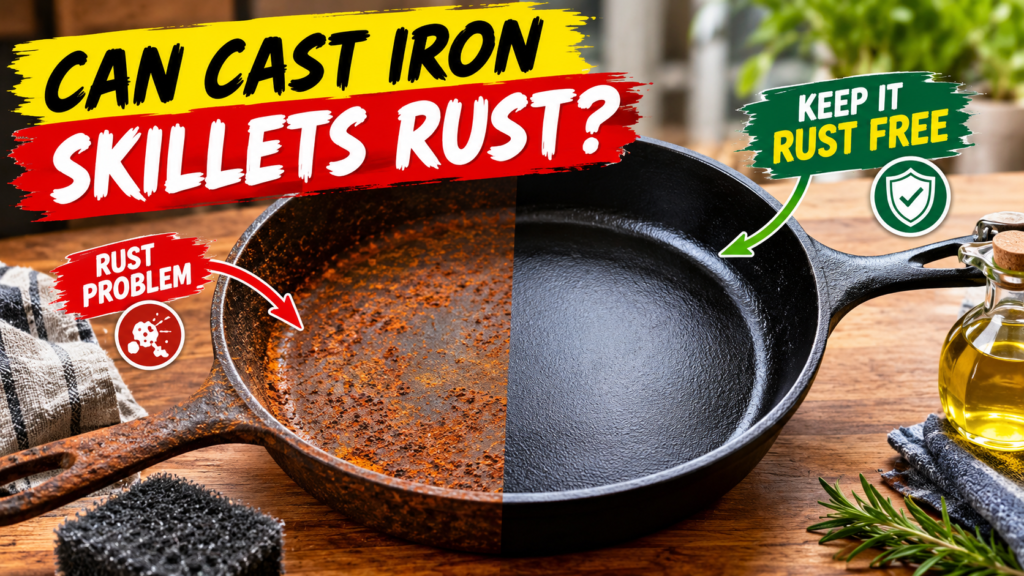
Yes. Cast iron is mostly iron, and iron reacts with oxygen and water to form rust. A well-seasoned skillet has a thin, baked-on layer of oil that helps keep moisture away from the metal. When that layer wears thin or the pan stays wet, orange spots can appear. Many home cooks see this after a dishwasher cycle, a long soak, or storage in a damp cabinet.
Beginner check: rub a paper towel over the cooking surface. If it picks up orange or reddish powder, rust is present. Experienced-cook observation: rust often starts at the rim, handle, or pan bottom first, because those spots are easy to miss when drying.
Note: Light surface rust is common and does not mean the skillet is ruined. In most cases, cleaning and re-seasoning bring the pan back into regular use.
How Cast Iron Compares With Other Cookware
Cast iron is not the only pan that can show rust or staining. This table shows how common materials usually behave, though results vary by brand and care.
Rust Risk by Cookware Type
| Cookware | Rust risk | Main care note |
|---|---|---|
| Bare cast iron | Higher | Dry fully and keep lightly oiled. |
| Enameled cast iron | Lower on coated areas | Chips can expose iron underneath. |
| Carbon steel | Moderate to higher | Needs seasoning like cast iron. |
| Stainless steel | Lower | Can stain or pit; dry to avoid spots. |
| Nonstick | Usually low | Avoid scratching; follow the maker’s care. |
Signs of Rust and What They Mean
Problem vs Likely Cause
| Problem you see | Likely cause | Usual next step |
|---|---|---|
| Orange dusty spots | Moisture on thin seasoning | Scrub, re-oil, re-season. |
| Rough, pitted patches | Rust left too long | Remove rust fully, then re-season. |
| Black flakes | Peeling seasoning layer | Scrub gently and re-season. |
| Metallic smell or taste | Rust or bare iron | Clean, re-season, then retest. |
| Sticky surface | Too much oil baked on | Bake thin coats only. |
Experienced-cook observation: rust that wipes off in one pass is usually surface-level. Deep pits that stay rough after scrubbing may need more work or, in rare cases, replacement.
Warning: Do not cook on a pan with flaking rust, deep pits, or cracks. Clean it first, and stop using the skillet if the metal itself looks damaged.
Use this quick path when you spot orange on your pan.
Most pans end up on the first or second path. The fourth path is about safety, not seasoning.
How to Remove Rust From a Cast Iron Skillet
Follow these steps for light to moderate rust. Check the manufacturer’s care guidance first, especially for enameled or specialty pans.
Tip: Season right after rust removal while the pan is clean and fully dry. Waiting overnight can let new rust start.
How to Prevent Rust Every Day
So, can cast iron skillets rust again after you fix them? Yes, which is why a short routine after each use matters. The visual below shows the basic order.
Here is a four-step routine for most weeknight meals.
Most of the protection comes from steps two and three. If you only change one habit, make it complete drying.
Safe Practice vs Risky Practice
| Safer practice | Riskier practice | Why it matters |
|---|---|---|
| Towel-dry right away | Air-dry on the rack | Standing water starts rust. |
| Wipe a thin oil film | Store with no oil | Oil shields bare iron. |
| Quick wash with a brush | Long soaking | Soaking invites rust. |
| Store in a dry cabinet | Store near a damp sink | Humidity speeds rust. |
| Hand wash only | Dishwasher cycle | Heat and detergent strip oil. |
Run through this short checklist once a week.
Spotting dull patches early is easier than removing rust later. A two-minute check can save a full re-seasoning.
Accuracy and Safety: Pan temperatures, oil smoke points, and enamel rules vary by product. Check the manufacturer’s instructions before using high oven heat or acidic soaks.
Tools and Oils That Help Prevent Rust
You do not need much gear. A few simple tools make drying, cleaning, and oiling easier.
Tool and Material Fit
| Item | Choose this if… | Avoid this if… |
|---|---|---|
| Stiff brush | You clean after most meals | Bristles are worn or shedding |
| Chainmail scrubber | Food is stuck on | You worry about scratching enamel |
| Fine steel wool | Rust needs removal | Your pan is enameled |
| Thin-coat cooking oil | You re-season at home | You plan one thick coat |
| Lint-free towel | You dry every time | You leave pans to drip |
This dashboard matches tools to the job.
Brush, towel, thin oil
Fine steel wool, brief vinegar soak
Soft tools only
Dry cabinet, paper towel between pans
Most weeks you only need the first tile. Reserve the second for rust and follow the maker’s care guidance for the third.
Common Mistakes and When to Get Help
In short, can cast iron skillets rust even with good care? Occasionally, yes, but regular drying and oiling keep it rare and easy to fix.
Mistake vs Better Choice
| Common mistake | Better choice |
|---|---|
| Soaking overnight | Wash soon after cooking |
| Using the dishwasher | Hand wash and dry |
| Skipping oil after washing | Add a thin film every time |
| Storing lids on tightly | Leave airflow and add a paper towel |
| Ignoring small orange spots | Treat them early |
This chart ranks common tasks by effort.
Bars show relative effort, not measured data. Daily drying is the easiest task, so it deserves the most attention.
Contact the Manufacturer or a Professional: If a skillet cracks, warps, or arrives with defects, contact the maker. For product safety concerns, visit the U.S. Consumer Product Safety Commission. Seek medical help for serious burns or cuts.
Optional Products Worth Considering
This article may contain affiliate links. If you buy through these links, we may earn a small commission at no extra cost to you. We only mention products that fit the topic and recommend checking current specs and care instructions directly with the manufacturer.
A thin coat after cleaning can help protect the surface between uses. Check the label for use and care directions.
Can help lift stuck-on food without harsh soaking. Avoid using on enameled surfaces unless the maker allows it.
Cast Iron Rust FAQs
Can cast iron skillets rust?
Yes. Bare or thinly seasoned iron can rust when it stays wet or damp. Drying fully and keeping a thin oil film helps prevent it.
Is it safe to cook on a rusty cast iron skillet?
Clean and re-season it first. Rusty pans can add a metallic taste, and flaking rust or deep pits mean the pan needs more work or may need replacing.
How fast can a cast iron skillet rust?
It depends on humidity and how thin the seasoning is. A wet pan can show spots quickly, so dry it right after washing.
Does rust mean my skillet is ruined?
Usually not. Light rust often scrubs off, and re-seasoning rebuilds protection. Deep pitting, cracks, or warping are different, so contact the manufacturer if you are unsure.
Can I use soap on cast iron to prevent rust?
Mild dish soap is generally fine on a well-seasoned pan if you rinse and dry it fully afterward. Check the manufacturer’s care guide for your skillet.
Can enameled cast iron rust?
The coated surfaces resist rust, but bare rims or chipped enamel can expose iron and rust. Follow the maker’s cleaning and use directions.
Final Thoughts
Can cast iron skillets rust? Yes, but a few steady habits make rust easy to prevent and usually simple to fix. Dry the pan fully, keep a thin oil film, and store it somewhere dry. Check the manufacturer’s instructions for your exact skillet, follow food-safety guidance, and seek medical help for burns or cuts.
