
By Michael Hayes
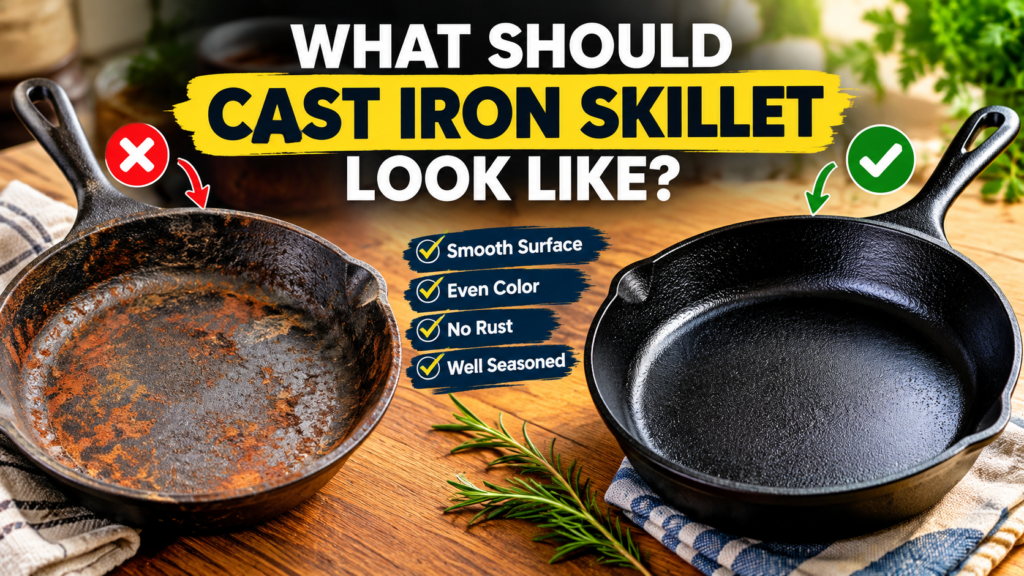
Quick Answer: What should cast iron skillet look like? A healthy pan is dark gray to black, smooth, and slightly satin to glossy. It feels dry, not sticky, with no orange rust or flaking. Some color variation and light scratches are normal.
A cast iron skillet tells you a lot just by how it looks. Color, shine, and texture can show whether the seasoning is healthy or something needs attention before your next meal.
This guide answers what should cast iron skillet look like at each stage, from a new pre-seasoned skillet to a well-used favorite. You will learn which marks are normal, which signs need action, and how to check your pan in minutes.
This article is for general educational and buying-guidance purposes only. It does not replace the manufacturer’s official manual, food safety guidance, or professional advice. Materials, specifications, and care instructions can vary by product and should be confirmed with the manufacturer before purchase or use. For product defects, suspected food-safety issues, or injuries such as burns or cuts, contact the manufacturer, a qualified professional, or seek medical help as needed.
What a Healthy Cast Iron Skillet Looks Like
A healthy skillet is usually dark gray, brown-black, or black. The surface looks fairly even from a distance, even if some patches are lighter or darker. The finish can range from soft satin to a gentle shine, but it should not look wet, tacky, or dusty.
Seasoning is a thin, baked-on layer of oil. It protects the iron and helps food release. When that layer is in good shape, the pan looks even and consistent. When it is failing, you often see the change first.
Cast Iron Skillet Stages Compared
Choose the first row as your baseline if you just bought a pan. Check the manufacturer’s guidance if yours looks different from every row.
Note: Enameled cast iron and carbon steel pans can look different. Follow your maker’s official care guide, such as Lodge’s guidance for Lodge pans.
Normal Marks That Should Not Worry You
Many beginners worry over small changes. These four looks are common and do not mean the pan is ruined.
Color Variation
Brown, bronze, or blue-black patches are common. Seasoning builds unevenly, so a pan can look patchy while still working well.
Light Scratches
Metal spatulas and daily cooking leave faint marks. If the surface stays smooth and dry, these marks are mostly cosmetic.
A Slightly Rough Texture
Many pans have a slightly bumpy cooking surface. That texture often softens as seasoning builds with use.
Lighter Spots After Cooking
Acidic foods or long simmering can leave dull spots. A thin wipe of oil after cleaning often helps them blend back in.
Tip: Tilt the pan under bright light to see what should cast iron skillet look like at its best: even, dry, and softly shiny.
Red Flags: What Cast Iron Should Not Look Like
Knowing what should cast iron skillet look like helps you spot trouble early. These signs usually mean the pan needs cleaning, reseasoning, or, in rare cases, replacing.
Problem vs Likely Cause
Example: You pull out a pan after a week unused and see a tacky patch near the edge. That usually points to leftover oil, so scrubbing lightly and rebaking a thin coat is a reasonable fix.
Warning: A crack, deep pitting, or a pan that wobbles on a flat burner is a safety concern. Cracks can spread under heat, so stop using the pan and contact the manufacturer.
Safety Note: Cast iron stays hot for a long time. Use dry oven mitts, keep handles turned inward, and keep hot pans away from children. For general food-safety guidance, visit FoodSafety.gov.
Use this quick path when something looks wrong.
Quick Decision Path
Most problems fall into the middle two steps and can be fixed at home. The first step is the one that needs outside help.
How to Check Your Skillet in Five Steps
Do this when the pan is cool. It takes about two minutes.
- Clean and dry the pan. Moisture can hide problems or look like them.
- Look at the color. Check the cooking surface and sides for orange spots, gray patches, or flaking.
- Tilt it in the light. Satin is normal. A wet-looking shine suggests extra oil.
- Touch the surface. Smooth and dry is good. Sticky or powdery needs attention.
- Check the shape. Set the pan on a flat surface and look for wobbling or cracks near the handle.
Experienced home cooks often run a hand over the pan when they put it away. Your fingers notice texture before your eyes do.
Looks follow habits. This routine helps keep the surface smooth.
After-Cooking Routine
Wipe out food while the pan is warm.
Wash with a brush and hot water.
Dry fully with a towel or low heat.
Rub in a very thin oil coat.
Store somewhere dry.
Drying and thin oil do most of the work. A thick coat of oil is a common cause of sticky pans.
How Seasoning Changes the Look Over Time
After a year of regular cooking, what should cast iron skillet look like? Usually darker, smoother, and more even than on day one. Fatty foods like bacon or seared chicken often help build seasoning, while long simmers of acidic sauces may wear it down.
To refresh a worn pan, many makers suggest scrubbing, drying fully, and baking very thin coats of oil. Oil choices and oven settings vary, so follow the instructions that came with your pan.
Care Tool Fit
Keep this checklist near your stove.
Care Checklist
☐ After Every Use
Wipe out food, wash with a brush, and dry fully. Add a very thin oil coat and store in a dry spot.
☐ Every Few Weeks
Look for orange spots, tacky areas, and flaking. Touch up with a thin coat if the surface looks dull.
Short, regular checks catch small issues before they grow.
Common Mistakes That Change How a Skillet Looks
Most changes in appearance come from a few habits. Small adjustments can make a big difference.
Mistake vs Better Choice
This chart shows a practical guide to routine priority, not scientific data.
Typical Routine Priority
Notice that drying and thin oil come first. Reseasoning matters, but good habits mean you need it less often.
The right size makes regular care easier.
Pan Fit Guide
Choose a 10–12 inch skillet if…
You cook for one to three people and want an everyday pan. It is easy to inspect and handle.
Choose a smaller skillet if…
You mostly cook eggs or sides. A smaller pan is lighter, which can make cleaning and drying simpler.
Pick one pan, learn how it looks, and add others later.
This article may contain affiliate links. If you buy through these links, we may earn a small commission at no extra cost to you. We only mention products that fit the topic and recommend checking current specs and care instructions directly with the manufacturer.
Helpful Products to Consider
Pre-Seasoned Cast Iron Skillet
A mid-size pan can make everyday cooking easier and gives you a clear baseline for judging how the surface looks over time.
Cast Iron Care Scrubber
A dedicated scrubber may help remove stuck-on bits without harsh pressure, which many home cooks find convenient.
When to Contact the Manufacturer or a Professional
Contact the manufacturer if a new pan arrives cracked, warped, or with a flaking coating. Report dangerous product defects or injuries through the CPSC, and seek medical care for serious burns.
Frequently Asked Questions
What should cast iron skillet look like after seasoning?
It should look dark and even, with a satin to glossy finish. The surface should feel dry and smooth, not sticky, with no orange spots or flaking.
Is it normal for cast iron to look blotchy?
Yes, patchy brown or black areas are common because seasoning builds unevenly. It is fine if the surface stays dry and smooth.
Why does my cast iron skillet look gray?
A dull gray surface often means the seasoning is thin or worn off. Clean the pan, dry it fully, and reseason it following your maker’s guidance.
Should a cast iron skillet be shiny?
A soft satin to gentle shine is normal. A wet, sticky, or uneven glossy look often means too much oil was left on the pan.
Is rust a reason to throw away a cast iron skillet?
Not always. Light surface rust can often be scrubbed off, then the pan dried and reseasoned. Deep pitting or cracks deserve a manufacturer check.
Does a new skillet look different from an old one?
Often, yes. New pans can look matte and a bit rough, while older, well-used pans tend to look darker and smoother.
Final Thoughts
Once you know what should cast iron skillet look like, checking your pan takes only a minute. Look for dark, dry, even seasoning, and treat rust, stickiness, or flaking as signs to clean and reseason. Always follow your manufacturer’s instructions, and seek help for cracks, defects, or serious burns.
