
By Michael Hayes
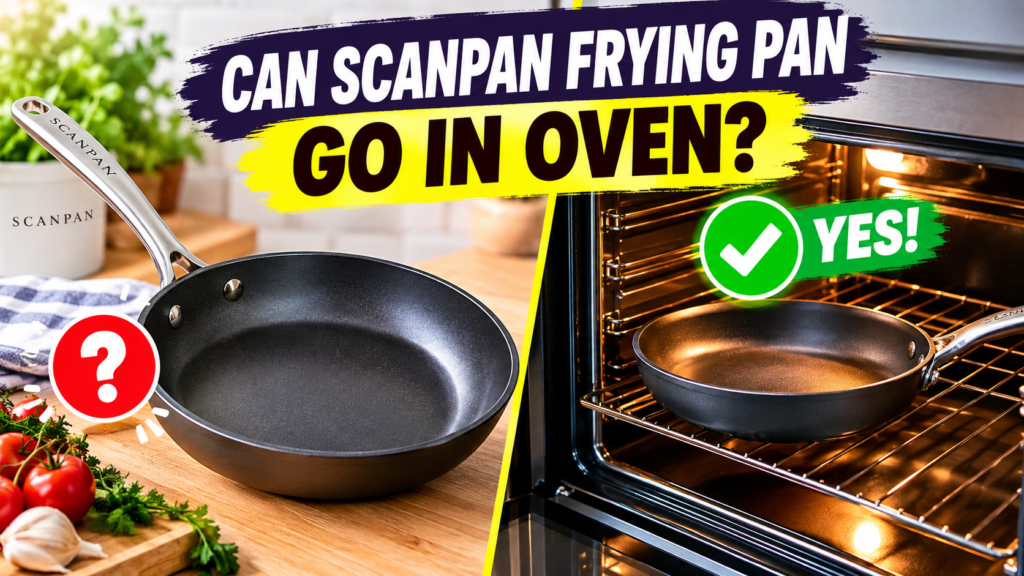
If you’ve just pulled a Scanpan pan off the stovetop and you’re eyeing the oven for a finishing step, you’re not alone. A lot of home cooks ask the same question mid-recipe: can a Scanpan frying pan go in oven safely without ruining the nonstick surface or the handle? This guide walks through what actually happens to the coating, the handle, and the lid at oven temperatures, plus how to check your specific pan before you commit.
What Does “Oven-Safe” Mean for a Scanpan Frying Pan?
“Oven-safe” simply means the pan’s body, coating, handle, and lid can hold up to dry oven heat for the amount of time a normal recipe needs. It does not mean the pan can handle unlimited heat forever, and it does not mean every part of the pan has the same limit. In daily cooking, I usually notice that the pan body heats up fastest, while the handle and any glass lid knob lag slightly behind.
So can Scanpan frying pan go in oven the same way a plain stainless steel skillet can? Mostly yes, but the honest answer depends on which Scanpan collection you own, because different lines are rated for different maximum temperatures.
Why Oven Safety Matters When Cooking with Scanpan
Getting this wrong can cost more than a ruined dinner. A handle that isn’t built for high heat can become dangerously hot to the touch, a nonstick coating pushed past its limit can degrade faster, and a lid that isn’t oven-rated can crack from sudden temperature swings. Knowing whether your Scanpan frying pan can go in oven heat before you start a recipe protects both your cookware and your hands.
This matters most for recipes that start on the stovetop and finish in the oven, like a seared chicken thigh or a frittata. If you skip the check and assume every piece of cookware behaves the same way, you risk warping a handle, cracking a glass lid, or shortening the life of the nonstick surface.
How Scanpan Frying Pans Are Built
Most Scanpan frying pans use a cast aluminum body with a bonded nonstick coating on the cooking surface, paired with a stainless steel handle. Lids, when included, are typically stainless steel or tempered glass. Each part reacts to oven heat a little differently, which is why the handle and lid deserve their own check, not just the pan body.
Table 1: Scanpan Component Comparison for Oven Use
Requirements to Check Before Oven Use
Before you decide a Scanpan frying pan can go in oven heat for your recipe, run through a short checklist. This takes less than a minute and prevents most of the common mistakes people make.
Check the packaging, bottom stamp, or manual for the exact Scanpan line. Different collections carry different maximum oven temperatures, so this is the first thing to confirm.
Compare your recipe’s oven setting against the rated limit for your pan. If the recipe calls for broiling or very high roasting heat, double-check before placing the pan inside.
If your recipe uses a lid, confirm the lid and knob are rated for the same oven temperature as the pan body, since some knobs are less heat tolerant.
Look for loose rivets, cracks, or wobble in the handle. A damaged handle should not go from stovetop to oven, regardless of the pan’s official rating.
Use this simple decision path anytime you’re unsure whether a specific pan can move into the oven:
In practice, this quick path stops most oven mishaps before they happen, since the temperature mismatch is usually the actual issue, not the pan itself.
Step-by-Step: Moving a Scanpan Pan from Stove to Oven
Confirm your pan’s rated oven temperature against the recipe before you preheat the oven.
Sear or start cooking on the stovetop using low to moderate heat, which is generally recommended for nonstick surfaces.
Use oven mitts on both hands when transferring, since the handle and pan body will both be hot.
Place the pan on a middle oven rack, away from the heating element, to keep heat distribution even.
Set a timer instead of guessing, since oven cooking finishes faster in a preheated metal pan than in many baking dishes.
When removing the pan, keep the mitt on the handle and set the pan on a heatproof surface, not directly on a cold countertop.
Common Problems and Fixes
Even when a Scanpan frying pan can go in oven heat, a few recurring issues show up in day-to-day cooking. Here’s what’s usually behind them.
Table 2: Problem vs Likely Cause
Common Mistakes with Scanpan Pans in the Oven
Table 3: Mistake vs Better Choice
Pro Tips and Best Practices for Oven Use
Preheating the pan on the stovetop before it goes in the oven can help you get a more even sear, since Scanpan’s cast aluminum body is designed to distribute heat quickly. Many home cooks find that starting on medium heat, rather than high, gives more consistent results and puts less stress on the nonstick coating.
Before your next stove-to-oven recipe, run through this quick maintenance checklist dashboard:
Running through these four checks takes under a minute and covers the checks that actually prevent most oven-related cookware problems.
What Experienced Home Cooks Chec

k That Beginners Miss
Another habit seasoned cooks pick up is checking whether a recipe calls for broiling, not just baking. Broiler heat sits much closer to the pan and runs hotter than a standard bake setting, so it deserves its own confirmation step even if a Scanpan frying pan can go in oven heat for regular roasting.
Safe vs Risky Oven Practices
Table 4: Safe Practice vs Risky Practice
As a practical guide, here’s how a few everyday oven-use factors compare in typical routine priority:
This is a practical guide only, not lab-tested data, but it reflects the order most cooks should work through before oven use.
Choosing the Right Scanpan Pan for Stove-to-Oven Cooking
A straightforward everyday pan that many home cooks find convenient for stovetop searing followed by an oven finish. Confirm the current oven-safe rating on the packaging before your first use.
Built with an induction-compatible base, which can make it a flexible pick for cooks who move between stovetop searing and oven roasting. Check the manual for the exact oven temperature limit for this line.
Table 5: Which Pan Fits Your Cooking Style
A quick product/tool fit dashboard for common kitchen needs:
When to Contact Scanpan or a Professional
Frequently Asked Questions
Can Scanpan frying pan go in oven at any temperature?
No. Different Scanpan collections carry different maximum oven ratings, so the safe temperature depends on your specific pan. Always check the packaging or manual before setting your oven.
Is the handle safe to touch straight out of the oven?
No. Even oven-rated handles get hot during oven use. Always use a dry oven mitt or towel when removing the pan.
Can I put the glass lid in the oven too?
Many Scanpan glass lids are rated for oven use alongside the base, but the knob material can differ, so confirm the lid’s rating separately before use.
Does putting the pan in the oven damage the nonstick coating?
Staying within the pan’s rated oven temperature is generally fine for the coating. Exceeding that limit, or letting oil residue build up, can affect performance over time.
Can Scanpan frying pan go in oven under the broiler?
Broiler heat is more intense and sits closer to the pan than standard baking. Confirm broiler compatibility separately before using this setting.
What should I do if my pan’s oven rating isn’t listed anywhere?
Contact Scanpan directly with your model information. It’s safer to confirm the rating than to guess based on a similar-looking pan.
Is it safe to use metal utensils on a Scanpan pan after oven use?
Let the pan cool first. Many Scanpan nonstick surfaces are designed to tolerate metal tools, but checking your manual confirms this for your specific pan.
In most everyday situations, a Scanpan frying pan can go in oven heat without issue, as long as you’ve confirmed the rated temperature for your specific collection and kept an eye on the handle and lid. A quick check before every stove-to-oven recipe is a small habit that protects both your cookware and your hands. Always confirm care instructions and materials with the manufacturer, and seek professional or medical help for any injury, persistent defect, or food-safety concern.
Authority resources: Scanpan official use and care guidance and U.S. Consumer Product Safety Commission.