
By Olivia Bennett
Quick Answer: Boiling cooks food in bubbling water, frying uses hot fat for crisp browning, and baking uses dry oven heat for even, gentle cooking. Choose boiling for pasta and eggs, frying for fast browning, and baking for larger or hands-off dishes. Always check food-safe temperatures.
Every recipe depends on how heat reaches the food. Pick the wrong method and you can end up with soggy fries, dry chicken, or pasta that sticks together. This guide to cooking methods boiling frying baking explains how each one works, when to use it, and how to stay safe at the stove and oven. You will also find step-by-step help, quick troubleshooting, and simple decision rules for everyday USA kitchens.
Disclaimer: This article is for general educational and buying-guidance purposes only. It does not replace the manufacturer’s official manual, food safety guidance, or professional advice. Materials, specifications, and care instructions can vary by product and should be confirmed with the manufacturer before purchase or use. For product defects, suspected food-safety issues, or injuries such as burns or cuts, contact the manufacturer, a qualified professional, or seek medical help as needed.
Cooking Methods Boiling Frying Baking Explained for Home Cooks
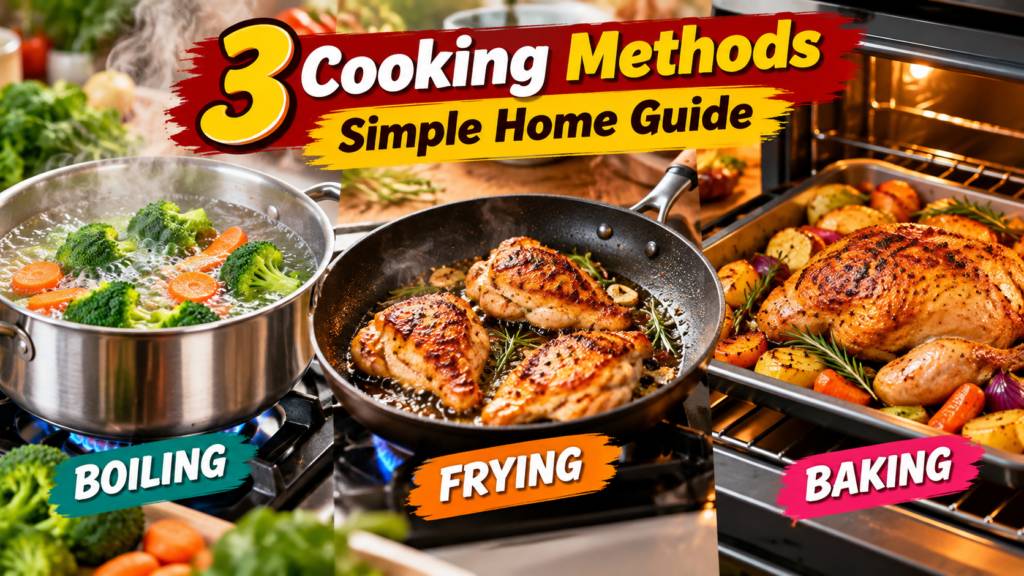
Every heat method changes flavor, texture, and the safety steps you need. Boiling moves heat through bubbling water. Frying moves heat through hot oil or fat. Baking moves heat through hot, dry oven air. Once you understand how each behaves, recipes become easier to follow and easier to fix.
Boiling
Boiling cooks food in water at a steady bubble, which is 212°F at sea level and a little lower at high altitude. It suits pasta, potatoes, eggs, corn, and stock. Results are predictable, but flavor can wash into the water. Simmering, a gentler bubble, works better for delicate foods.
Frying
Frying uses fat to cook food quickly and build a brown, crisp surface. Pan-frying uses a thin layer of oil, while deep frying covers the food. Experienced cooks watch for a shimmer and small bubbles rather than smoke. Choose frying if you want crunch or a fast sear. Avoid it if you cannot stay at the stove, because hot oil needs constant attention.
Baking
Baking surrounds food with dry heat, often between 300°F and 450°F. It suits breads, casseroles, roasted vegetables, and larger cuts of meat. Many ovens run a little hot or cold, so a small oven thermometer helps you check the real temperature. Choose baking when you want hands-off cooking or need to cook several items at once.
Boiling vs Frying vs Baking at a Glance
Comparing cooking methods boiling frying baking side by side makes the trade-offs easy to see.
Before you start cooking, this quick flow can help you settle on a method.
Practical guide: Picking a method
Do you want soft, crisp, or browned?
Thick or thin pieces cook differently.
Match texture and size to the heat.
Confirm a safe internal temperature.
Notice that texture comes first and safety comes last. Deciding what you want on the plate usually points to the right method, and the final check keeps the result safe.
Simple Decision Rules for Choosing a Method
- Choose boiling if you are cooking pasta, whole eggs, or root vegetables and want little added fat. Avoid it if you want browning or strong roasted flavor.
- Choose frying if you want a crisp crust or a quick sear on thin pieces. Avoid it if you are short on time to watch the pan or have no safe way to handle used oil.
- Choose baking if you are cooking for a crowd or want even, hands-off heat. Avoid it if your oven runs unevenly and you cannot check the temperature.
Note: Steaming, sautéing, roasting, and broiling are related methods. This guide stays with the three most common ones so you can build a strong base first.
How to Cook With Any Method: Step by Step
Whichever of the cooking methods boiling frying baking you pick, this routine keeps things simple and consistent.
- Prep first. Cut food into even pieces and pat it dry if you are frying or roasting.
- Set up your tools. Use a pot, pan, or baking sheet sized to the food, with room around it.
- Preheat properly. Bring water to a boil, warm the pan and oil until they shimmer, or let the oven reach its set temperature.
- Add food gently. Lower it in, away from you, to avoid splashes. Do not crowd the pot, pan, or tray.
- Monitor, do not guess. Watch timing, and use a food thermometer for meat, poultry, fish, and egg dishes.
- Rest and serve. Let food rest briefly, drain or blot as needed, and refrigerate leftovers promptly.
Common Problems and Likely Causes
Food Safety and Kitchen Safety for Each Method
Safe habits matter with all cooking methods boiling frying baking, but the risks differ. Boiling brings steam and scalding water. Frying brings splatter and fire risk. Baking brings hot surfaces and heavy pans. Raw meat, poultry, and eggs also call for clean hands, separate cutting boards, and safe temperatures in every method.
Warning: Never add water to hot oil, and never leave a frying pan unattended. Water causes violent splattering. Keep pot handles turned inward and keep children and pets away from the stove.
Safer Habits vs Risky Habits
Accuracy/Safety Note: USDA guidance commonly lists 165°F for poultry and leftovers, 160°F for ground meats, and 145°F for fish and whole cuts of beef, pork, and lamb, with a short rest for the meats. Confirm current guidance at FoodSafety.gov and USDA. For product safety and injury information, see the Consumer Product Safety Commission.
When you are unsure whether food is ready, this decision path keeps you on the safe side.
Practical guide: Is it done?
Is it meat, poultry, fish, or an egg dish?
Insert a food thermometer in the thickest part.
Keep cooking and check again.
Rest as needed, then serve.
Color and time are helpful clues, but they are not proof. Thermometer readings settle the question, especially for thick or stuffed foods.
Cookware Care for Boiling, Frying, and Baking
Good cookware makes each method easier, and simple care habits help it last. Always follow the manufacturer’s instructions for heat limits, cleaning, and oven use.
Practical guide: Cookware care checklist
A quick check before cooking takes less than a minute. Replace items with damage that affects safety, such as loose handles, and contact the manufacturer if unsure.
Cookware and Material Fit
The right setup depends on where the heat comes from.
Practical guide: Tool fit by heat source
Stockpots and skillets do most boiling and frying. Pick flat-bottomed pieces that sit steady on your burner.
Baking sheets, casserole dishes, and Dutch ovens handle baking. Confirm each item’s oven-safe temperature with the manufacturer.
If a pan does both jobs, such as a Dutch oven, check its stovetop and oven limits in the manual. Many home cooks find a few versatile pieces enough to start.
Tip: Pat food dry before frying or roasting. Less surface moisture means less splatter and better browning. For boiling, salt the water once it is bubbling and stir pasta early so it does not stick.
Common Mistakes and Better Choices
Beginners often wonder which method is hardest. For cooking methods boiling frying baking, this practical guide shows relative difficulty only. It is not lab data or a statistic.
Practical guide: Relative difficulty for beginners
Boiling is often the gentlest place to start because water limits how hot food can get. Baking adds timing and temperature awareness. Frying asks for the most attention because oil heats quickly and can be hazardous. Start with the easier methods and build up.
What Experienced Home Cooks Notice
Food added to hot oil should sizzle steadily. Silence suggests the oil is too cool, and loud popping suggests too much moisture.
Toasty, nutty aromas often mean browning is going well. Sharp, acrid smells mean it is time to lower the heat.
Even golden tones usually signal steady heat. Dark edges with pale centers point to heat that is too high.
Gentle steam from a simmer is normal. Heavy clouds when lifting a lid are a reminder to open it away from your face.
When to Contact a Professional or Manufacturer: Call 911 for a fire you cannot control, and seek medical help for serious burns or deep cuts. Contact the manufacturer if your oven, stove, or cookware seems defective, and do not attempt DIY electrical or gas repairs. If you suspect a food-safety problem, check FoodSafety.gov or contact a qualified professional.
Frequently Asked Questions
What are the main differences between cooking methods boiling frying baking?
Boiling cooks food in bubbling water, frying cooks it in hot oil for a crisp surface, and baking uses dry oven heat for even cooking. Each gives a different texture, needs different cookware, and has its own safety steps.
Which cooking method uses the least added fat?
Boiling and baking usually need little or no added fat, while frying relies on oil. Your best choice still depends on the recipe, the food, and your overall meal.
Can I use any pan for frying?
Not always. Choose a pan with a flat base and a heat rating that suits stovetop frying, and check the manufacturer’s instructions for temperature limits, especially with non-stick coatings.
How do I know food is cooked safely with any method?
Use a food thermometer. USDA guidance lists 165°F for poultry and leftovers, 160°F for ground meats, and 145°F for fish and whole cuts of beef, pork, and lamb, with a rest time for the meats.
Why does my baked food cook unevenly?
Common causes include oven hot spots, crowded pans, and opening the door too often. Rotating the pan halfway and checking your oven with a thermometer can help.
What should I do if hot oil catches fire?
Turn off the heat if it is safe and slide a lid over the pan to smother the flames. Never use water, and call 911 if the fire spreads or you cannot control it.
Final Thoughts
Once you understand cooking methods boiling frying baking, choosing a method becomes a quick decision about texture, time, and safety. Start with the easier methods, use a thermometer, and keep hot oil and steam in mind. Check the manufacturer’s instructions for your cookware and oven, follow food-safety guidance, and seek professional or medical help for serious problems.
