
By Olivia Bennett
Quick Answer: How to avoid overcooking vegetables: cut pieces evenly, use the right heat, and start checking early. Cook until just tender with bright color, then stop the heat right away and serve or cool them quickly.
Mushy broccoli and gray green beans are a common kitchen letdown. This guide explains how to avoid overcooking vegetables with simple timing, heat control, and doneness checks that fit a regular home kitchen. You will learn why vegetables go soft, how each cooking method behaves, and what to do in the last minute before serving.
Vegetable doneness Cooking times Carryover heat Steaming and roasting Blanching basics
This article is for general educational and buying-guidance purposes only. It does not replace the manufacturer’s official manual, food safety guidance, or professional advice. Materials, specifications, and care instructions can vary by product and should be confirmed with the manufacturer before purchase or use. For product defects, suspected food-safety issues, or injuries such as burns or cuts, contact the manufacturer, a qualified professional, or seek medical help as needed.
What Overcooking Looks Like
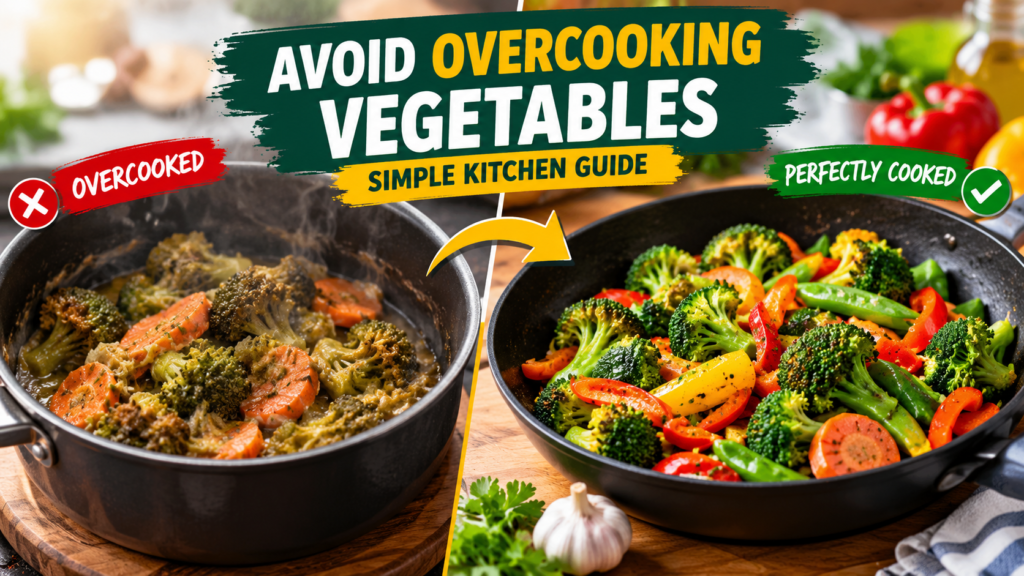
Overcooked vegetables turn soft, watery, dull, and sometimes bitter. Heat breaks down the plant walls that give vegetables their bite, and you cannot rebuild them. Learning how to avoid overcooking vegetables mostly means controlling time, heat, and size.
Beginner check: a fork should slide in with light resistance. Experienced cooks know food keeps cooking from stored heat after it leaves the pan. For example, broccoli left in a steamer one extra minute can shift from bright green to olive.
Note: Vegetables cook at different speeds. Dense carrots need more time than asparagus or spinach, so cut them smaller or add them at different times.
Why Vegetables Cook Past Perfect
Common causes are uneven pieces, heat set too high, a crowded pan, and walking away. Small or thin pieces cook fastest, so mixed sizes mean some bites turn mushy while others stay hard.
Cooking Method Comparison
| Method | Best for | Overcooking risk |
|---|---|---|
| Steaming | Broccoli, green beans | Moderate; trapped steam is strong |
| Roasting | Carrots, cauliflower | Lower; edges can burn |
| Boiling | Potatoes, corn | Higher; easy to forget |
| Sautéing | Zucchini, peppers | Moderate; fast and hot |
Here is a simple routine flow that works for most vegetables on the stove or in the oven.
Cut pieces to a similar size. Dry them so they cook instead of stewing.
Let the water boil or the pan get hot. Starting hot makes timing easier to predict.
Check a few minutes before the recipe time. Taste one piece if you can.
Move food to a cool plate or drain it. Do not leave it in the hot pot.
The flow matters because the last step is the one most people skip. Vegetables left in a hot pan or steamer keep softening, even with the burner off.
Step-by-Step Method for Tender-Crisp Vegetables
Use this routine any time you want to know how to avoid overcooking vegetables, whatever the recipe.
Tip: Many home cooks find it helps to set the timer a little short. You can always add a minute, but you cannot undo a minute.
Fixing Common Vegetable Problems
Problem vs Likely Cause
| Problem | Likely cause | Next time |
|---|---|---|
| Mushy texture | Too much time or steam | Test earlier, drain fast |
| Dull olive color | Long cooking, acid added early | Cook briefly, add acid last |
| Watery pan | Crowded or wet vegetables | Dry them, use two batches |
| Burnt outside, hard inside | Heat too high, pieces too big | Lower heat, cut smaller |
If you are unsure what to do at the stove, follow this quick decision path.
Take them off the heat now. Drain or move them to a cool plate.
Cook 30 to 60 seconds more. Test again before adding more time.
Stop cooking and change the dish. Mash, blend, or stir them into another recipe.
Turn off the heat and ventilate. Discard anything burnt and start fresh.
The path keeps you from guessing. Small checks beat long waits, and a soft batch can still become a good soup.
Method-by-Method Tips
Keep the water below the basket and the lid on. Lift the lid away from your face and test early.
Use a rimmed pan and leave space between pieces. Toss with oil and check a few minutes before the recipe says.
Use plenty of water so it keeps boiling. For blanching, have a bowl of ice water ready before you start.
Use a wide pan and medium-high heat. Add dense vegetables first and tender ones near the end.
Choose steaming if you want gentle, even cooking. Choose roasting if you want browned edges. Avoid boiling if you tend to walk away from the stove.
Warning: Steam and boiling water can cause serious burns. Tilt lids away from your face, use dry oven mitts, and drain pots slowly over a stable sink.
Accuracy and Safety: Cooked vegetables are perishable. Refrigerate leftovers within two hours, using shallow containers. For more guidance, see FoodSafety.gov.
Safe Practice vs Risky Practice
| Situation | Safer practice | Risky practice |
|---|---|---|
| Opening a steamer | Lift lid away from you | Leaning over the steam |
| Draining | Colander in an empty sink | Pouring near a full sink |
| Storing leftovers | Shallow container, fridge in two hours | Leaving the pot on the counter |
| Cutting | Steady board, sharp knife | Sliding board, dull knife |
Tools That Make Timing Easier
The right tools support how to avoid overcooking vegetables without adding stress. You do not need many, but each one should fit your pot, pan, or oven.
Tool and Material Fit
| Tool | Choose this if | Avoid this if |
|---|---|---|
| Steamer basket | You have a pot with a lid | It will not fit your pot |
| Rimmed baking sheet | You roast often | Your oven is very small |
| Slotted spoon | You blanch in batches | You only roast |
| Kitchen timer | You get distracted while cooking | Your stove already has one you use |
This dashboard shows how much each tool tends to help beginners. It is a practical guide, not a test result.
Practical guide: Kitchen timer
Practical guide: Steamer basket
Practical guide: Rimmed baking sheet
Practical guide: Slotted spoon
A timer scores highest because most overcooking comes from lost track of time. Specialty tools help most when they match the way you already cook.
Use this checklist before you cook and after you finish, so your tools stay ready.
☐ Timer works and is within reach
☐ Steamer basket fits the pot with the lid closed
☐ Baking sheet is clean, flat, and not warped
☐ Ice water is ready if you are blanching
☐ Pots and tools are washed and dried after use
Ready tools save you from scrambling at the worst moment. Always follow the manufacturer’s care instructions for each item.
Mistake vs Better Choice
| Common mistake | Better choice |
|---|---|
| Following the recipe time blindly | Test early; stoves and pans vary |
| Leaving them in the hot pan | Move them to a plate or colander |
| Piling everything in together | Group by density or cook in batches |
| Reheating on high | Reheat in short bursts, stirring |
This chart shows how easy it is to overcook common vegetables. It is a relative difficulty guide, not a measurement.
Relative difficulty: Asparagus and green beans
Relative difficulty: Broccoli and cauliflower
Relative difficulty: Zucchini and peppers
Relative difficulty: Carrots and potatoes
Thin, tender vegetables need the closest watching. Dense roots are more forgiving, which makes them good practice for beginners.
Contact the Manufacturer or a Professional: If a steamer, pot, or oven smokes, sparks, or does not heat as described, stop using it and contact the manufacturer. For burns, seek medical help. If you suspect food poisoning, contact a healthcare provider.
This article may contain affiliate links. If you buy through these links, we may earn a small commission at no extra cost to you. We only mention products that fit the topic and recommend checking current specs and care instructions directly with the manufacturer.
Holds vegetables above simmering water so they cook gently instead of sitting in it. Check that the size fits your pot.
Helps you check vegetables early instead of guessing. Useful when you are cooking several dishes at once.
Frequently Asked Questions
Why do vegetables turn mushy so fast?
Heat softens the plant walls in vegetables, and small or thin pieces soften fastest. Extra time, high heat, trapped steam, or leftover heat after cooking can push them past tender.
How long should I steam broccoli?
Many home cooks steam small florets for roughly 3 to 5 minutes, but size and setup vary. Start testing at 3 minutes and stop when a fork goes in easily.
Should I use an ice bath after cooking vegetables?
An ice bath can help when you blanch vegetables or plan to serve them cold, because it stops cooking fast. Skip it for hot side dishes, since it cools and waters down the food.
Can I fix vegetables that are already overcooked?
You cannot restore the texture, but you can change the dish. Mash them, blend them into soup, or stir them into a sauce, omelet, or casserole.
How do I keep green vegetables bright?
Cook them briefly and stop as soon as they are just tender. Long cooking and acidic ingredients added early can dull the color.
How should I reheat cooked vegetables?
Warm them in short bursts or a hot pan, stirring often. The USDA advises reheating leftovers to 165°F, and leftovers should be refrigerated within two hours of cooking.
Final Thoughts
Knowing how to avoid overcooking vegetables comes down to even cuts, steady heat, early checks, and stopping the cooking on time. Check the manufacturer’s instructions for your cookware and appliances, follow food-safety guidance for leftovers, and seek professional or medical help if a product fails or someone is hurt.
