
By Olivia Bennett
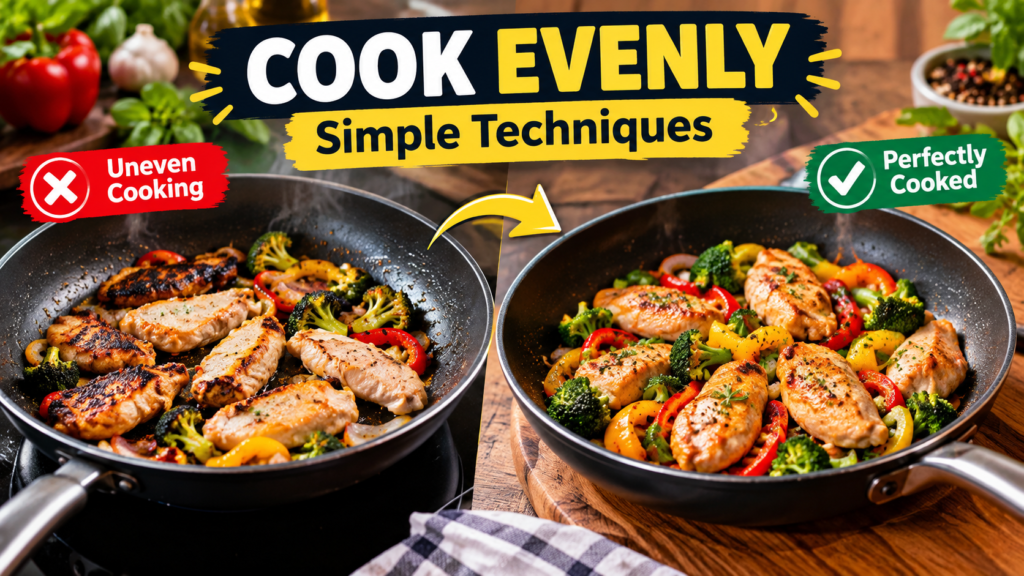
Quick Answer: Learn how to cook evenly using simple techniques: cut food to matching sizes, pat it dry, preheat fully, avoid crowding, use steady heat, rotate or stir, and check doneness with a thermometer.
Uneven cooking is frustrating. Chicken can be dry at the edge and pink in the middle, or vegetables can burn while the centers stay hard. This guide shows how to cook evenly using simple techniques on the stovetop and in the oven. You will learn how to prep food, manage heat, fix common problems, and check doneness safely.
Please Note: This article is for general educational and buying-guidance purposes only. It does not replace the manufacturer’s official manual, food safety guidance, or professional advice. Materials, specifications, and care instructions can vary by product and should be confirmed with the manufacturer before purchase or use. For product defects, suspected food-safety issues, or injuries such as burns or cuts, contact the manufacturer, a qualified professional, or seek medical help as needed.
What Cooking Evenly Really Means
Cooking evenly means the whole piece of food reaches safe, pleasant doneness at about the same time. The outside should not be overdone while the center is still cold. Uneven results usually come from three things: the food itself, the heat, and the cookware. Once you spot which one is causing trouble, the fix is often simple.
Note: Even cooking does not mean identical color everywhere. Small differences near pan edges or oven walls are normal.
Why Food Cooks Unevenly
Heat reaches food in different ways. A pan passes heat through the metal where it touches the food, while an oven surrounds food with hot air that is often stronger near the walls or heating element. Knowing your heat source helps you choose what to adjust first.
Common Heat Sources Compared
| Heat Source | Where Unevenness Starts | Simple Fix |
|---|---|---|
| Stovetop pan | Hot spot over the burner | Match burner to pan, move food |
| Oven | Hot zones near walls or elements | Rotate pans halfway |
| Air fryer | Crowded basket blocks airflow | Single layer, shake basket |
| Microwave | Cold spots in thick food | Stir, rotate, let stand |
Choose the oven for many pieces at once. Choose the stovetop for fast browning and easy control.
Follow this simple routine for most meals.
Practical guide: Even Cooking Routine
Match sizes, pat dry
Warm the pan or oven fully
Space food out, steady heat
Check temperature, rest
Most uneven cooking is decided in the first two stages, before food starts sizzling. If you skip prep or preheating, flipping later will only help so much.
How to Cook Evenly Using Simple Techniques: 7 Steps
Use these steps as a checklist. Beginners can follow them in order, and experienced cooks will recognize them as habits behind consistent results.
Tip: Try a bread test to map hot spots. Bake plain bread slices across a baking sheet briefly and see which areas brown first. Then rotate pans accordingly.
Fixing Common Uneven Cooking Problems
Problem vs Likely Cause
| Problem | Likely Cause | Try This |
|---|---|---|
| Burnt outside, raw inside | Heat too high, food too thick | Lower heat, cut thinner |
| Pale, soggy food | Crowded pan, wet surface | Dry food, cook in batches |
| One side browner | Hot spot or warped pan | Rotate, check pan flatness |
| Cold center in leftovers | Thick portion, no stirring | Stir, cover, heat thoroughly |
| Mixed soft and hard vegetables | Uneven cuts or types | Add dense pieces first |
Beginner check: change one thing at a time so you know what helped. Experienced-cook observation: pans often warp with age, so a wobbling pan is a common hidden cause.
If you are unsure whether food is ready, follow this path.
Practical guide: Troubleshooting Path
Work from top to bottom and stop at the first step that applies. Color alone is not proof of safety, so the thermometer step matters most for meat and poultry.
Warning: Never pour water on a grease fire or leave hot oil unattended. Turn off the heat, cover the pan with a lid if it is safe, and call 911 if the fire spreads.
Accuracy and Safety: Color and texture can mislead. Safe internal temperatures vary by food, so confirm them at FoodSafety.gov.
Safe Practices for Even Cooking
Safe Practice vs Risky Practice
| Situation | Safe Practice | Risky Practice |
|---|---|---|
| Checking doneness | Thermometer in thickest part | Judging by color alone |
| Taking off the chill | Short rest within USDA limits | Leaving food out for hours |
| Handling raw meat | Separate clean utensils for cooked food | Reusing the same tongs |
| Moving hot pans | Dry oven mitts, clear path | Wet cloth or bare hands |
| Crowded pans | Cook in batches | Piling food and hoping |
Avoid partly cooking meat and finishing it later unless you will complete cooking right away. Check the manufacturer’s guidance if your appliance has automatic modes.
Keep your tools ready with this quick checklist.
Practical guide: Before-You-Cook Checklist
Run through the list before you start. A short check can prevent many hot spot and cross-contamination problems.
Choosing Cookware and Tools That Help
Choose a heavier, flatter pan if food scorches in spots. Avoid pans that wobble or warp. Aluminum, stainless steel, cast iron, and carbon steel behave differently, so check the manufacturer’s instructions for care and heat limits.
Cookware and Tool Fit Guide
| Tool | Best For | Why It May Help | Check First |
|---|---|---|---|
| Heavy skillet | Searing, sautéing | Steadier heat | Burner size, care rules |
| Rimmed baking sheet | Roasting vegetables | Room for airflow | Fits your oven |
| Instant-read thermometer | Meat, casseroles | Checks the center | Probe instructions |
| Lid or foil | Thick pieces | Traps heat to finish | Steam is hot; lift away from face |
| Cast iron pan | Steady searing | Holds heat well | Weight, seasoning care |
Use this snapshot to decide what to buy first.
Practical guide: Tool Fit Dashboard
High priority for meat. It removes guesswork.
Good for stovetop cooking. It may reduce scorching.
Useful for roasting. Spacing helps browning.
Helpful for finishing thick pieces. Lift it carefully.
Start with a thermometer if you cook meat often. Add a heavy pan if your current pan wobbles or scorches.
This article may contain affiliate links. If you buy through these links, we may earn a small commission at no extra cost to you. We only mention products that fit the topic and recommend checking current specs and care instructions directly with the manufacturer.
Instant-Read Meat Thermometer
Can help you check the thickest part of food instead of guessing. Follow the manufacturer’s cleaning and use instructions.
Heavy-Bottomed Skillet
May help hold steadier heat for stovetop cooking. Confirm heat limits and care rules with the manufacturer.
Habits That Improve Results Over Time
Practicing how to cook evenly using simple techniques gets easier when you replace a few common mistakes.
Mistake vs Better Choice
| Mistake | Better Choice |
|---|---|
| Adding food to a cold pan | Warm the pan first, then add oil |
| Flipping constantly | Let food release, then flip |
| Small pan on a big burner | Match burner to pan |
| Opening the oven often | Check only at planned times |
| Random cut sizes | Group pieces by size |
This chart is a rough guide, not a measurement.
Practical guide: Relative difficulty
These bars are a practical guide, not lab data. Beginners can master the easier habits first and add heat control as they gain confidence.
Contact the Manufacturer or a Professional: If your oven runs far from its set temperature, a burner burns unevenly, or an appliance sparks or smells like burning plastic, stop using it and contact the manufacturer or a qualified technician. For serious burns or deep cuts, seek medical help.
Frequently Asked Questions
What is the easiest way to learn how to cook evenly using simple techniques?
Start with two habits: cut food to similar sizes and preheat your pan or oven fully. Then use a thermometer to check doneness. Many home cooks see steadier results from these small changes.
Why is my food burnt outside but raw inside?
Heat is often too high, or the food is too thick. Lower the heat, cut pieces thinner, or finish in the oven, then check the center with a thermometer.
Should I let meat sit out before cooking?
A short rest may take off some chill, but perishable food should not stay at room temperature long. Follow USDA time limits and keep food refrigerated until close to cooking.
How do I find hot spots in my oven?
Bake plain bread slices across a baking sheet and note which areas brown first. Rotate pans halfway through cooking. If the oven seems far off, contact the manufacturer.
Does pan material matter for even cooking?
It can. Thicker, flatter pans often hold steadier heat than thin ones, and materials differ in care and heat limits. Check the manufacturer’s instructions.
Do I need a thermometer to cook evenly?
Not for every dish, but it helps for meat, poultry, and thick casseroles because color can mislead. Check the thickest part and confirm safe temperatures at FoodSafety.gov.
Final Thoughts
Learning how to cook evenly using simple techniques comes down to preparation, steady heat, and checking food properly. Always follow manufacturer instructions, confirm material and care needs, and use food-safety guidance. If something seems unsafe, stop and seek professional or medical help.
