
By Olivia Bennett
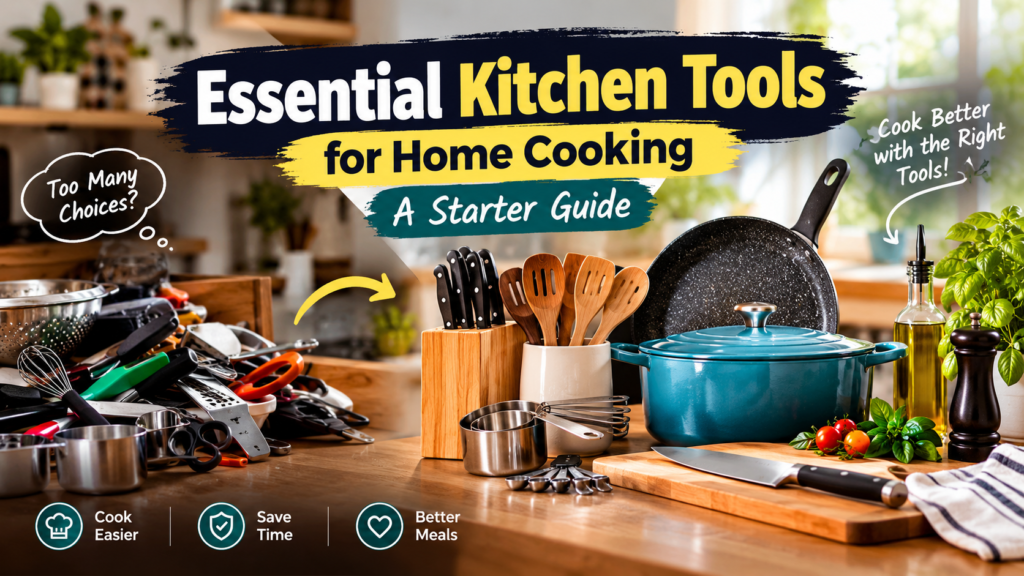
Quick Answer: The essential kitchen tools for home cooking are a chef’s knife, cutting board, skillet, saucepan, mixing bowls, measuring tools, spatula, tongs, and an instant-read thermometer. Start with these, then add pieces based on what you cook most.
Walking into a kitchen store can feel overwhelming. Shelves are packed with gadgets, yet most everyday meals rely on a small group of dependable pieces. This guide explains which essential kitchen tools for home cooking are worth buying first, how to choose them, and how to keep them clean and safe.
You will learn what each tool does and what mistakes to avoid.
Please note: This article is for general educational and buying-guidance purposes only. It does not replace the manufacturer’s official manual, food safety guidance, or professional advice. Materials, specifications, and care instructions can vary by product and should be confirmed with the manufacturer before purchase or use. For product defects, suspected food-safety issues, or injuries such as burns or cuts, contact the manufacturer, a qualified professional, or seek medical help as needed.
What Makes a Kitchen Tool Truly Essential?
The best essential kitchen tools for home cooking earn their place by being used several times a week, doing more than one job, and staying easy to clean. A garlic press or avocado slicer may be fun, but a sharp knife handles both tasks and many more. Before buying anything, think about the meals you actually cook, since a stir-fry cook and a weekend baker need different pieces.
Note: This guide covers hand tools and basic cookware. Appliances like blenders or air fryers can help, but they are not required for good everyday meals.
How to Choose Essential Kitchen Tools for Home Cooking
Ask three questions when comparing options. Is it comfortable to hold? Can it handle your usual heat? Can you clean it fully? Choose single pieces if you cook a few times a week and want to spend on quality where it counts. Avoid big matching sets if you only need a few items, since they often include pieces that stay in the drawer.
Four groups cover most everyday cooking:
Cutting and Prep
A chef’s knife and a stable cutting board handle most chopping and slicing. A paring knife adds control for small jobs like trimming and peeling.
Heat and Cookware
A skillet, a saucepan with a lid, and a larger pot cover frying, simmering, and boiling. Match each pan to your stovetop and check the manufacturer’s heat limits.
Measuring and Mixing
Nesting bowls, measuring cups, and measuring spoons help recipes turn out consistently. Accuracy matters most in baking.
Handling and Serving
A spatula, tongs, and a ladle let you stir, flip, and serve without burning your hands. Choose heat-resistant materials that suit your cooking temperatures.
Cutting Tools: Knife and Board
If you buy one quality item, make it a chef’s knife. A sharp knife is often safer than a dull one because it needs less force and is less likely to slip. Look for a comfortable handle, good balance, and a blade you can keep sharp. Add a paring knife, a serrated knife for bread, and a large cutting board that does not slide. A damp towel under the board can help keep it steady.
Knife Comparison: Which Blade Does What?
This simple flow shows a practical order for building your kit without overspending.
Practical guide: Build your kit in this order
Move down the list only when you notice a real gap. Buying in stages helps you learn what you actually use.
Cookware Basics: Skillet, Saucepan, and Stockpot
A 10- to 12-inch skillet handles eggs, sautéed vegetables, and seared chicken. A medium saucepan with a lid covers rice and sauces, and a larger pot handles pasta and soup. Stainless steel, cast iron, and nonstick each have trade-offs. Stainless steel often tolerates higher heat, while nonstick can be gentler for eggs but usually needs softer utensils and moderate heat. Cast iron can be durable but needs seasoning and thorough drying.
Tip: Match your pan to your stovetop. Induction cooktops need magnetic cookware, so check the product description or hold a magnet to the base before buying.
Common Cooking Problems and Likely Causes
Use this quick path when a pan or tool does not feel right.
Practical guide: Safety decision path
Loose handles and flaking coatings are safety concerns, not cooking mistakes. Technique problems can usually be fixed with heat control and patience.
Measuring, Mixing, and Handling Tools
Accurate amounts matter. Use dry measuring cups for flour and sugar and a clear liquid measuring cup for milk or broth. Nesting mixing bowls in glass, stainless steel, or ceramic give you room for tossing, whisking, and marinating. A heat-resistant spatula, tongs, and a wooden or silicone spoon cover most handling tasks.
An instant-read thermometer is the most underrated pick among essential kitchen tools for home cooking. Color and cooking time can mislead, but temperature shows doneness more reliably. Check FoodSafety.gov for the full chart of safe minimum internal temperatures. Common examples include 165°F for poultry and leftovers, 160°F for ground meat, and 145°F for fish.
Warning: Never leave hot pans unattended, and keep handles turned inward so they cannot be bumped. Use dry oven mitts, since a damp mitt can conduct heat and cause a burn.
Safe Habits vs Risky Habits
This checklist gives you a simple care routine for the tools above.
Practical guide: Care checklist
Small habits protect your tools and your safety. Dishwasher safety varies, so confirm each item’s care instructions first.
Matching Tools to Your Cooking Style
Realistic example: a busy weeknight cook making pasta and roasted vegetables mainly needs a pot, a baking sheet, a knife, and tongs. Your menu should guide your shopping list.
Tool and Material Fit Guide
This dashboard shows how a small starter kit can grow with your cooking.
Practical guide: Tool fit dashboard
Start with the first row and add items only when a recipe truly calls for them.
Safety Note: Product materials and coatings vary. Confirm heat limits, dishwasher safety, and utensil compatibility with the manufacturer’s instructions, and stop using cookware with loose handles or damaged surfaces.
Common Mistakes When Buying Kitchen Tools
Mistakes and Better Choices
This bar view is a rough guide to what tends to get daily use in many kitchens.
Typical routine priority (practical guide, not scientific data)
Knife and board
Skillet and saucepan
Measuring tools
Thermometer
Specialty gadgets
Specialty gadgets sit last because they serve narrow jobs. Spend first on what you use every day.
When to Contact the Manufacturer or a Professional: Reach out to the manufacturer for defects, flaking coatings, or unclear care instructions. For serious burns or deep cuts, seek medical help right away. You can also report unsafe products to the CPSC.
Helpful Tools to Consider
This article may contain affiliate links. If you buy through these links, we may earn a small commission at no extra cost to you. We only mention products that fit the topic and recommend checking current specs and care instructions directly with the manufacturer.
Chef’s Knife
A sharp, comfortable chef’s knife can make daily chopping and slicing easier.
Instant-Read Thermometer
Many home cooks find this convenient for checking doneness without guessing.
Frequently Asked Questions
What are the essential kitchen tools for home cooking?
A chef’s knife, cutting board, skillet, saucepan, mixing bowls, measuring tools, spatula, tongs, and an instant-read thermometer cover most everyday meals.
How many kitchen tools does a beginner need?
A small set of basics is usually enough. Start with cutting, cooking, and measuring tools, then add items only when a recipe truly needs them.
Is a dull knife really more dangerous?
It can be. Dull blades need more force and may slip, so keeping a knife sharp and using a stable board can reduce risk.
Which cookware material is best for beginners?
No single material fits everyone. Stainless steel and nonstick are common starting points, but check heat limits and utensil guidance with the manufacturer.
Do I need a kitchen thermometer?
It is not required, but it helps confirm doneness. FoodSafety.gov lists safe minimum internal temperatures for meat, poultry, and fish.
How should I clean and store my kitchen tools?
Follow each product’s care label. Wash and dry knives promptly, store them safely, and check cookware coatings for damage regularly.
Can I put kitchen tools in the dishwasher?
Some can, but many knives, wooden items, and nonstick pans are better washed by hand. Check the care label or manufacturer guidance first.
Final Thoughts
A small, well-chosen set of tools makes cooking easier and safer than a drawer full of gadgets. When you shop for essential kitchen tools for home cooking, focus on comfort, durability, and easy cleaning. Always check manufacturer instructions, follow food-safety guidance, and seek professional or medical help for serious burns, cuts, or product defects.
