
By Michael Hayes
Quick Answer: How to improve kitchen organization comes down to four habits. Empty one area at a time, group items by task, keep daily tools within easy reach, and store raw foods apart from ready-to-eat foods. Review each zone every few months.
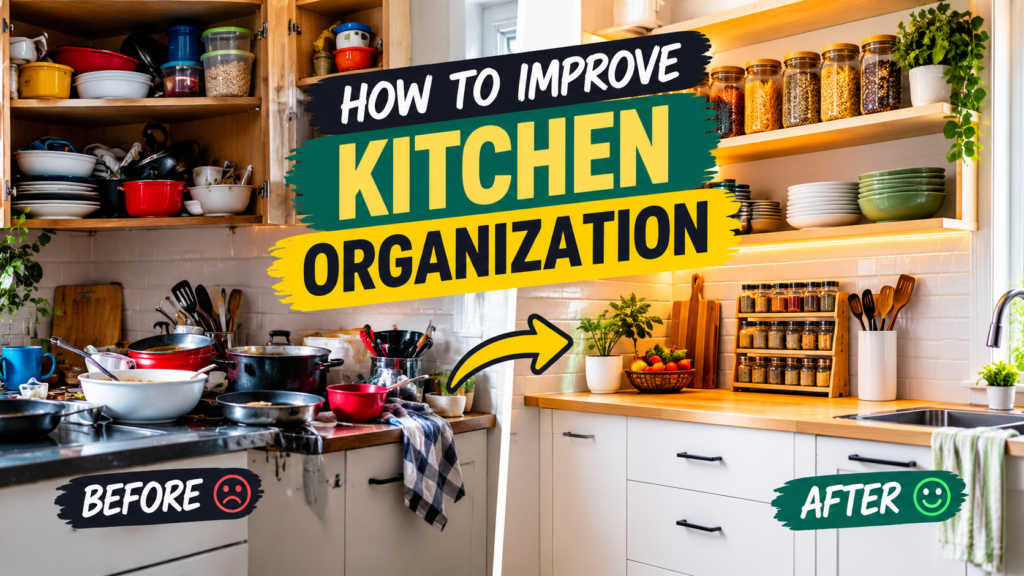
A kitchen that is easy to use makes cooking calmer, faster, and safer. This guide shows how to improve kitchen organization with practical steps for small apartments and larger family kitchens. You will learn how to set up zones, organize cabinets and the pantry, store food safely, and choose useful containers.
This article is for general educational and buying-guidance purposes only. It does not replace the manufacturer’s official manual, food safety guidance, or professional advice. Materials, specifications, and care instructions can vary by product and should be confirmed with the manufacturer before purchase or use. For product defects, suspected food-safety issues, or injuries such as burns or cuts, contact the manufacturer, a qualified professional, or seek medical help as needed.
What Kitchen Organization Really Means
Kitchen organization is not about matching bins or a picture-perfect pantry. It means arranging your space so the things you use most are easy to reach, see, and put away. A good system fits how you actually cook. Someone who bakes every weekend needs a different setup than someone who mostly reheats meals.
Think of your kitchen as five small jobs: preparing, cooking, serving, storing, and cleaning. When the tools for each job sit close to where the job happens, the room works better. Experienced cooks notice this first: the cutting board, knives, and scrap bowl sit within one arm’s reach.
Why a Better Kitchen Setup Matters
A cluttered kitchen wastes time, and it can create safety problems. Crowded counters make it easier to bump a hot pan. Overstuffed refrigerators can hide old leftovers. Messy cabinets lead to buying duplicates. Many home cooks find that a clear system saves money and reduces stress, which is the goal of this guide on how to improve kitchen organization.
Start With a Simple Kitchen Zone Plan
A zone is a small area built around one task. Even one wall of cabinets can be split into prep, cooking, and storage areas.
Kitchen Zones Compared
Here is a simple order to follow when setting up zones.
Practical guide
Work through the flow one cabinet or drawer at a time. A finished small area gives you a quick win and keeps the kitchen usable.
How to Improve Kitchen Organization Step by Step
Empty one area. Pick one drawer or shelf, take everything out, and wipe it with warm soapy water. Starting small keeps the project manageable.
Sort into groups. Make piles for keep, move, donate, and toss. Throw away expired food and broken tools. Check package storage directions if unsure.
Give daily items prime space. Place everyday tools between waist and shoulder height. Store rarely used items, like a roasting pan, on high or low shelves.
Group by task. Keep baking sheets near the oven and mugs near the coffee maker. Tools stored where they are used save steps.
Add containers last. Measure the space first. Buy dividers and bins only after you know what needs one.
Label and reset. Label shelves where helpful. Spend five minutes each evening returning items to their homes.
Choose this method if you want steady progress. Avoid reorganizing everything in one afternoon, which often leaves piles with nowhere to go.
Tip: Take a quick photo of each shelf before you start. Comparing before and after helps you judge whether the new layout really works.
Organizing Cabinets, Drawers, and Counters
Store heavy items low and lighter items higher. Keep pots and Dutch ovens in lower cabinets or deep drawers, and lids in a rack. For knives, use a block, magnetic strip, drawer insert, or blade guards so edges stay protected.
Counters should hold only what you use almost daily. If an appliance has not been used in a month, move it to a cabinet. Keep cords from hanging over edges or near the stove, and follow the manufacturer’s placement guidance.
Common Kitchen Problems and Likely Causes
Use this path when you are unsure where an item belongs.
Practical guide
Answer the questions in order. Most items land in a clear spot after two questions.
Warning: Never store cleaning sprays or detergent near food. Keep chemicals in a separate cabinet, away from children and pets, and keep flammable items like paper bags away from the stove.
Pantry and Refrigerator Organization With Food Safety
Group similar pantry foods together and place newer items behind older ones. This habit is called first in, first out. Store food in a cool, dry place away from the stove and dishwasher, and follow the package storage directions.
In the refrigerator, keep raw meat, poultry, and seafood in sealed containers on the bottom shelf so juices cannot drip onto ready-to-eat foods. Federal guidance from FoodSafety.gov recommends a refrigerator at 40°F or below, so an appliance thermometer can help.
Safer Practices vs Risky Practices
Safety Note: If a refrigerator stops cooling or food looks or smells off, do not taste it to check. When in doubt, throw it out, and review the guidance on USDA.gov.
A few small habits keep any system working.
Care checklist
Wipe counters and return tools to their zones. Reset the sink area.
Check the fridge before shopping. Use up leftovers and wipe spills.
Rotate older pantry foods forward. Check appliance cords for damage.
Review spices and gadgets. Donate duplicates and replace cracked containers.
Treat this as a realistic routine, not a strict rule. Adjust it to your household.
Choosing Containers and Organizers
Organizers help only after you sort and measure. Measure the depth, width, and height of a shelf or drawer before buying. Choose clear containers for foods you want to see and tight lids for dry goods, and check the manufacturer’s instructions for microwave, dishwasher, and freezer use.
Which Organizer Fits Which Job
Different kitchens benefit from different tools.
Tool fit guide
Use wall hooks and shelf risers. Check weight limits with the manufacturer.
Sealed containers keep dry goods tidy. Label each one.
Choose removable options. Read mounting instructions first.
Build separate stations. Keep each stocked with its own tools.
Match tools to your space and cooking habits, and skip anything that solves a problem you do not have.
Common Mistakes and Better Choices
Many people struggle with how to improve kitchen organization because of a few predictable mistakes.
Mistakes vs Better Choices
This chart shows a typical routine priority, not scientific data.
Typical routine priority
Put effort where the bars are longest. Safe storage and easy reach matter most, while decorative extras can wait.
Note: Organization is personal. If a system feels annoying after two weeks, change it. A setup works only when everyone who cooks there can follow it.
When to Contact a Professional or Manufacturer: Contact the manufacturer if a container, rack, or appliance arrives damaged, cracks during normal use, or has unclear care instructions. If a cord looks frayed, stop using the appliance and contact a qualified electrician or the manufacturer. For serious burns, deep cuts, or fire, call emergency services or seek medical help. Unsafe products can be reported to the CPSC.
Helpful Organizing Tools
After sorting and measuring, these two product types are common starting points.
This article may contain affiliate links. If you buy through these links, we may earn a small commission at no extra cost to you. We only mention products that fit the topic and recommend checking current specs and care instructions directly with the manufacturer.
Drawer Organizer Trays
Can help keep utensils and gadgets sorted so daily cooking feels easier.
Airtight Food Storage Containers
Many home cooks find these convenient for keeping dry goods easy to see.
Frequently Asked Questions
What is the first step in kitchen organization?
Empty and sort one small area, such as a single drawer. Remove expired food, broken tools, and duplicates before deciding where things belong.
How to improve kitchen organization on a budget?
Start with what you own. Sort, group items by task, and reuse trays or clean jars. Buy organizers only after measuring.
Where should I store knives safely?
Use a block, magnetic strip, drawer insert, or blade guards. Keep blades from touching other metal and out of children’s reach.
How should I organize a refrigerator safely?
Keep raw meat sealed on the bottom shelf, store ready-to-eat foods above it, and aim for 40°F or below. Avoid overpacking.
How often should I reorganize my kitchen?
Reset daily, check the fridge weekly, and review pantry shelves monthly. A fuller review twice a year suits many kitchens.
How do I organize a small kitchen?
Use vertical space, wall hooks, and shelf risers, and keep counters nearly clear. Follow the manufacturer’s weight and mounting instructions.
Final Thoughts
Knowing how to improve kitchen organization does not require a big budget or a remodel. Start with one drawer, group items by task, and store food safely. Check manufacturer instructions for every container, rack, and appliance, confirm material and care needs, and follow food-safety guidance. For serious burns, cuts, fire, or damaged products, seek professional or medical help.
