
By Michael Hayes
Quick Answer: Use long-grain rice like jasmine or basmati for fluffy sides, medium-grain for risotto and paella, short-grain for sushi and rice pudding, and brown rice for hearty bowls. Match grain length to the dish, then follow the package directions.
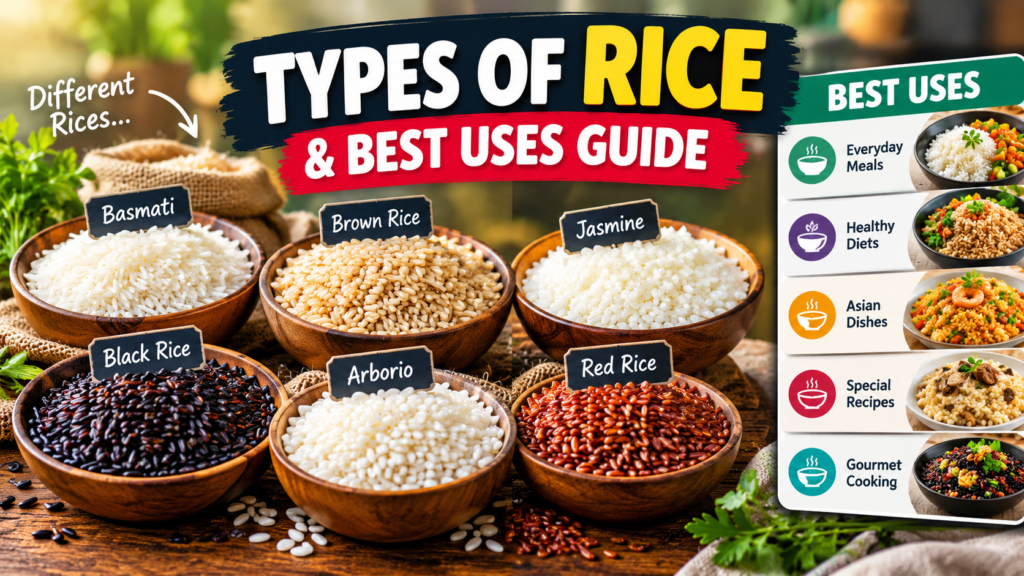
A grocery shelf can hold a dozen kinds of rice, and they do not behave the same way in the pot. This types of rice and best uses guide explains how grain length, starch, and processing change texture, so you can pick the right bag for tonight’s meal. You will also learn basic stovetop cooking, storage safety, and common mistakes.
Kitchen Tips Home Cooking Rice Basics Food Safety
This article is for general educational and buying-guidance purposes only. It does not replace the manufacturer’s official manual, food safety guidance, or professional advice. Materials, specifications, and care instructions can vary by product and should be confirmed with the manufacturer before purchase or use. For product defects, suspected food-safety issues, or injuries such as burns or cuts, contact the manufacturer, a qualified professional, or seek medical help as needed.
Why Rice Type Matters in Your Kitchen
Rice is simple to buy and surprisingly easy to get wrong. The same pot of water can give you light, separate grains or a creamy, sticky mass, depending on the bag you picked. A good types of rice and best uses guide starts with starch, because starch decides how grains behave once they cook.
Long-grain rice usually cooks up separate and light. Short-grain rice tends to turn soft and cling together. Medium-grain sits in the middle and often works when you want creaminess without full stickiness. Brown rice keeps its bran layer, so it tends to taste nuttier, feel chewier, and take longer to cook.
Choose long-grain if you want separate grains for plates, bowls, and curries. Choose short-grain if you want grains that hold together for sushi or rice pudding. Check the package directions if you are unsure, since brands can differ.
Main Types of Rice Compared
Before the details, here is a quick side-by-side view. Use it as a shopping cheat sheet when you are standing in the grocery aisle.
Rice Types Comparison Table
Rice Types in Detail
These four groups cover most of what home cooks see in USA grocery stores. Each card explains what the rice does well and when to pick something else.
Long-Grain Rice
This group includes plain long-grain white, jasmine, and basmati. The grains stay slender and mostly separate, which makes them a flexible everyday choice.
Medium-Grain Rice
Arborio and paella-style rice release starch as they cook. That gives dishes a creamy body, but it also means you should not expect fluffy, separate grains.
Short-Grain Rice
Sushi rice and similar types turn tender and sticky. That clinginess helps with rolls, rice balls, and some desserts, but it can feel heavy under a saucy curry.
Brown and Whole-Grain Rice
The bran layer adds chew and a nuttier flavor. It usually needs more water and a longer cook time than white rice, so read the label first.
Note: Glutinous or “sweet” rice is sticky because of its starch makeup, and it usually does not contain gluten. If you avoid gluten for any reason, still check the package label for processing or ingredient notes.
Best Uses by Dish
The most practical way to use a types of rice and best uses guide is to start from the dish. For curries, stews, and saucy plates, basmati or long-grain white keeps grains apart so sauce coats them instead of turning them gluey. For stir-fries, jasmine works well because it is fragrant and slightly soft.
Fried rice is a good example of a realistic kitchen decision. Many cooks prefer rice that has been cooked, cooled quickly, and refrigerated, because chilled grains are drier and stir-fry better. For risotto, choose Arborio or a similar medium-grain rice. For sushi, pick rice labeled for sushi. For rice pudding, short- or medium-grain rice usually gives a creamier result.
Tip: Rinse long-grain rice in cool water until the water looks less cloudy. This removes loose surface starch and can help grains stay separate. Skip rinsing for risotto, where surface starch helps create creaminess.
How to Cook Rice on the Stovetop
Stovetop cooking works for most white rice and teaches you how rice should look and smell as it finishes. The flow below shows the basic routine before the detailed steps.
Practical guide: Stovetop rice routine
Level your measuring cup. Rinse until the water looks clearer.
Use the package ratio. Bring the pot to a gentle boil.
Lower the heat and keep the lid on. Avoid stirring or peeking.
Turn off the heat and wait a few minutes. Fluff gently with a fork.
Read this flow as a checklist, not a stopwatch. Brands, rice types, and pots all change timing slightly, so the package directions should win if they differ.
- Measure the rice. Use a dry measuring cup and level it off.
- Rinse if the recipe suits it. Swirl the rice in cool water, drain, and repeat a few times.
- Add water. Follow the ratio on your package, because long-grain, basmati, and brown rice often differ.
- Simmer covered. Bring to a boil, reduce heat to low, and cover with a tight lid.
- Rest and fluff. Let the pot sit off the heat, then fluff with a fork.
Warning: Lift the lid away from your face. Steam from a pot of rice can cause burns, and a hot lid handle can also be a problem if it is metal. Use oven mitts when you are unsure.
Fixing Common Rice Problems
Most rice problems come from water balance, heat, or the wrong rice for the job. Experienced cooks notice the sound and smell: a crackling, toasty smell near the end often means water is gone. The table below helps you diagnose quickly.
Problem vs Likely Cause Table
If a pot still looks wrong, this simple decision path can help you decide what to do before you serve it.
Practical guide: Rice troubleshooting path
Drain extra water and let it steam dry briefly. Next time, reduce the water.
Add a little hot water and cover on low heat. Check again after a few minutes.
Move the unburnt top layer to a clean dish. Do not scrape the bottom into the pot.
Rest it covered, fluff, and serve. Note your water ratio for next time.
Treat this as a quick triage tool. It will not fix every pot, but it helps beginners avoid panic and wasted rice.
Rice Storage and Food Safety
Cooked rice needs careful handling. Leaving it at room temperature for long periods can allow bacteria to grow, so cool it promptly and refrigerate leftovers within about two hours. You can read general leftovers guidance at FoodSafety.gov and broader food guidance at the USDA. Dry, uncooked rice should stay in a sealed container in a cool, dry pantry.
Safe Practice vs Risky Practice Table
Accuracy and Safety Note: Food-safety timelines are general guidance. If rice smells sour, looks slimy, or has been left out too long, throw it away. Do not taste it to find out.
Rice Cooker, Pot, and Tool Fit
You can cook every rice type in a plain pot, but a rice cooker can make daily cooking easier for people who eat rice often. Pick tools based on how you cook, not on trends.
Rice Tool Fit Table
Whatever tool you use, keep it clean and in good condition. This short dashboard covers rice cooker care.
Practical guide: Rice cooker care checklist
Never clean a hot or plugged-in appliance. Wait until it is cool to the touch.
Use a soft sponge so the surface is not scratched. Follow the manual for dishwasher use.
Starch can build up around seals and vents. A damp cloth usually handles it.
Stop using the appliance if you see damage. Contact the manufacturer instead of repairing it yourself.
Do this after each use or at least regularly. A clean appliance cooks more evenly and is easier to trust.
This article may contain affiliate links. If you buy through these links, we may earn a small commission at no extra cost to you. We only mention products that fit the topic and recommend checking current specs and care instructions directly with the manufacturer.
Electric Rice Cooker
An electric rice cooker can make daily rice easier and may support more consistent results. Compare capacity and care instructions before you choose.
Fine-Mesh Strainer
A fine-mesh strainer makes rinsing rice quicker and less messy. Many home cooks find it convenient for other pantry grains too.
Use this fit dashboard to decide whether a purchase makes sense for your kitchen.
Practical guide: Rice tool fit dashboard
You make rice often and like hands-off cooking. It frees up a burner on busy nights.
You cook rice rarely or have little storage space. A good pot can do the job.
You rinse long-grain or basmati rice. It keeps grains from washing down the drain.
You are unsure about capacity, cleaning, or rice settings. Manuals vary by product.
The best purchase is the one you will actually use. If you are on the fence, start with the pot you already own.
When to Contact a Professional or Manufacturer: Contact the manufacturer if a rice cooker has a frayed cord, a loose plug, a cracked housing, or stops heating normally. For appliance hazards, you can also visit the CPSC. Seek medical help for serious burns, and contact a health professional if you think rice made you ill.
Common Mistakes to Avoid
Most disappointing rice comes from small habits. A types of rice and best uses guide is only useful if you also avoid the easy errors below.
Mistake vs Better Choice Table
Some rice is harder to cook well than others. This chart shows a rough, practical view of difficulty, not scientific data.
Practical guide: Relative difficulty
Beginners can start with long-grain white rice and move up to risotto or sushi rice as they build confidence. Experienced cooks often find the difficulty comes from timing and attention, not special equipment.
Frequently Asked Questions
What are the main types of rice?
Rice is usually grouped by grain length: long-grain, medium-grain, and short-grain. Common varieties include jasmine, basmati, Arborio, sushi rice, and brown rice.
Which rice is best for fried rice?
Many cooks prefer long-grain rice, such as jasmine, that was cooked, cooled quickly, and refrigerated. Chilled rice is drier, so it stir-fries better.
What is the difference between jasmine and basmati rice?
Jasmine is usually softer and slightly clingy, while basmati is longer, drier, and more separate. Both are fragrant long-grain choices.
Do I need to rinse rice before cooking?
Rinsing is often used for long-grain rice to remove loose starch. Skip it for risotto, where starch helps make the dish creamy.
How long can cooked rice stay in the fridge?
Cool it quickly, refrigerate within about two hours, and eat it within three to four days. Reheat until steaming hot.
Can I use brown rice instead of white rice?
Often yes, but brown rice usually needs more water and more time. Check the package directions and expect a chewier texture.
Final Thoughts
The best way to use this types of rice and best uses guide is to match the rice to the dish, then follow the package directions for water and time. Check the manufacturer’s instructions for any rice cooker or pot, store leftovers safely, and reheat them until steaming hot. For serious burns, a damaged appliance, or a suspected food-safety problem, contact the manufacturer, a qualified professional, or medical help.
