
By Michael Hayes
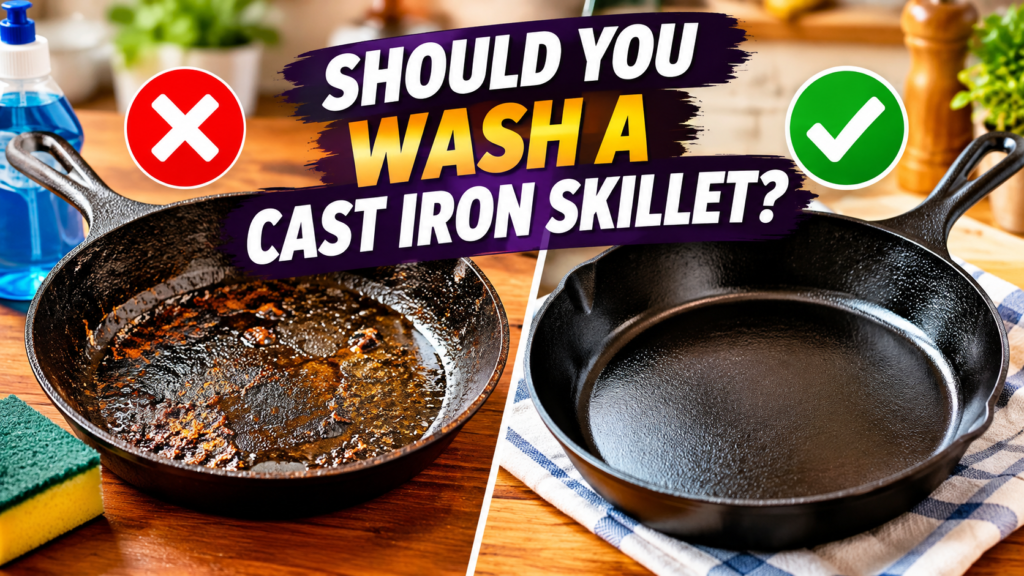
Quick Answer: Should you wash a cast iron skillet? Yes. Rinse it with hot water and scrub off food right after cooking. A little mild dish soap is fine for greasy or smelly pans. Skip soaking and the dishwasher, dry the pan fully, and wipe on a thin film of oil.
Few kitchen debates last as long as the soap question. Your grandparents may have warned you never to let soap touch the pan, yet modern advice is more relaxed. If you have ever asked, should you wash a cast iron skillet, you are not alone, and the answer depends on what is stuck to the pan.
This guide explains what to do, what to avoid, and how to tell when a pan needs a deeper clean. You will learn a safe everyday routine, how to handle rust and sticky spots, and which tools make cleanup easier.
Kitchen Tips • Cookware • Cast Iron Care • Home Cooking
This article is for general educational and buying-guidance purposes only. It does not replace the manufacturer’s official manual, food safety guidance, or professional advice. Materials, specifications, and care instructions can vary by product and should be confirmed with the manufacturer before purchase or use. For product defects, suspected food-safety issues, or injuries such as burns or cuts, contact the manufacturer, a qualified professional, or seek medical help as needed.
So, Should You Wash a Cast Iron Skillet?
Yes, a cast iron skillet needs cleaning like any other pan. Cooked-on food, old grease, and leftover moisture can cause bad smells, sticking, and rust. The real question is how to clean it, not whether to clean it.
Cast iron is tough, but the seasoning on its surface is a thin layer of baked-on oil that you want to protect. Gentle washing removes leftovers while keeping that layer in good shape.
Beginners can use a simple check. If the pan looks clean after a wipe and a rinse, you are done. If it feels greasy, smells like last night’s fish, or has a sticky film, a drop of mild soap is reasonable. Experienced home cooks notice how the pan feels: a smooth, slightly glossy surface usually means the seasoning is holding up well.
Why the No-Soap Rule Became So Popular
Older soaps and lye-based cleaners were harsher and could strip seasoning. That is where the no-soap rule came from. Today’s mild dish soaps are generally gentler on a well-seasoned pan, and many cast iron makers say a small amount of soap is acceptable. Check your pan maker’s advice, since new, unseasoned, or vintage pans may differ.
A pan that loses a little seasoning is not ruined, either. You can re-season it and keep cooking.
Note: A brand-new or freshly re-seasoned pan has a thinner, less settled coating. For the first few uses, many home cooks prefer hot water and a brush, then add soap only when needed.
Cleaning Methods Compared
Use this table when you are unsure should you wash a cast iron skillet with water alone, salt, or soap.
When to Skip Soap and When to Use It
A useful rule when deciding should you wash a cast iron skillet with soap is to look at the mess. Choose water and a brush if the pan only has light crumbs or a thin film of oil. Choose a little soap if you cooked fish, bacon, or strongly spiced food, or if the pan sat in a cabinet for a while.
Avoid soap right after seasoning a pan, until the coating has settled through a few rounds of cooking. Check the manufacturer’s guidance if your pan is enameled, vintage, or has a special coating, because care steps can differ.
Tip: Wash the pan while it is still warm, not hot. Warm pans release food more easily, and sudden temperature changes can stress the metal.
Here is a quick look at a typical cleaning routine, from stove to shelf.
Practical guide: Everyday cleaning flow
Until safe to hold
Remove food bits
Soap only if needed
Towel, then warm burner
Thin film only
Treat this flow as a practical guide, not a lab protocol. Drying and oiling matter most for preventing rust.
How to Wash Your Pan Step by Step
- Let it cool slightly. Wait until you can hold the pan with an oven mitt. Hot cast iron stays hot for a long time, and the handle can cause burns.
- Scrape off food. Use a wooden spatula or pan scraper to push leftover bits into the trash.
- Scrub with hot water. A stiff brush works well. For stuck spots, rub coarse salt on the surface with a cloth.
- Add soap only if needed. One small drop of mild dish soap on a sponge is enough. Rinse thoroughly.
- Dry right away. Wipe with a towel, then set the pan on a low burner for a minute or two until all moisture is gone. Use mitts.
- Oil lightly. Rub a few drops of cooking oil over the cooking surface, then wipe off extra so the pan is not greasy.
Common Pan Problems and Likely Causes
If you are not sure where to start, this decision path can help.
Practical guide: Which cleaning path fits?
Most pans land in the first two boxes. Only a small number of pans need more than a scrub and a fresh coat of oil.
What to Avoid When Cleaning Cast Iron
Warning: Do not put cast iron in the dishwasher, and do not leave it soaking in the sink. Long contact with water is a common cause of rust.
Skip steel wool and harsh scouring pads on a seasoned pan unless you plan to re-season afterward. Avoid strong chemical cleaners too, since you do not want residue on a surface that touches food.
Safer Habits vs Risky Habits
This checklist dashboard sums up a simple care rhythm.
Practical guide: Care checklist
☐ Scrape food
☐ Rinse with hot water
☐ Dry fully
☐ Wipe on thin oil
☐ Check for rust or stickiness
☐ Use a drop of soap if greasy
☐ Re-season dull spots
☐ Store in a dry place
The first box covers most days. The second box is for check-ins when the pan looks or smells off.
Handling Rust, Stickiness, and Seasoning Wear
Four issues come up most often. Here is how beginners can handle each one.
Scrub the spots with a brush or coarse salt, wash, and dry fully. Then wipe on thin oil and follow your maker’s seasoning steps.
A tacky feel usually means too much oil was left behind. Wash gently and use a much thinner layer next time.
Dull or gray patches mean the seasoning is thin. Cooking with some fat and re-seasoning when needed can rebuild it over time.
Loosen it with a scraper and hot water first. Repeat instead of scrubbing hard so you protect the surface.
Tool Fit for Cast Iron Cleanup
This tool-fit dashboard matches common situations to a tool.
Practical guide: Best tool match
Stiff brush and hot water.
Scraper, then chainmail with light pressure.
Steel wool, then wash, dry, and re-oil.
Coarse salt and a cloth.
Choose the gentlest tool that works. Save stronger tools for problems that need them.
This article may contain affiliate links. If you buy through these links, we may earn a small commission at no extra cost to you. We only mention products that fit the topic and recommend checking current specs and care instructions directly with the manufacturer.
A stiff brush can make daily cleanup quicker. Many home cooks find it convenient for loosening food without soap.
This tool may help with stuck-on residue. Use gentle pressure and confirm care guidance with your pan’s maker.
Common Mistakes and Better Choices
Finally, here is a relative view of which habits tend to matter most.
Practical guide: Typical routine priority (not scientific data)
Drying fully
Gentle scrubbing
Thin oil coat
Using soap when needed
The bars show a practical ordering, not measured results. Drying and gentle scrubbing carry the most weight, while soap is an occasional tool.
Accuracy and Safety Note: Hot cast iron can cause serious burns, and handles stay hot. Always use mitts. Do not leave cooked food sitting in the pan for hours. Move leftovers to storage containers and review the storage guidance at FoodSafety.gov.
When to Contact a Professional or Manufacturer: If your pan is cracked, warped, or has a peeling coating, stop using it and contact the maker. Brands such as Lodge post their own care guidance. To report a possible product defect, visit the CPSC. For serious burns, seek medical help right away.
Frequently Asked Questions
Should you wash a cast iron skillet after every use?
Yes. At minimum, scrape off food, rinse with hot water, dry the pan fully, and wipe on a thin film of oil.
Can I use dish soap on cast iron?
A small amount of mild dish soap is generally fine on a well-seasoned pan. Rinse well, dry right away, and follow your manufacturer’s advice.
Can cast iron go in the dishwasher?
No. Long water exposure and drying cycles can cause rust and wear down the seasoning, so hand wash instead.
What if I used soap by accident?
The pan is not ruined. Rinse, dry it fully, and oil it lightly. If the surface looks dull or food starts sticking, re-season it.
How do I clean cast iron without soap?
Use hot water and a stiff brush, a pan scraper, or coarse salt with a cloth. Then dry the pan completely and oil it lightly.
Can I let my skillet air dry?
It is better not to. Towel dry it, then warm it briefly on a burner so no moisture stays in the metal.
Final Thoughts
So, should you wash a cast iron skillet? Yes, gently and promptly. Scrape, rinse, dry, and oil, and use a drop of mild soap when the pan is greasy or smelly. Confirm care steps with your pan’s manufacturer, follow food-safety guidance for leftovers, and seek professional or medical help for cracked cookware or serious burns.
