
By Olivia Bennett
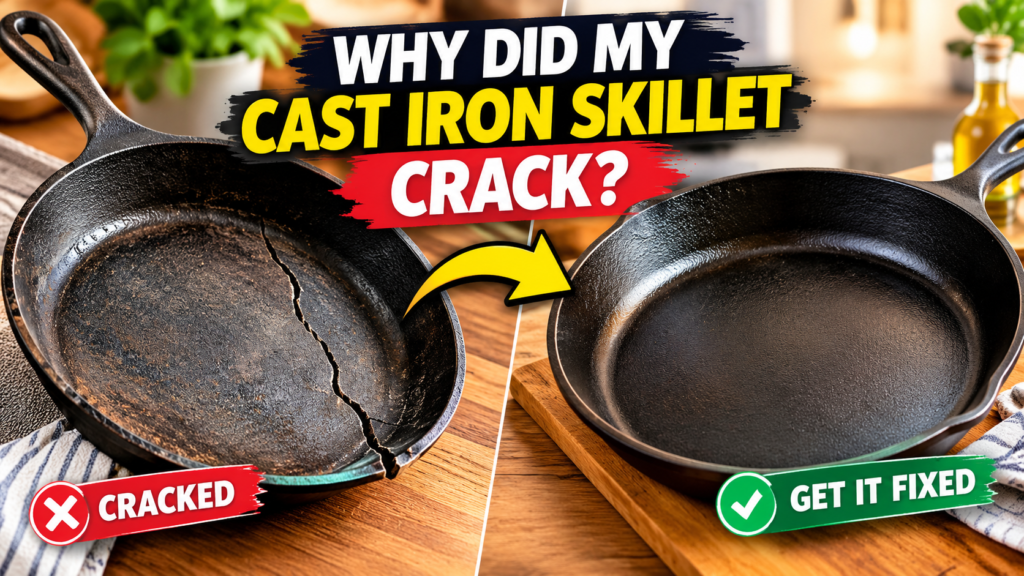
Quick Answer: Why did my cast iron skillet crack? Most often it was thermal shock, uneven or extreme heat, a hard knock, or a hidden casting flaw. Iron is strong but brittle, so sudden stress can split it. A cracked skillet should be retired.
A sudden snap or a thin dark line can be upsetting, especially if the pan was a favorite. If you keep asking why did my cast iron skillet crack, you are not alone. This guide explains the common causes, how to read the clues, what to do next, and how to lower the risk with your next pan.
Cracked Cast IronThermal ShockSkillet Heat SafetySkillet Care
Trust and Accuracy: This article is for general educational and buying-guidance purposes only. It does not replace the manufacturer’s official manual, food safety guidance, or professional advice. Materials, specifications, and care instructions can vary by product and should be confirmed with the manufacturer before purchase or use. For product defects, suspected food-safety issues, or injuries such as burns or cuts, contact the manufacturer, a qualified professional, or seek medical help as needed.
What a Cracked Skillet Is Telling You
Cast iron is hard and heavy, but it is also brittle. It holds heat well, yet it does not bend much under stress. When one part of the pan heats, cools, or takes a hit faster than the rest, tension builds inside the metal. If that tension is too much, the iron can split.
When you think about why did my cast iron skillet crack, start with three questions. How fast did the temperature change? Where was the heat applied? Did the pan take a knock or a fall? Those answers usually say more than the brand name does.
The Most Common Causes
Most cracks trace back to one of four causes. Each works a little differently.
Thermal Shock
The temperature changes too fast. Pouring cold water into a very hot skillet is the classic case. Running a hot pan under a cold tap can do the same.
Uneven or Extreme Heat
A large skillet on a small burner heats the center faster than the rim. An empty pan left on high heat can also stress the iron.
Impact or a Drop
A fall onto tile or concrete can crack the pan at once. Sometimes it leaves a hairline crack that spreads later, when the pan is heated.
Hidden Casting Flaws
Rarely, a pan has a weak spot from how it was made, such as a thin area. A crack during gentle, normal use may be worth reporting to the maker.
Comparison: Four Common Crack Causes
| Cause | Typical trigger | Where it often shows |
|---|---|---|
| Thermal shock | Cold water on a hot pan | Base or sidewall |
| Uneven heat | Oversized pan, small burner | Center or base-wall edge |
| Impact | Drop or hard knock | Rim, handle, or impact point |
| Casting flaw | Normal use | Often near thin areas |
Use this as a starting point, not a verdict. Cracks can have more than one cause, and only the manufacturer can judge a possible defect.
Safer Heat Habits
Because heat plays such a big role, a steady routine helps. This flow shows a gentle path many home cooks use.
Practical guide: Heat-up routine
Use a dry, empty pan.
Low to medium heat.
Add oil and food.
Wash only when cool.
Patience is the key idea. Choose this routine if you use a big skillet on a small burner. Avoid starting on high heat if you tend to walk away from the stove.
Note: A warped pan is not the same as a cracked one. Warping makes a pan wobble, while a crack is a split in the metal. Enameled pans also differ, since chipped enamel is not a cracked body. Check the manufacturer’s guidance for your pan type.
Reading the Clues
Problem vs Likely Cause
| What you saw | Likely cause | What to check |
|---|---|---|
| Snap after adding cold liquid | Thermal shock | How hot the pan was |
| Crack spreading from the center | Uneven or extreme heat | Burner and pan size |
| Line near rim after a bump | Impact | Any past drop |
| Crack during gentle use | Possible casting flaw | Contact the maker |
If more than one row fits, treat the pan as unsafe anyway. The cause helps prevention, but the crack decides safety.
Is a Cracked Skillet Still Safe?
A crack is not only cosmetic. This decision path shows how to think it through.
Practical guide: Decision path
The path always ends the same way because a cracked pan can break further under heat or weight. Avoid this pan if you are tempted to use it for light cooking. Check the manufacturer’s guidance if the pan is new.
Warning: Do not keep cooking in a cracked skillet, and do not weld, glue, or patch it for food use. A split pan full of hot oil can cause serious burns. Never pour water on a hot pan to cool it quickly.
What to Do Right After a Crack
If you are still stuck on why did my cast iron skillet crack, handle the pan safely first.
Everyday Habits That Protect Your Pan
Safe Practice vs Risky Practice
| Safer practice | Risky practice | Why it matters |
|---|---|---|
| Warm gradually | High heat on an empty pan | Heat spreads more evenly |
| Cool before washing | Cold water on hot iron | Avoids sudden shock |
| Two hands and a dry mitt | One-handed lift of a full pan | Drops cause damage |
| Store where it won’t be bumped | Stacking heavy items on it | Impact can hide cracks |
Beginner check: if you are new to cast iron and wondering why did my cast iron skillet crack on an early try, cold water on hot iron is a frequent culprit. Wash only when the pan feels cool.
Experienced-cook observation: many longtime users match pan to burner and let the pan cool on the stove before cleaning. That habit tends to prevent most heat-related damage.
A Simple Care Checklist
Good habits are easier when they are short. Run through this list before each cook.
Practical guide: Before-you-cook checklist
A quick look takes seconds and can catch a problem early. Choose this checklist if others share your kitchen and may not know cast iron rules.
Tip: Check the cool, dry pan in good light. Run a finger along the base, walls, and handle joint. A thin line you can feel deserves a closer look.
Matching the Pan to Your Stove
Product and Material Fit
| Option | Choose this if… | Avoid this if… |
|---|---|---|
| Bare cast iron | You will heat it gradually | You wash hot pans in cold water |
| Enameled cast iron | You will follow the maker’s heat limits | You want open-flame use without checking guidance |
| Smaller skillet | You cook on a small burner | You often cook for a crowd |
| Used or vintage pan | You can inspect it closely | You cannot see the base and walls |
Realistic example: a cook with a small apartment burner buys a large skillet and sets it on high. The center gets very hot while the rim stays cool. A pan that fits the burner narrows that gap.
A quick scan can show whether your setup fits. This dashboard uses plain labels, not test scores.
Practical guide: Setup fit dashboard
Pan covers burner without overhanging far.
Gradual warm-up every time.
Safe spot, away from knocks.
Two hands, dry mitt.
If two panels need work, adjust your setup before blaming the pan. Check the manufacturer’s guidance if you use an induction or glass-top stove.
Helpful Replacement Options
This article may contain affiliate links. If you buy through these links, we may earn a small commission at no extra cost to you. We only mention products that fit the topic and recommend checking current specs and care instructions directly with the manufacturer.
Cast Iron Skillet
A new skillet can replace a retired pan. Compare pan size to your burner before you buy.
Silicone Handle Holder
A holder can protect your hand when lifting a hot handle. Confirm heat ratings with the manufacturer.
When to Seek Help
DIY vs Manufacturer or Professional Help
| Situation | You can do | Get help for |
|---|---|---|
| Crack in a new pan | Stop use, take photos | Possible defect claim |
| Crack in an older pan | Retire it | Disposal questions |
| Hot oil spill or burn | Cool minor burns gently | Serious burns need medical help |
Habits matter in different amounts. This chart is a practical guide, not a lab result.
Practical guide: Typical routine priority (relative difficulty to build the habit shown in brackets)
Longer bars point to habits that most directly limit sudden temperature change, a common reason for splits. Shorter bars still help. Treat the bars as relative guidance only.
Accuracy and Safety: Cracks can look small but behave unpredictably under heat. For general product safety information, visit the U.S. Consumer Product Safety Commission. Care rules vary by pan, so confirm details with the maker.
Contact the Manufacturer or a Professional: Reach out if a new pan cracked during normal use, if it is under warranty, or if you notice thin spots or pits. Seek medical help for serious burns.
Frequently Asked Questions
Why did my cast iron skillet crack?
Common reasons include thermal shock, uneven or extreme heat, a drop or hard knock, and a hidden casting flaw. Recall the last time you used it to narrow the cause.
Can I still use a cast iron skillet with a small crack?
It is safest not to. A crack can widen under heat, and a split pan holding hot food or oil can cause burns or spills.
Can a cracked cast iron skillet be repaired?
Repairs are not recommended for cookware used with food. Welding or patching can leave weak spots, so most cooks retire the pan.
Does cold water really crack a hot cast iron pan?
It can. Cold liquid hitting very hot iron cools one area too fast. Let the pan cool before washing it.
Will the manufacturer replace a cracked cast iron skillet?
Policies vary. A defect in a new pan may be covered, but damage from heat shock or drops often is not. Check the warranty and ask the maker.
How can I stop my next skillet from cracking?
Heat it gradually, match it to your burner, cool it before washing, and store it where it won’t be knocked. Check for cracks before each use.
Final Thoughts
A cracked skillet is frustrating, but it also leaves clues. When you ask why did my cast iron skillet crack, look at how fast the heat changed, how the pan was heated, and whether it was ever dropped. Retire a cracked pan, confirm care rules with the manufacturer, and seek medical help for any serious burn.
