
By Michael Hayes
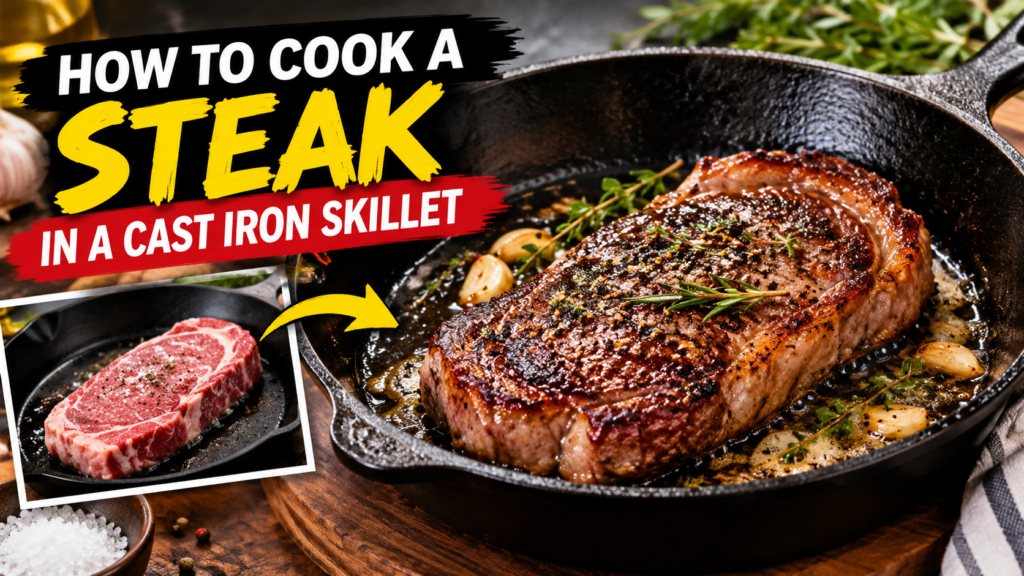
Quick Answer: To cook a steak in a cast iron skillet, pat a 1–1.5 inch steak dry, season well, and preheat the pan until very hot. Sear 3–5 minutes per side with a little high-heat oil, check the temperature with a thermometer, then rest the steak before slicing.
Cast iron can give steak a deep brown crust, but small mistakes can lead to smoke, a gray surface, or an overcooked middle. This guide shows how to cook a steak in a cast iron skillet using simple steps, clear heat cues, and USDA-based safety reminders. You will learn cuts, heat, doneness, fixes, and care.
This article is for general educational and buying-guidance purposes only. It does not replace the manufacturer’s official manual, food safety guidance, or professional advice. Materials, specifications, and care instructions can vary by product and should be confirmed with the manufacturer before purchase or use. For product defects, suspected food-safety issues, or injuries such as burns or cuts, contact the manufacturer, a qualified professional, or seek medical help as needed.
Why a Cast Iron Skillet Works Well for Steak
Cast iron is heavy and holds heat well. A thick skillet recovers quickly when a cold steak lands, which helps build a crust before the inside overcooks.
The tradeoff is that cast iron heats slowly and unevenly on large burners, and it stays hot long after you turn off the heat. If you want to learn how to cook a steak in a cast iron skillet, start by learning to read the pan. The oil should shimmer, with only a faint wisp of smoke. Choose cast iron if you want a strong sear.
Choose the Right Steak
Steak Cuts Compared for Skillet Cooking
Thickness matters more than the label. A steak about 1 to 1.5 inches thick usually browns well without drying out, while thin steaks can overcook before a crust forms. Choose ribeye or strip for more fat and flavor. Choose sirloin for a leaner option.
Prepare the Steak and Skillet Safely
Pat both sides of the steak very dry with paper towels. Surface moisture turns to steam, and steam stops browning. Season generously with salt and pepper just before cooking.
Tip: A dry steak and a hot pan do more for a good crust than any fancy seasoning. If the steak looks wet after salting, blot it again.
Keep raw steak in the refrigerator until you are ready to cook. Use a separate plate and tongs for raw and cooked steak, and wash your hands after handling raw meat. Skip rinsing the steak, since that can spread bacteria around your sink.
How to Cook a Steak in a Cast Iron Skillet Step by Step
These six steps suit a 1-inch steak. Let a thermometer make the final call.
Dry and season
Pat the steak dry, then season both sides and the edges.
Preheat the skillet
Heat the dry skillet over medium-high for about 5 to 10 minutes, with the exhaust fan on. The pan is ready when a drop of oil shimmers right away.
Add oil and the steak
Add a thin layer of high-heat oil such as avocado or refined vegetable oil. Lay the steak in away from you to avoid splashes.
Sear without moving it
Leave the steak alone for about 3 to 4 minutes. When the crust is deep brown, it should release easily.
Finish and baste
Cook the second side, adding butter, garlic, or herbs in the last minute if you like. Lower the heat so the butter does not burn.
Rest and slice
Move the steak to a clean plate and rest it about 5 minutes. Slice across the grain.
Warning: Cast iron handles get hot, including in the oven. Keep a dry oven mitt nearby, and never move a pan with flaming grease.
This flow shows the order of the routine at a glance.
Routine flow: from fridge to plate
Most steak problems trace back to an early link, like a wet surface or a cool pan.
Doneness Temperatures and Food Safety
USDA recommends cooking whole cuts of beef, including steaks, to 145°F measured with a food thermometer, followed by a 3-minute rest. Many restaurant guides list lower temperatures for medium-rare, but those choices carry more risk. Anyone who is pregnant, older, very young, or has a weakened immune system should follow the USDA number. You can read more at FoodSafety.gov and USDA.
Safety Note: Insert an instant-read thermometer sideways into the thickest part of the steak, away from bone and the hot pan. Clean the probe before using it again.
Safer Practice vs Risky Practice
Use this simple decision path when the pan misbehaves.
Safety decision path
Most smoke is a heat problem you can fix quickly.
Fix Common Steak Problems
When you are learning how to cook a steak in a cast iron skillet for the first time, small things can go wrong. Use this table to match what you see with a likely cause.
Problem vs Likely Cause
Note: Steaks thicker than about 1.5 inches often cook more evenly if you sear them first and finish them in a hot oven. Check the manufacturer’s guidance before putting any skillet or handle in the oven.
Clean and Care for the Skillet After Cooking
Steak leaves fat and browned bits behind. Let the pan cool until it is safe to handle, then follow the manufacturer’s care instructions. Many owners use hot water and a brush, then dry the pan fully and add a very thin coat of oil.
Care checklist dashboard
✓ Cool safely
Wait until the pan is safe to touch. Never plunge a hot skillet into cold water.
✓ Clean gently
Scrape stuck bits and rinse with hot water. Follow your maker’s guidance on soap.
✓ Dry fully
Wipe the skillet dry, or warm it briefly on low heat. Moisture is the main rust risk.
✓ Oil and store
Rub on a very thin layer of oil. Store the skillet in a dry place.
A few minutes of care protects the surface for next time.
Tools That Make Steak Night Easier
Whether you are new to how to cook a steak in a cast iron skillet or cook steak weekly, a few basic tools can make daily cooking easier and results more consistent.
Tool and Material Fit
This dashboard separates must-haves from extras.
Tool fit dashboard
Start with
Skillet, thermometer, tongs, oven mitt.
Nice to have
Splatter screen, basting spoon, small wire rack for resting.
A beginner can get strong results with the first group alone.
This article may contain affiliate links. If you buy through these links, we may earn a small commission at no extra cost to you. We only mention products that fit the topic and recommend checking current specs and care instructions directly with the manufacturer.
Cast Iron Skillet, 10 to 12 Inch
A heavy skillet can make steady searing easier. Confirm size, handle, and oven limits with the manufacturer.
Instant-Read Meat Thermometer
Many home cooks find a thermometer convenient for checking doneness. Confirm its range and cleaning directions before use.
Common Mistakes and Better Choices
Most people who struggle with how to cook a steak in a cast iron skillet repeat the same few habits.
Mistake vs Better Choice
The bars below are a practical guide to what usually matters most, not lab data.
Practical guide: typical routine priority
Master the first three before worrying about fancy finishes.
When to Contact a Professional or Manufacturer: Contact the skillet maker if the pan is cracked, warped, or has a loose handle. Seek medical help for serious burns, and call 911 if a fire spreads. If you suspect foodborne illness, contact a healthcare provider, and check CPSC for recalls or product safety concerns.
Frequently Asked Questions
How long do you cook a steak in a cast iron skillet?
For a 1-inch steak, many cooks sear about 3 to 5 minutes per side over medium-high heat. Thickness and heat change the time, so use a food thermometer.
What temperature should steak reach?
USDA recommends 145°F for whole cuts of beef, measured with a food thermometer, followed by a 3-minute rest. Lower temperatures carry more risk, especially for vulnerable groups.
Should I oil the steak or the pan?
Either works. Use a thin layer of high-heat oil such as avocado oil, and avoid letting it pool.
Why does my steak stick to the skillet?
Sticking usually happens when the pan is not hot enough or the steak is flipped too soon. A properly browned crust releases more easily from the surface.
Can I use butter to sear a steak?
Butter can burn at high heat, so most cooks sear with oil and add butter near the end.
Can I finish a steak in the oven in a cast iron skillet?
Many cast iron skillets are oven-safe, and thick steaks can cook more evenly this way. Check the manufacturer’s instructions first, and treat the handle as hot at all times.
Final Thoughts
Learning how to cook a steak in a cast iron skillet comes down to a dry steak, a hot pan, steady timing, and a thermometer. Follow USDA temperature guidance, check the manufacturer’s instructions for your skillet, keep raw and cooked foods separate, and get medical help for serious burns or illness.
