
By Michael Hayes
Quick Answer: Use a cast iron skillet when you want strong searing, even browning, crispy frying, or oven-to-stovetop cooking. Skip it for delicate fish, long acidic simmers, and quick low-heat tasks. It works best on foods that like steady, high heat.
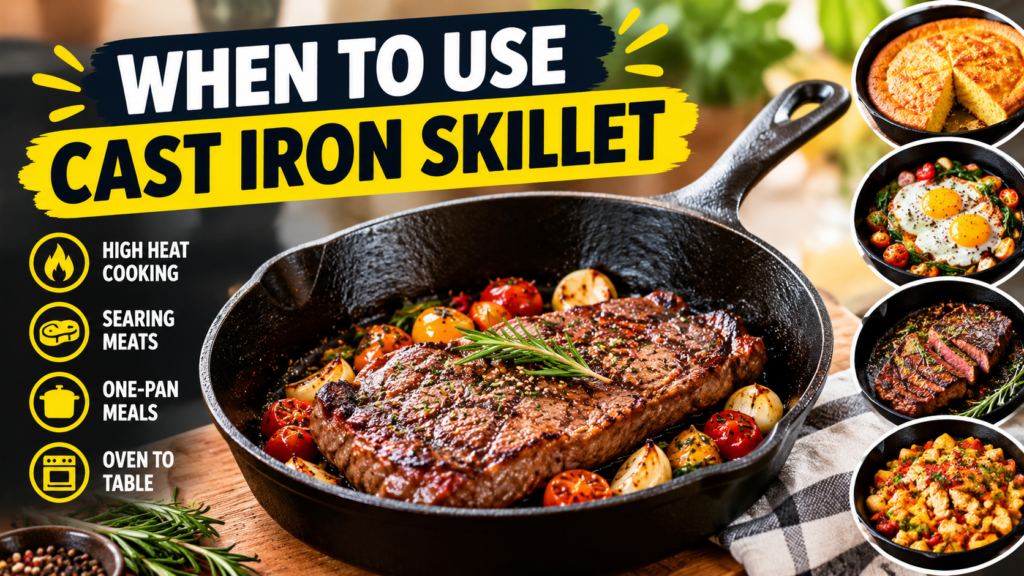
A cast iron skillet is heavy, tough, and loved by many home cooks, but it is not the right pan for every job. Learning when to use cast iron skillet cooking, and when to reach for another pan, helps you get better browning, fewer stuck foods, and a pan that can last for years. In this guide, you will learn which foods suit cast iron, which ones do not, how to handle heat safely, and how to cook step by step.
Kitchen Tips Cookware Cast Iron Home Cooking
This article is for general educational and buying-guidance purposes only. It does not replace the manufacturer’s official manual, food safety guidance, or professional advice. Materials, specifications, and care instructions can vary by product and should be confirmed with the manufacturer before purchase or use. For product defects, suspected food-safety issues, or injuries such as burns or cuts, contact the manufacturer, a qualified professional, or seek medical help as needed.
When to Use Cast Iron Skillet for Everyday Meals
Cast iron holds heat for a long time. Once it is hot, it stays hot when cold food hits the surface. That makes it great for jobs that need strong, steady heat. A thin pan can lose heat fast and steam food instead of browning it.
Searing Meat
Steaks, chops, and burgers form a deep brown crust in a hot skillet. Pat the meat dry first for better browning.
Crispy Frying
Chicken cutlets, potatoes, and fritters brown evenly. The pan’s steady heat helps the coating turn crisp.
Baking in the Pan
Cornbread, skillet cookies, and pan pizza bake well because the base heats evenly. Preheating the pan can help the bottom crisp.
Stovetop to Oven
Start a frittata on the stove or finish a seared chicken thigh in the oven. One pan means fewer dishes to wash.
The simplest rule for when to use cast iron skillet is to ask if your food benefits from heat that stays strong. If the answer is yes, cast iron is a good fit.
Cast Iron vs Other Pans for Common Jobs
Best Foods and Cooking Jobs for Cast Iron
Picture a busy Tuesday steak. You pat it dry, heat the skillet well, and lay the steak down. You hear a loud sizzle, and a crust forms. Experienced cooks notice that cast iron rewards patience, so let food brown before you flip it.
Tip: Dry food browns better. Moisture on the surface makes steam, which slows browning and can make food stick.
Choose this if you want browned burgers, roasted vegetables, skillet potatoes, or cornbread. Beginners can check heat by listening: food should sizzle steadily when it touches the pan. If you hear almost nothing, wait a minute and try again. For meat and poultry, use a food thermometer and review safe temperatures at FoodSafety.gov, such as 165°F for poultry.
This simple flow shows how most cast iron meals move from pan to plate.
Practical guide: Cast Iron Cooking Flow
Most good results come from the first two steps. If the pan is not hot or the food is wet, browning suffers.
When Cast Iron Is Not the Best Choice
Knowing when to use cast iron skillet also means knowing when to skip it. Delicate fish can stick and break apart. Long simmers with tomatoes, wine, or vinegar may dull the pan’s seasoning and add a metallic taste. Quick jobs like boiling water or melting butter are easier in a lighter pan.
Choose cast iron if you cook acidic foods briefly and your pan is well seasoned. Avoid it if lifting a heavy pan is hard for you or the dish needs a long, gentle simmer.
Warning: Cast iron handles get very hot, and the whole pan stays hot long after cooking. Use dry oven mitts, and keep a hot skillet away from children.
Problem vs Likely Cause
Heat and Cooktop Compatibility
Cast iron generally works on gas, electric, and induction cooktops, and many all-metal skillets can go in the oven. Lift the pan instead of sliding it to protect glass tops. Check the manufacturer’s guidance if your skillet has wooden handles, enamel, or other special parts.
Safe vs Risky Practices
Safety Note: If cooking oil catches fire, turn off the heat and cover the pan with a lid. Never use water. The CPSC website offers home product safety information.
When to contact a professional or manufacturer: For serious burns, call a medical provider or emergency services. If your skillet cracks or a product seems defective, stop using it and contact the manufacturer.
Use this path when food keeps sticking.
Practical guide: Sticking Troubleshooting Path
Work from top to bottom. Most sticking problems are solved in the first two checks.
How to Use a Cast Iron Skillet Step by Step
Once you know when to use cast iron skillet, the next step is using it well. Follow these steps for steady results.
- Preheat slowly. Warm the skillet over medium heat for a few minutes so it heats evenly.
- Add oil. Use a thin layer of a high-heat oil, and wait until it looks shimmery.
- Add dry food. Leave space between pieces so food browns instead of steaming.
- Wait before flipping. Food often releases more easily once a crust forms.
- Check doneness. Use a food thermometer and compare results with USDA safe-temperature guidance.
- Cool and clean. Let the pan cool safely, then wash and dry it right away.
Note: A well-seasoned pan has a dark, smooth surface. Seasoning and cleaning advice can differ by brand, so confirm it with the manufacturer.
A short routine after each use helps prevent rust. Use this checklist as a reminder.
Practical guide: After-Cooking Care Checklist
Dryness matters most. A pan that stays damp is more likely to rust.
Tools and Gear That Fit Cast Iron
Choose tools that protect the cooking surface and your hands. Wooden and silicone tools are gentle, while metal spatulas can scrape stuck bits when used with care.
Tool and Material Fit
This dashboard shows how each tool fits a typical cast iron routine.
Practical guide: Tool Fit Dashboard
Start with a wooden spoon and a handle cover. Add other tools only when you need them.
This article may contain affiliate links. If you buy through these links, we may earn a small commission at no extra cost to you. We only mention products that fit the topic and recommend checking current specs and care instructions directly with the manufacturer.
Cast Iron Skillet
A single skillet can make searing, baking, and oven finishing easier. Compare size and handle design, and confirm care steps with the maker.
Silicone Handle Cover
Many home cooks find a handle cover more comfortable during stovetop cooking. Check its heat rating before using it in the oven.
Common Mistakes and Better Choices
Many beginners learn when to use cast iron skillet through trial and error. A few small habits prevent most problems.
Mistake vs Better Choice
This chart shows which habits many cooks treat as most important.
Typical routine priority (practical guide, not scientific data)
These bars are a simple visual guide, not test results. Focus first on heat and dryness, then fine-tune your routine.
Frequently Asked Questions
When to use cast iron skillet instead of nonstick?
Choose cast iron for searing, frying, baking, and oven finishing. Choose nonstick for delicate eggs, thin fish, or low-heat tasks. Follow each pan’s manufacturer care instructions.
Can you cook eggs in a cast iron skillet?
Yes. A well-seasoned pan, enough fat, and medium heat can work well. Many home cooks find it takes some practice to prevent sticking.
Can cast iron be used on an induction cooktop?
Cast iron is magnetic, so it generally works on induction. Lift the pan instead of sliding it, and check your cooktop manual for guidance.
Is it okay to cook tomato sauce in cast iron?
Short cooking in a well-seasoned pan may be fine. Long simmering can affect seasoning and taste, so stainless steel or enameled pots are often easier choices.
Can a cast iron skillet go in the oven?
Many all-metal skillets can. Wooden or plastic parts cannot, so check the manufacturer’s guidance. The handle will be very hot, so always use dry oven mitts.
Should you wash cast iron with soap?
Many home cooks use a small amount of mild soap, then dry the pan fully and rub on a thin coat of oil. Check your manufacturer’s care instructions first.
How do you know a cast iron skillet is hot enough?
Preheat over medium heat for a few minutes. Oil should look shimmery, and food should sizzle when it touches the pan. Avoid heavy smoking.
Final Thoughts
Knowing when to use cast iron skillet makes everyday cooking simpler. Reach for it when you want a crust, steady heat, or an oven finish, and choose another pan for delicate or acidic dishes. Always check the manufacturer’s instructions, follow food-safety guidance, and seek professional or medical help for serious burns or damaged cookware.
