
By Michael Hayes
Quick Answer: Why are garlic presses bad for some home cooks? Many are hard to clean, leave garlic behind in the chamber, and make a sharper, hotter flavor than chopped garlic. Cheap models can also bend or wear out. A press can still help when you want fast, strong garlic and choose a sturdy model.
Garlic Press Problems, Explained
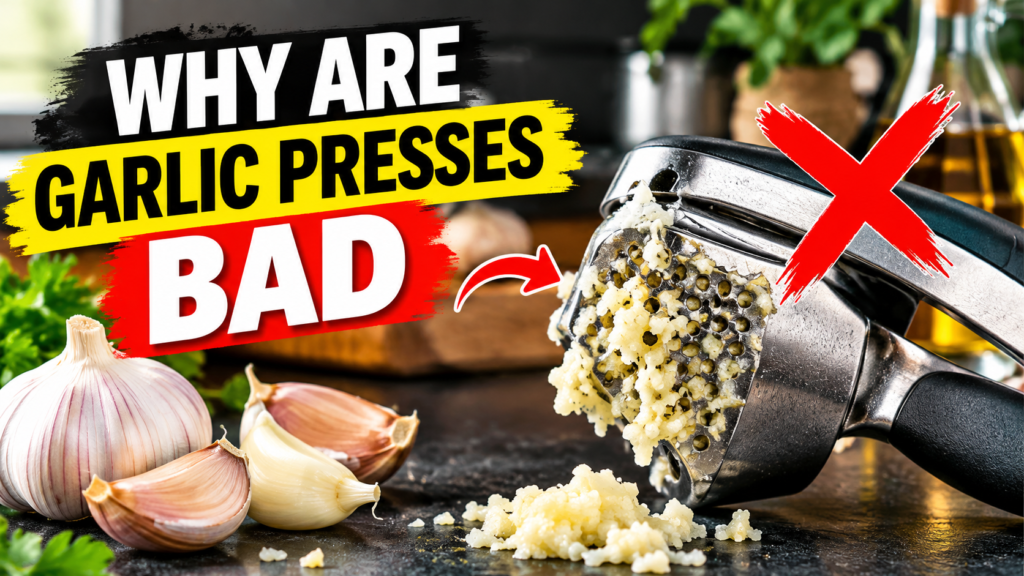
Garlic presses look simple, yet many cooks end up frustrated and ask, “Why are garlic presses bad?” Others love them. This guide explains the real problems, their causes, and how to decide if a press belongs in your drawer.
You will learn about flavor, cleanup, build quality, safe storage, and easy alternatives.
Trust & Accuracy Notice
This article is for general educational and buying-guidance purposes only. It does not replace the manufacturer’s official manual, food safety guidance, or professional advice. Materials, specifications, and care instructions can vary by product and should be confirmed with the manufacturer before purchase or use. For product defects, suspected food-safety issues, or injuries such as burns or cuts, contact the manufacturer, a qualified professional, or seek medical help as needed.
Why Are Garlic Presses Bad? The Short Version
The tool itself is not unsafe. The complaints come from daily use: slow cleanup, wasted garlic, a strong taste, and handles that feel weak on some models. Peeling every clove can also feel as slow as chopping.
When a press works
It is fast for sauces, marinades, and soups that need fine garlic. It also keeps your fingers away from a knife blade.
When a press frustrates
Tiny holes can be a chore to clean. If you cook with one clove at a time, the effort may not feel worth it.
Picture a weeknight pasta sauce. You need four cloves, so the press saves time. Now picture adding one clove to scrambled eggs. Washing the press can take longer than the cooking.
Flavor: Why Pressed Garlic Tastes Stronger
Crushing breaks open many garlic cells at once, which releases the compounds behind garlic’s sharp bite. A press does this more than slicing does. For flavor, the short answer to “Why are garlic presses bad?” is that the crush is very fine, so the taste can feel hot or harsh in light dishes.
Pressed garlic also cooks fast. Tiny bits can burn in hot oil, and burnt garlic tastes bitter. Many cooks add it late, after lowering the heat.
Fresh garlic also varies. Older cloves can taste sharper and may have green sprouts, which some cooks remove because they can taste bitter. Choose firm, plump cloves when you can.
Beginner check: If pressed garlic smells sharp enough to sting, stir it into a sauce with liquid instead of hot dry oil. Experienced-cook observation: Many cooks press garlic after the onions soften, so it only cooks briefly.
Garlic Press vs Other Garlic Prep Methods
| Method | Flavor | Cleanup | Best use |
|---|---|---|---|
| Garlic press | Sharp, strong | Small holes to rinse | Sauces, marinades |
| Knife mince | Milder, more control | Wash knife and board | Sautés, roasts |
| Fine rasp grater | Strong, paste-like | Rinse sharp teeth carefully | Dressings, dips |
| Jarred minced garlic | Varies by brand | No peeling; check label | Fast weeknight meals |
Note: Flavor is personal. If you enjoy punchy garlic, this problem may not matter to you.
Cleaning: The Biggest Complaint
Cleanup is a common reason people quit. Garlic pulp packs into small holes and can dry hard. Some presses have cleaning tips or hinged parts that open flat; others do not. Rinse right away, because fresh pulp comes out more easily.
Beginner check: Look at the holes before buying. Tiny, deep holes mean more scrubbing. Many cooks find a small stiff brush works better than a sponge.
Common Garlic Press Problems and Likely Causes
| Problem | Likely cause | What to try |
|---|---|---|
| Garlic stuck in holes | Pulp dried before rinsing | Rinse early; use a brush |
| Hard to squeeze | Large clove or weak leverage | Cut clove in half |
| Bent or loose parts | Thin metal or too much force | Check build before buying |
| Harsh taste | Fine crush plus high heat | Add later, lower heat |
| Lots of garlic left behind | Clove does not fit chamber | Match clove size; scrape pulp |
| Spots or rust | Water left on metal | Dry after washing; check care label |
How to Use a Garlic Press With Fewer Problems
Here is the whole routine at a glance.
The last step matters most. A quick rinse while the pulp is soft can save a lot of scrubbing later.
Tip: If the press sticks often, try a smaller clove or check for a model with a larger chamber.
Safe Garlic Handling Tips
A garlic press is a low-risk tool, but storage matters. Garlic stored in oil can cause food-safety problems if left at room temperature. See FoodSafety.gov and USDA for current storage guidance. Also keep fingers clear of the hinge while squeezing, since fingers can get pinched. Cut cloves on a stable board if you must halve them.
Warning: Never keep crushed or chopped garlic in oil at room temperature. Refrigerate it and use it quickly, following official guidance.
Safe Habits vs Risky Habits
| Situation | Safer practice | Risky practice |
|---|---|---|
| Pressed garlic | Use soon or refrigerate | Leave it out for hours |
| Stuck press | Stop and clear the pulp | Force it with a tool |
| Cleaning holes | Use a small brush | Poke with a knife tip |
| Damaged press | Retire it | Keep using sharp or cracked parts |
Accuracy check: Care rules vary by brand. Confirm dishwasher use and cleaners with the manufacturer’s instructions.
Use this path when the press fights back.
A stuck press is often a clove-size problem. A bent or cracked press is a product problem, so stop using it.
Care Checklist for Longer Use
Good care can reduce many complaints. A ten-second rinse after pressing may save several minutes of scrubbing later. Store the press dry so water does not sit in the hinge. If the manufacturer says to avoid soaking or harsh cleaners, follow that advice.
Use this quick checklist after each use.
Most items take seconds. The inspection step helps you catch weak parts before they cause trouble.
Build Quality and Material Fit
A thin press may bend under hard squeezing. Check that the hinge feels firm, the handles meet evenly, and the chamber fits a normal clove. Many home cooks find a sturdy, simple press causes fewer problems than a fancy one with extra parts.
Also think about hand strength. A press that needs a hard squeeze can tire your hand or wrist. Longer handles can give more leverage, so test the feel in a store when you can.
Garlic Tools and Materials: Which Fits You?
| Option | Choose this if… | Avoid this if… |
|---|---|---|
| Stainless steel press | You want a simple, sturdy tool | You hate scrubbing holes |
| Coated or alloy press | Care label is clear | Finish looks chipped |
| Silicone peeling tube | Peeling is your main struggle | You want garlic crushed |
| Rasp-style grater | You want paste-like garlic | Sharp teeth worry you |
| Sharp chef’s knife | You want mild flavor and control | You want zero knife work |
Match the tool to the job.
No tool wins every time. Pick by dish, time, and how much cleanup you will accept.
Is a Garlic Press Worth It?
People who ask “Why are garlic presses bad?” often just need a better match between tool and habit. Some cooks keep both a press and a knife, then pick whichever fits the dish.
Choose this if you cook garlic-heavy sauces often and can rinse the press quickly.
Avoid this if you use one clove now and then or dislike cleaning small tools.
Check the manufacturer’s guidance if you want to press unpeeled cloves or use a dishwasher.
This chart compares common problems by effort, not by lab data.
Cleaning tends to rank highest, so judge a press by how easy it looks to rinse.
Mistakes to Avoid
Common Mistakes vs Better Choices
| Mistake | Better choice |
|---|---|
| Pressing into hot oil | Add garlic later |
| Waiting to clean | Rinse right away |
| Buying on price alone | Check hinge and care label |
| Using it for one clove | Mince with a knife |
| Forcing a stuck clove | Cut the clove smaller |
Contact the manufacturer or a professional if a handle snaps, the hinge fails, or the finish flakes. For deep cuts, get medical help. Product-safety resources are available at CPSC.
Helpful Tools to Consider
This article may contain affiliate links. If you buy through these links, we may earn a small commission at no extra cost to you. We only mention products that fit the topic and recommend checking current specs and care instructions directly with the manufacturer.
Stainless Steel Garlic Press
Stainless steel models may be simpler to wipe dry. Compare hinge strength and care instructions before you buy.
Fine Rasp-Style Grater
Can turn garlic into soft paste without a press. The teeth are sharp, so handle with care.
Frequently Asked Questions
Why are garlic presses bad for some home cooks?
Common complaints are hard cleanup, wasted garlic, a sharper taste, and weak build on some models. Quick rinsing and a sturdy design can help.
Do garlic presses make garlic taste bitter?
Pressed garlic can taste stronger because the crush is fine. It can also taste bitter if it burns in hot oil.
Is a garlic press worth buying?
It can be if you use garlic often and want fast, fine garlic. If you rarely cook with it, a knife may be enough.
How do I clean a garlic press easily?
Rinse it right after use, then clear the holes with a small brush. Follow the manufacturer’s care instructions.
Can I put a garlic press in the dishwasher?
Some are made for it and some are not. Check the label or manufacturer’s instructions first.
What can I use instead of a garlic press?
Try a sharp knife, a fine rasp grater, or jarred garlic if you check the label. Each changes flavor and cleanup.
Final Thoughts
The answer to “why are garlic presses bad?” is usually cleanup, flavor, or build quality. Pick the tool that fits your habits. Check the manufacturer’s instructions, confirm care needs, follow food-safety guidance for garlic storage, and seek medical help for injuries.
