
By Michael Hayes
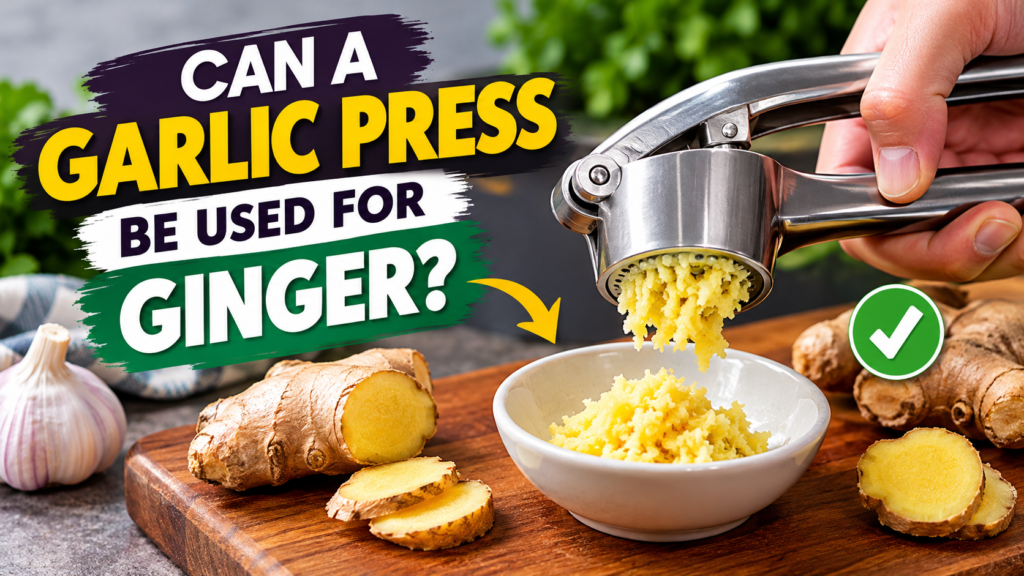
Fresh ginger adds warm flavor to stir-fries, soups, and marinades, but grating it can feel slow. Wondering can a garlic press be used for ginger as a shortcut? This guide covers the texture to expect, how to avoid clogging, safe steps, care tips, and when another tool is the better pick.
Can a Garlic Press Be Used for Ginger? The Short Version
In most home kitchens, yes, with limits. A garlic press squeezes soft food through small holes. Ginger is firmer and more fibrous than garlic, so the result depends on the root. Young ginger with thin skin and plenty of juice usually works better than older ginger that feels woody or dry.
Think of the press as a juicer for small ginger pieces, not a true grater. You get a wet, fine mash and some juice, while long fibers often stay behind. That suits marinades, soups, and sauces, but not recipes that need ginger pulp.
How Ginger Is Different From Garlic
Garlic cloves are dense but soft inside. Ginger is a rhizome full of long fibers that can wrap around the holes of a press. Beginner check: slice a small piece and look at the cut face. Long, visible strings mean more clogging. Experienced cooks often cut across those strings first.
Comparison: Ways to Prep Fresh Ginger
| Method | Texture | Best For | Cleanup |
|---|---|---|---|
| Garlic press | Wet mash and juice | Marinades, sauces, soups | Moderate; fibers stick |
| Fine grater | Soft paste with fibers | Stir-fries, baking, tea | Moderate; pulp clings |
| Knife mince | Small bits you control | Soups and curries | Easy; knife and board |
| Slice or smash | Large pieces | Broths and simmered dishes | Easy; remove before serving |
When a Garlic Press Works Well for Ginger
Choose this if you need a small amount of ginger for a sauce or marinade, the root is fresh and juicy, and your press has a roomy chamber. Realistic example: for a quick teriyaki-style sauce, pressing a thumb-sized piece in small chunks adds flavor without picking bits out of a grater.
So, can a garlic press be used for ginger on a busy weeknight? Often yes, if the root is young and you cut it small.
Avoid this if your ginger is old, dry, or very stringy, or if the recipe needs a lot of it. Check the manufacturer’s guidance if your press is plastic or has thin handles.
Here is the simple routine many home cooks follow.
The routine keeps pieces small and pressure gentle. Skipping the cutting step is a common reason a press jams.
How to Use a Garlic Press for Ginger: Step by Step
Scrub the ginger under running water and dry it. Cut off only what you need.
Scrape thick skin away with the edge of a spoon. Very thin skin on young ginger may be fine, but taste a small piece if unsure.
Slice thin coins, then cut across the strings into small chunks. Pieces should fit the chamber without being forced.
Load a few chunks at a time. Squeeze the handles slowly and steadily, keeping fingers clear of the pinch point.
Scrape the pulp out, then rinse the press right away. Use the ginger soon or refrigerate it in a clean, covered container.
Common Problems and What They Usually Mean
Problem vs Likely Cause
| Problem | Likely Cause | What to Try |
|---|---|---|
| Hard to squeeze | Pieces too large or root very firm | Cut smaller and press in batches |
| Dry pulp, little juice | Older or dried-out ginger | Use fresher ginger or a fine grater |
| Fibers jammed in holes | Strings cut lengthwise | Cut across the strings next time |
| Handles feel loose or bent | Press may not suit hard foods | Stop and check manufacturer guidance |
If the press resists, use this decision path before pushing harder.
Extra force is never the fix. Changing the cut or the tool is safer and usually works better.
Safety and Food Handling Tips for Pressed Ginger
Ginger is a raw ingredient, so wash your hands, the root, and the cutting board. Use clean spoons and containers. For storage times and temperatures, follow current guidance from FoodSafety.gov instead of guessing.
Safe Practice vs Risky Practice
| Safe Practice | Risky Practice | Why It Matters |
|---|---|---|
| Cut ginger into small pieces | Jamming in a large chunk | Large pieces strain the hinge |
| Press slowly in batches | Forcing the handles hard | Slips and pinches become more likely |
| Refrigerate leftover paste in a covered container | Leaving paste out for hours | Raw food needs safe storage |
Cleaning and Caring for Your Press After Ginger
Ginger fibers dry into a stiff mat, so rinse the press soon after use. A small brush can push fibers out from the back. Some presses are dishwasher safe and others are not, so confirm with the maker.
Use this checklist after each ginger session.
A short routine prevents sticky buildup and scrubbing later.
Choosing the Right Tool for Your Ginger
People often ask, “can a garlic press be used for ginger,” and the honest answer is yes with limits. If you cook with ginger often, one tool may not cover every dish, so match the tool to the texture and amount you need.
Tool and Material Fit
| Tool | Good Fit For | Material Notes |
|---|---|---|
| Garlic press with large chamber | Small amounts, smooth sauces | Sturdy handles often feel safer; confirm with the maker |
| Fine grater | Larger amounts, fibrous roots | Check edge sharpness and care steps |
| Chef’s knife and board | Chunky or minced ginger | Keep the blade sharp and the board steady |
| Spoon for peeling | Thin or knobby skin | No special material needed |
This dashboard gives a quick fit summary for everyday cooking.
Pick the card that matches your recipe, and keep a second tool nearby for tougher roots.
Common Ginger Pressing Mistakes
Mistake vs Better Choice
| Mistake | Better Choice |
|---|---|
| Pressing big chunks | Cut ginger into small pieces first |
| Using old, dried-out ginger | Choose firm, fresh root |
| Letting fibers dry in the holes | Rinse the press right away |
| Pressing large amounts for a big recipe | Use a grater or knife for bulk ginger |
This practical guide shows how hard each job tends to feel for a typical home cook.
The bars show relative effort only. Your root, press, and hands will change the result.
Tools Worth Checking If You Prep Ginger Often
A roomier chamber may hold more ginger pieces per squeeze. Check the listing for materials and care instructions.
A fine grating surface is often used for fibrous ginger and can back up a press. Check the listing for size and cleaning notes.
Frequently Asked Questions
Can a garlic press be used for ginger?
Yes, in many cases, especially with small pieces of young, juicy ginger. Tough or stringy ginger may clog it, so a fine grater can work better.
Do I need to peel ginger before using a garlic press?
Peel it if the skin is thick, rough, or dirty. Very thin skin on young ginger may be fine if washed well.
Why does my garlic press clog with ginger?
Long ginger fibers often wrap around the holes. Cutting the ginger across the strings into small chunks and pressing in small batches usually helps.
Is a ginger grater better than a garlic press?
For tough roots or larger amounts, many cooks prefer a fine grater. A press can be quicker for tiny amounts.
Can I put my garlic press in the dishwasher after pressing ginger?
Only if the manufacturer says it is dishwasher safe. Rinse off the pulp first, because fibers can stay stuck in the holes.
How should I store pressed ginger?
Place it in a clean, covered container in the refrigerator and use it soon. Check FoodSafety.gov for current storage guidance.
Will pressing ginger damage my garlic press?
It can if you force it. Hard or large pieces strain the hinge and handles. Use small pieces, press gently, and check the manufacturer’s guidance.
Can a garlic press be used for ginger? Yes, with care and the right root. Choose young ginger, cut it small, press gently, and clean up right away. Confirm care details with the manufacturer, follow food-safety guidance, and seek medical help for serious injuries.
